Home
Products
Emulsifier List
Application
Gallery
News
Blog
About Us
About Us
Contact Us
Your Position : Home > Blog

Why SP Emulsifier Is Essential for Sponge Cake Production

Date:2026-03-09
Read:
Share:
SP emulsifier, also known as SP cake gel or SP cake emulsifier, is a compound emulsifier specially designed for light and fluffy baked goods. It typically consists of a blend of mono- and diglycerides, GMS, Tween 80, and other functional emulsifiers, using propylene glycol or water as the base. In sponge cake production, the key function of SP emulsifier is to stabilize the egg foam structure, resulting in a light, soft, uniform texture and consistent volume.

This blog explains in detail how SP emulsifier works, its impact on product result, recommended dosage, and why similar effects cannot be achieved using conventional emulsifiers alone.


How SP Emulsifier Solves Egg Foam Problems


Traditional sponge cake relies entirely on whipped eggs to create the airy, open crumb structure. Eggs are whipped to incorporate air, forming a foam that holds the batter together and gives the cake its lift. The problem is that egg foam is fragile. It starts collapsing the moment you stop mixing — or the moment you add flour, sugar, or any other ingredient that disrupts the foam structure.

In a small bakery, this is manageable. In high-volume production with large batches, long holding times between mixing and baking, and multiple production lines running simultaneously, unstable egg foam becomes a serious consistency problem.

SP emulsifier stabilizes the foam at the molecular level. Its emulsifying components — primarily mono- and diglycerides, GMS, and Tween 80 — form a protective film around each air bubble in the batter, making the foam significantly more resistant to collapse. The batter holds its structure even when mixed with other ingredients, when transferred between equipment, or when it needs to wait before going into the oven.


How SP Changes Your Production Results


The practical effects of SP on sponge cake production are concrete and measurable:

Faster mixing, lower specific gravity. SP dramatically reduces the time needed to achieve full aeration. What might take 15–20 minutes of whipping with eggs alone can be reduced significantly with SP in the formula. The batter reaches a lower specific gravity (more air incorporated per unit volume), which directly translates to better cake volume.

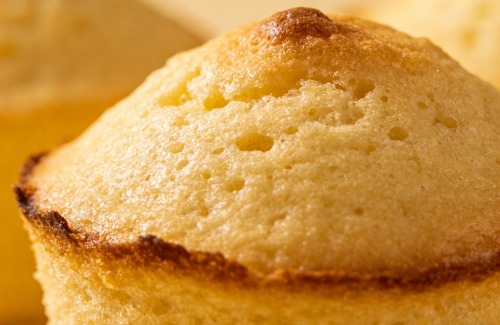
Sponge cake

Batter stability during holding. In industrial production, batter often sits in hoppers or transfer tanks for several minutes before depositing. Without SP, that waiting time costs you aeration and consistency. With SP, the batter retains its structure — what you deposit into the mold five minutes after mixing behaves the same as what you deposited at the start.

Consistent volume across batches. One of the hardest things to control in sponge cake production is batch-to-batch uniformity. Egg quality varies. Room temperature varies. Mixing intensity varies. SP reduces the sensitivity of the batter to these variables, giving production teams a more forgiving process and tighter quality control.

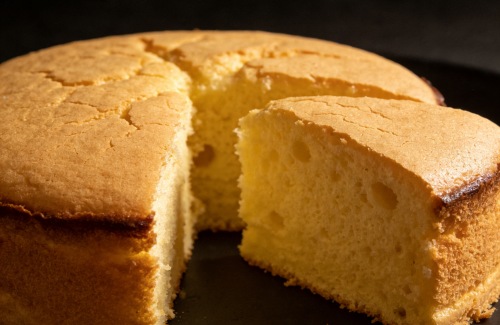
Finer, more uniform crumb. SP helps distribute air bubbles more evenly throughout the batter. The result is a finer crumb structure — smaller, more consistent cells — which gives the cake a softer texture and cleaner mouthfeel. This also helps with slicing, since a uniform crumb holds together better on cutting lines.


SP Usage in Sponge Cake Formulas


SP is typically added at 1–5% of total batter weight, or 3–5% of egg weight, depending on the formula. It is added directly to the egg-sugar mixture at the start of the whipping stage, allowing it to begin stabilizing the foam from the first moment air is incorporated.

For sponge cakes specifically, the lower end of the dosage range (1–2%) is often sufficient for standard full-egg formulas. Reduced-egg or egg-replaced formulas — increasingly common as egg prices rise — may need higher SP levels to compensate for the reduced natural emulsifying power of egg yolk.

One important note: do not overdose. Excess SP can leave a slightly gummy or waxy aftertaste and may over-soften the crumb structure. Stay within the recommended range and adjust based on your specific recipe and process.

SP in sponge cake


SP vs. Making Do Without It


Some producers try to achieve similar results with standard GMS or mono- and diglycerides alone. These ingredients help, but they don't replicate the full effect of a purpose-formulated SP system. SP is specifically designed for high-aeration applications — the combination of components works together in a way that individual emulsifiers can't match when foam stability and batter tolerance are the priorities.

For soft roll sponge cakes, Swiss rolls, chiffon-style products, and any sponge format that needs to hold its shape after rolling or filling, SP is particularly difficult to replace.


Conclusion


SP emulsifier not only improves the quality of sponge cakes but also enables stable, large-scale sponge cake production. It stabilizes the foam that imparts the unique flavor to sponge cakes, reduces process sensitivity, and helps production teams ensure consistent results across batches.

If you are producing sponge cake products or addressing volume and texture issues on your production line, SP emulsifier is a highly advantageous ingredient. Chemsino supplies SP, as well as various emulsifier components used in sponge cake formulations, including GMS, DMG, and SSL. Contact us for samples or technical support.
Start earning substantial
profits in your country today!
Email
Whatsapp