Home
Products
Emulsifier List
Application
Gallery
News
Blog
About Us
About Us
Contact Us
Your Position : Home > Blog
Blog
Source of Glycerol Monostearate (GMS)
2026-01-21
Glycerol Monostearate (GMS) is a widely used emulsifier derived mainly from vegetable oils. This article explains the natural and industrial sources of GMS, compares plant-based and refined monoglycerides, and introduces Chemsino’s manufacturing process using fully hydrogenated palm oil and molecular distillation to produce high-purity distilled monoglycerides (DMG) for food and industrial applications.
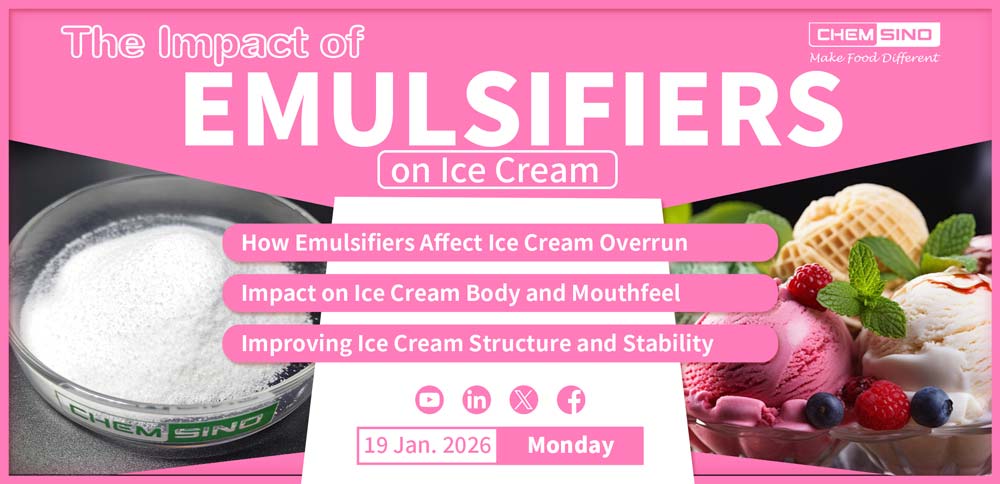
The Impact of Emulsifiers on Ice Cream
2026-01-19
Emulsifiers play a critical role in ice cream production by controlling the interaction between fat, water, and air. Their proper use directly affects overrun, body, texture, and structural stability. This article explains how emulsifiers work in ice cream, how they influence air incorporation and mouthfeel, and why selecting the right emulsifier is essential for consistent quality and processing performance.
Distilled Monoglycerides vs Regular Monoglycerides
2026-01-16
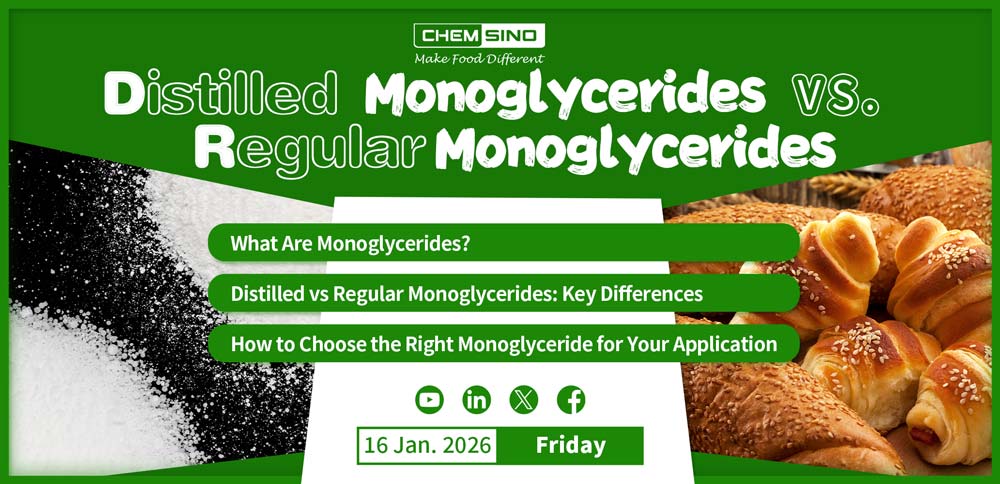
Monoglycerides are essential food emulsifiers used to improve texture, stability, and shelf life in a wide range of food products. This article explains the main differences between distilled monoglycerides and regular monoglycerides, helping food manufacturers and buyers select the most suitable option based on performance requirements, application needs, and budget considerations.
Tips for Using Glycerol Monolaurate in Food Applications
2026-01-14
Glycerol Monolaurate (GML) is widely used in food formulations for its emulsifying and antimicrobial properties. This article provides clear and practical guidance on how to use GML effectively, including dosage recommendations, incorporation methods, emulsifier combinations, and processing considerations to help improve product stability, texture, and shelf life.
Key Considerations When Sourcing Food-Grade Glycerol Monolaurate
2026-01-12
Glyceryl monolaurate (GML) is a widely used food ingredient valued for its emulsifying and antimicrobial properties. When sourcing food-grade GML, manufacturers must consider more than price—regulatory compliance, product purity, technical documentation, and certification requirements all play a critical role. This article outlines the key factors to evaluate when selecting a reliable GML supplier for consistent quality and global market approval.
Food Emulsifier Certifications Explained: Halal, Kosher, Non-GMO, RSPO
2026-01-09
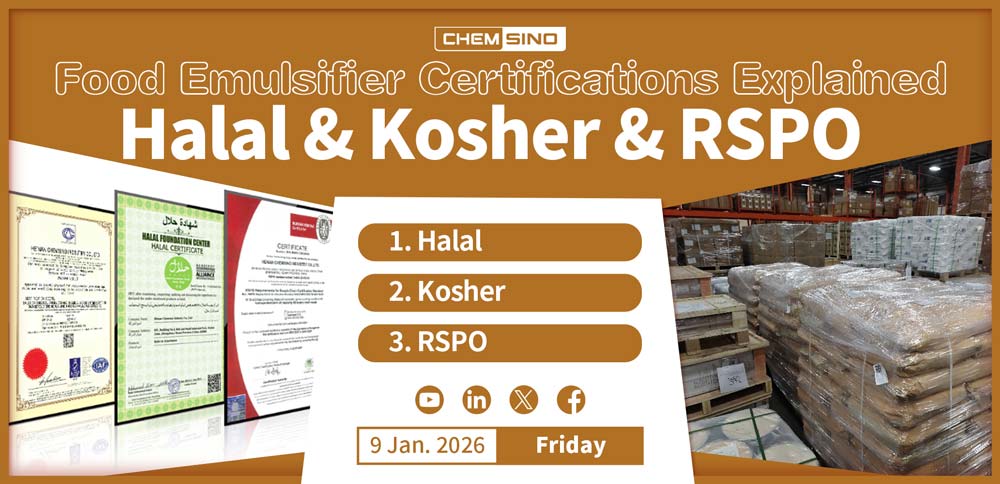
Food emulsifier certifications are essential for ensuring regulatory compliance, market access, and consumer confidence in global food manufacturing. From Halal and Kosher to Non-GMO and RSPO, certified emulsifiers help brands meet international standards, support sustainability goals, and maintain reliable supply chains. This article outlines the four most important food emulsifier certifications and explains why they matter when selecting the right emulsifier supplier.
CSL vs SSL vs DATEM: What’s the Difference?
2026-01-07
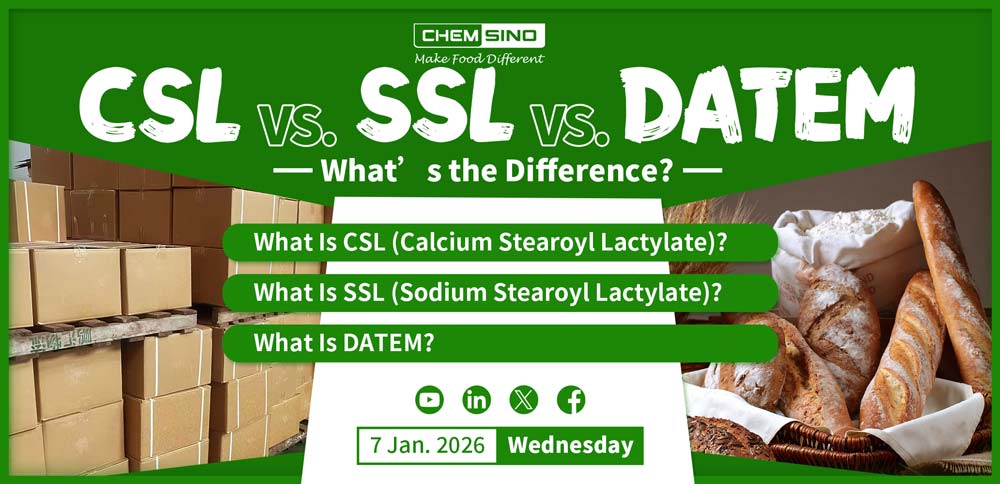
CSL, SSL, and DATEM are three widely used emulsifiers and dough conditioners in the bakery industry. Each plays a unique role in improving dough strength, volume, texture, and shelf life. CSL (Calcium Stearoyl Lactylate) enhances gluten structure and freshness, SSL (Sodium Stearoyl Lactylate) improves softness and emulsification, while DATEM (Diacetyl Tartaric Acid Esters of Mono- and Diglycerides) provides strong gluten strengthening for high-volume or frozen dough. Understanding their differences helps bakers select the right emulsifier for consistent, high-quality baked goods.
Why HLB Value Matters in Food Emulsion Design
2026-01-05
HLB value plays a key role in food emulsion design, helping formulators understand how emulsifiers interact with oil and water. This article explains what HLB value means, how it relates to different emulsion types, and how it affects product stability and processing performance. It also provides practical guidance on selecting or blending emulsifiers to achieve consistent, stable results in a wide range of food applications.
How to Prevent Caking in Food Emulsifiers
2026-01-04
Caking is a common physical stability issue affecting powdered food emulsifiers, where free-flowing particles agglomerate into hard lumps during storage or transportation. This phenomenon can negatively impact flowability, dosing accuracy, and processing efficiency. This article outlines the main causes of caking in food emulsifiers and introduces practical, industry-proven prevention methods to help manufacturers and distributors maintain consistent performance and product quality throughout the supply chain.
What are Span 60 and Tween 60?
2025-12-31
Span 60 and Tween 60 are widely used non-ionic emulsifiers in food, cosmetic, and pharmaceutical formulations. Although both are derived from sorbitan monostearate, they differ significantly in solubility, HLB value, and emulsion type. This article explains what Span 60 and Tween 60 are, compares their key differences, and explores how they can be used individually or together to improve texture, stability, and shelf life in industrial formulations.
What Is the Difference Between Span and Tween
2025-12-29
Span and Tween emulsifiers are widely used non-ionic surfactants in food, pharmaceutical, and cosmetic formulations. Although both help mix oil and water, they differ significantly in solubility, HLB values, functional roles, and application performance. This article explains their key differences and practical uses in modern food formulations.
Common Sources of Food Emulsifiers: A Clear and Structured Guide
2025-12-26
Food emulsifiers are essential in modern food processing, helping oil and water blend smoothly while improving texture, mouthfeel, and shelf life. This article outlines the main sources of food emulsifiers—including plant-based, animal-derived, and fermentation-based options—to help food professionals better understand ingredient selection and sourcing.
What is Span 20 and Its Role in Food Emulsification
2025-12-24
Span 20 (E493) is a versatile food emulsifier widely used to stabilize water-in-oil systems, enhance texture, and extend the shelf life of baked goods, spreads, dairy products, confectionery, and other fat-based foods. This blog explains its function, benefits, and common applications.
Tween 20 vs Other Polysorbates: Key Differences and Applications
2025-12-22
This blog compares Tween 20 with other polysorbates, highlighting their key differences, applications, and safety considerations to help formulators select the right emulsifier for stable, high-quality products.
How to Prevent Surface Bubbles in Industrial Bread Production
2025-12-19
Surface bubbles, or blisters, are a common issue in industrial bread production that can affect appearance and packaging. Preventing them requires good fermentation control, proper processing, and the use of functional bakery ingredients. With Chemsino’s bakery solutions, manufacturers can achieve more stable production and consistent bread quality.
How to Upgrade Your Food Formula Using Tween 20
2025-12-17
Tween 20 (E432) is a food-grade non-ionic emulsifier widely used to improve emulsion stability, texture, and consistency in beverages, dairy products, and plant-based formulations. This article explains how food manufacturers can effectively use Tween 20 to upgrade modern food formulas.
How Cake Gel Powder Enhances Emulsification in High-Sugar Cake Batters
2025-12-15
Cake gel powder plays a critical role in stabilizing emulsification in high-sugar cake batters. High sugar levels often disrupt oil, water, and air interactions, leading to poor volume and uneven texture. This article explains how cake gel powder restores emulsification balance and supports consistent quality in industrial cake production.
What Is Bread Improver and How Does It Work?
2025-12-12
Bread improver is an essential functional ingredient used in modern baking to enhance dough strength, increase bread volume, improve softness, and extend shelf life. It helps manufacturers achieve consistent, high-quality products in packaged bread, frozen dough, and large-scale bakery operations. With its blend of enzymes and food-grade emulsifiers, CHEMSINO’s bread improver solutions support reliable performance, stable production, and better results for bakeries worldwide.
How Cake Gel Powder Enhances Moisture Retention in Packaged Cakes
2025-12-10
Cake gel powder is a key ingredient in modern bakery production, helping packaged cakes maintain softness and freshness. By improving air incorporation, stabilizing emulsions, slowing starch retrogradation, and enhancing moisture binding, it ensures longer shelf life and consistent quality.
5 Common Problems in Bread Making and Emulsifier Solutions
2025-12-09
Bread is one of the most widely consumed foods globally, yet achieving consistent quality in large-scale production can be difficult. Problems like weak dough, low loaf volume, dryness, and short shelf life often affect both product texture and consumer satisfaction. Emulsifiers play an essential role in solving these challenges by strengthening dough, improving crumb structure, and helping bread stay soft for longer. This article introduces the common issues in bread production and explains how different emulsifiers offer effective, reliable solutions for modern bakeries.
How to Choose the Best Plant-Based Emulsifier for Your Food Application
2025-12-08
Plant-based emulsifiers are becoming essential in modern food manufacturing as brands move toward cleaner labels and vegan-friendly formulations. These natural emulsifiers help improve stability, texture, and product quality across beverages, bakery items, dairy alternatives, and desserts. This guide explains how to choose the most suitable plant-based emulsifier and highlights commonly used options such as GMS, PGMS, MCT oil, and plant-derived polysorbates.
Emulsifier Solutions for High-Protein Nutrition Drinks
2025-12-03
This article explains the role of emulsifiers in high-protein nutritional beverages, covering their types, practical applications, and benefits for texture, stability, and overall product quality.
How Food Emulsifiers Work at Molecular Level
2025-12-01
Food emulsifiers play an essential role in everyday products such as bread, sauces, beverages, and ice cream. This article explains in simple, clear terms how emulsifiers work at the molecular level—how their amphiphilic structure helps them stabilize droplets, improve texture, and support better storage stability. With these functions, emulsifiers greatly enhance the quality and performance of many food products.
How to Slow Down Bread Staling and Extend Freshness?
2025-11-28
Bread staling is a common challenge in bakeries, causing dryness, firmness, and loss of freshness. Functional emulsifiers and enzyme systems, such as DMG, SSL, DATEM, and maltogenic amylase from Chemsino, help slow starch retrogradation, retain moisture, and maintain soft, appealing crumb. These solutions enable manufacturers to extend shelf life, improve product quality, and satisfy consumer expectations.
 1 2 3 4 5 6 7 8 9 10 
Start earning substantial
profits in your country today!
Email
Whatsapp