GMS 60 appears on ingredient specifications, supplier catalogs, and food additive lists across bakery, dairy, margarine, and frozen dessert production. Most manufacturers know it's an emulsifier. Fewer understand what makes a 60% monoglyceride grade different from a 40% grade — or from high-purity DMG at 90% — and why that difference matters in their specific application.
This article explains what GMS 60 actually is, what it does in each food application, and how to choose the right grade.
What Is GMS 60?
GMS stands for Glycerol Monostearate — a monoglyceride produced by reacting glycerol with stearic acid (C18:0). The "60" refers to the monoglyceride content: GMS 60 contains approximately 60% monoglycerides.
The remaining 40% is primarily diglycerides (two fatty acid chains attached to glycerol) with small amounts of triglycerides and free glycerol. This is not a minor detail. Monoglycerides are the functionally active fraction — they form inclusion complexes with starch, position at fat-water and fat-air interfaces, and do the emulsification work. Diglycerides are largely inert as emulsifiers and can interfere with some mechanisms, particularly starch complexation in bread.
This is the key reason the monoglyceride percentage matters when comparing grades:
| Grade |
Monoglyceride Content |
Active Fraction |
| GMS 40 |
~40% |
Lower functional dose per gram |
| GMS 60 |
~60% |
Standard commercial grade |
| High-purity DMG |
90–95%+ |
Highest functional dose per gram |
GMS is covered under FDA GRAS status as glyceryl monostearate (21 CFR 184.1505) and is approved as food additive E471 (mono- and diglycerides of fatty acids) under EU Regulation (EC) No 1333/2008.

Is GMS 60 the Same as E471?
Not exactly. E471 is the designation for the entire class of mono- and diglycerides of fatty acids, which includes GMS 40, GMS 60, high-purity DMG, and other glycerol esters of various fatty acids. GMS 60 is one specific grade within this category, characterized by its monoglyceride content and stearic acid base.
On a finished food label, both GMS 60 and DMG appear as "mono- and diglycerides of fatty acids" or "E471." Regulators don't distinguish between grades — but formulation performance does.
What GMS 60 Does in Food: The Mechanism
GMS 60's functions depend on the food system. There are two primary mechanisms:
Starch complexation. In bread and bakery products, monoglycerides insert their fatty acid chains into the hydrophobic core of amylose helices, forming inclusion complexes. Amylose in complex with monoglyceride cannot recrystallize — slowing the retrogradation process responsible for bread staling. This is why bread with GMS stays softer longer.
Interfacial activity. In emulsified systems (margarine, ice cream, whipped toppings), monoglycerides position at fat-water or fat-air interfaces, stabilizing droplets or air cells. In ice cream, they specifically displace milk proteins from fat globule surfaces, making fat globules susceptible to the partial coalescence that builds body and texture.
Diglycerides do neither of these things effectively. This is why monoglyceride purity — not total GMS weight — is the relevant specification for functional performance.
GMS 60 in Bakery Products
Bread and Rolls
In commercial bread, GMS 60 contributes to anti-staling through starch complexation and to fat distribution in enriched doughs.
Typical dosage: 0.5–0.8% flour basis for GMS 60 at ~60% monoglycerides, delivering approximately 0.3–0.5% active monoglyceride.
Important: For the starch complexation mechanism to work reliably, monoglycerides must be in the alpha crystal form. Standard GMS 60 powder is typically in the beta or beta-prime form — lower surface activity. Pre-hydrating GMS 60 into an alpha-gel before dough addition significantly improves anti-staling performance. Alpha-gel preparation: heat GMS above its melting point (65–70°C), add equal weight of hot water, cool under agitation to 35–40°C.
For bread with a 7+ day softness specification, high-purity DMG (90%+) at 0.3–0.5% flour basis is more reliable than GMS 60 at higher dosage. The higher monoglyceride purity, combined with lower diglyceride interference, produces more consistent starch complexation.
Cakes and Muffins
In cakes, GMS 60 improves fat emulsification in batter, contributes to finer crumb structure, and helps retain moisture over shelf life.
Typical dosage: 0.5–0.8% flour basis.
GMS 60 is often used alongside Polysorbate 60 in commercial layer cakes — GMS handles fat distribution and shelf life; Polysorbate 60 handles aeration and volume. Pre-melting GMS into shortening before batter preparation produces better distribution than dry powder addition.

GMS 60 in Margarine and Spreads
In margarine, GMS 60 stabilizes water droplets in the fat phase (W/O emulsification) and promotes the beta-prime fat crystal form that gives margarine its smooth, plastic texture.
Typical dosage: 0.2–0.4% of product weight for standard table margarine.
The crystal control function is where the diglyceride content of GMS 60 matters. Diglycerides disrupt beta-prime crystal formation more than the monoglycerides promote it — which is why premium soft tub margarine, where consistent smooth texture across batches is critical, typically uses high-purity DMG rather than GMS 60. For commodity margarine where exact texture consistency matters less, GMS 60 performs adequately at a lower cost.
GMS 60 in Ice Cream and Frozen Desserts
In ice cream, GMS 60 promotes fat partial coalescence — the mechanism that builds body, texture, and melt resistance. Monoglycerides displace milk proteins from fat globule surfaces, making globules susceptible to controlled aggregation around air cells during freezing.
Typical dosage: 0.15–0.2% of mix weight, used alongside Polysorbate 80 (0.1–0.2%).
GMS 60 is typically added during pasteurization (65–72°C) when the mix is warm. The mix must then be aged at 4°C for a minimum of 4 hours before freezing — this allows emulsifiers to equilibrate at fat globule surfaces and fat to complete crystallization. Skipping or shortening the aging step degrades texture regardless of emulsifier dosage.
GMS 60 in Whipped Toppings
In whipped toppings, monoglycerides must be in the alpha crystal form to function. This is non-negotiable for whipped applications — beta or beta-prime form GMS 60 has low surface activity and produces poor foam stability.
For reliable performance in whipped toppings, GMS 60 needs to be either:
# Pre-hydrated into an alpha-gel before use, or
# Replaced with DMG supplied in pre-made alpha-gel format
Typical dosage: 0.3–0.6% of product weight, combined with Polysorbate 60 (not Polysorbate 80) at 0.2–0.4%.
Polysorbate 60's saturated stearic acid chain forms a more rigid interfacial film at whipping temperatures than Polysorbate 80's unsaturated chain — producing more stable foam. This combination is the standard commercial system for non-dairy whipped toppings.
GMS 60 vs. GMS 40: Which to Choose
The difference is monoglyceride content: GMS 40 delivers ~40% active monoglyceride per gram; GMS 60 delivers ~60%.
Choose GMS 60 over GMS 40 when:
# Your application requires a meaningful emulsification or anti-staling effect
# You're comparing on active monoglyceride content rather than total weight (GMS 60 requires 33% less product weight to deliver the same active dose as GMS 40)
# Cost-per-active-unit is close enough between the two grades to make GMS 60 more economical
GMS 40 may be sufficient when:
# The emulsifier function needed is modest (e.g., pan release, general fat distribution)
# Price difference between grades is significant, and trial results show equivalent performance
Consider upgrading to high-purity DMG when:
# Bread shelf life beyond 5–7 days is specified
# Whipped topping foam stability is inconsistent
# Ice cream texture varies batch to batch despite consistent processing
# The diglyceride interference effect is suspected (staling faster than expected despite adequate GMS 60 dosage
How Much GMS 60 to Use
| Application |
GMS 60 Dosage |
Notes |
| Bread (anti-staling) |
0.5–0.8% flour basis |
Alpha-gel preparation recommended |
| Cake and muffins |
0.5–0.8% flour basis |
Pre-melt into fat phase |
| Margarine (standard) |
0.2–0.4% product weight |
Higher for soft tub |
| Ice cream |
0.15–0.2% mix weight |
Add at pasteurization temperature |
| Whipped toppings |
0.3–0.6% product weight |
Must be alpha-gel form |
These are starting points for trial — the right dosage depends on fat content, processing conditions, and target shelf life. Above the effective range, additional GMS rarely improves performance and can affect texture or flavor. Start in the middle of the range and adjust based on results.
What to Check When Sourcing GMS 60
Two products both labeled "GMS 60" can perform very differently if the underlying specifications differ. Before approving a supplier, request a Certificate of Analysis with actual test results — not specification ranges — for:
# Monoglyceride content (GC assay): confirm it's actually 58–62%, not "around 60%."
# Acid value: ≤ 6 mg KOH/g (elevated values indicate hydrolytic degradation)
# Iodine value: ≤ 3 g I₂/100g (confirms saturated fatty acid base)
# Moisture: ≤ 2.0% (high moisture accelerates degradation and causes caking)
# Saponification value: 158–177 mg KOH/g (confirms fatty acid chain composition)
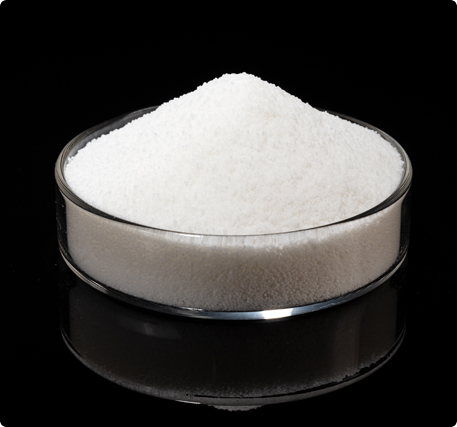
Physical form matters too. Powder, flake, and bead forms have different dispersion behavior in production — verify that the physical form matches your processing equipment and addition method.
Frequently Asked Questions
What does the 60 mean in GMS 60?
It refers to the monoglyceride content — approximately 60% of the product is the active monoglyceride fraction. The remaining ~40% is primarily diglycerides.
Is GMS 60 better than GMS 40?
GMS 60 delivers more active monoglyceride per gram than GMS 40, making it more functionally efficient in most applications. Whether it justifies the price premium depends on the application requirements. For critical functional applications (bread anti-staling, whipped toppings), high-purity DMG at 90%+ often performs better than either.
Is GMS 60 the same as E471?
No. E471 covers the entire class of mono- and diglycerides of fatty acids. GMS 60 is one specific grade within this class. Other grades (GMS 40, DMG 90, etc.) also fall under E471 on food labels.
Can GMS 60 be used in bread? Yes. GMS 60 slows staling through amylose inclusion complexation. For best results, use in alpha-gel form or pre-dispersed in fat. Typical dosage: 0.5–0.8% flour basis. For extended shelf life targets (7+ days), high-purity DMG is more reliable.
What is the regulatory status of GMS 60? In the US, GMS is GRAS under 21 CFR 184.1505. In the EU, it's approved as E471 under Regulation (EC) No 1333/2008. Both designations cover GMS 60 as well as other monoglyceride grades.
Sourcing GMS 60 from CHEMSINO
CHEMSINO supplies GMS 60, GMS 40, and high-purity DMG for bakery, margarine, dairy, and frozen dessert applications. Emulsifiers are our only business — our technical team works with GMS grade selection, dosage optimization, and formulation troubleshooting every day.
Every batch ships with a full Certificate of Analysis including actual monoglyceride content by GC assay, acid value, iodine value, saponification value, and moisture. If you're comparing GMS 60 against GMS 40 or DMG for a specific application, we can advise on which grade fits your formulation and processing conditions — and provide samples for trial before any purchase commitment.

 Emulsifier List
 About Us