Home
Products
Emulsifier List
Application
Gallery
News
Blog
About Us
About Us
Contact Us
Your Position : Home > Blog

What Is GMS 40 Used For? Applications in Food and Other Industries

Date:2026-10-16
Read:
Share:
GMS 40 is a grade of glycerol monostearate (GMS) used in a wide range of formulations. Its main functions include emulsification, texture modification, lubrication, dispersion, and support during processing.

It is commonly used in food products, but its applications are not limited to food. Depending on the grade and specification, GMS-based products can also be used in cosmetics, pharmaceuticals, plastics, and other industrial applications.

For manufacturers, the key question is not simply whether GMS 40 can be used in a product. The more important question is which GMS grade is suitable for the specific application.

What Is GMS 40?


GMS stands for glycerol monostearate, also known as glyceryl monostearate. It is a monoglyceride made from glycerol and stearic acid. The term GMS 40 generally refers to a grade containing about 40% monoglycerides. Specifications can vary by supplier, so buyers should always check the technical data sheet.

GMS is a surface-active ingredient. In food, this property allows it to interact with fats, water, proteins, and other ingredients. FDA lists glyceryl monostearate as having technical functions such as emulsification, texturizing, firming, and lubrication or release.

This is why GMS can be useful in many different types of formulations.

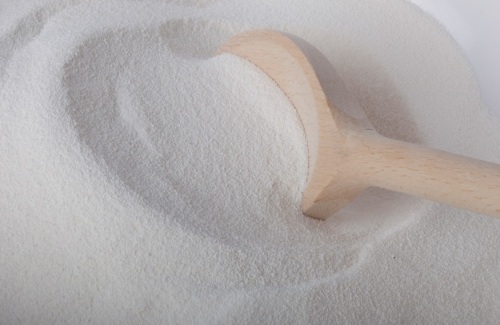
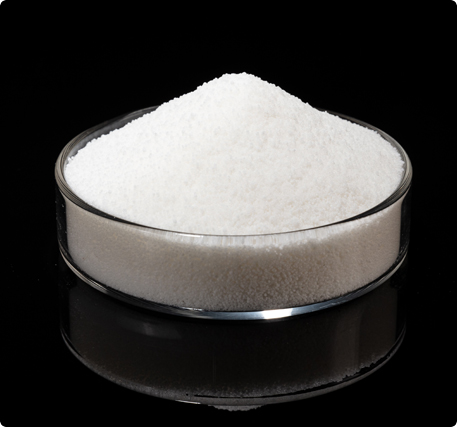
Glycerol Monosteatate GMS 40

What Is GMS 40 Used For?


GMS 40 is mainly used when a formulation needs better control of fat, water, texture, or processing behavior.

Its applications can be divided into two main groups:

Food applications

# Bakery products
# Ice cream and frozen desserts
# Margarine and spreads
# Selected dairy and non-dairy products
# Confectionery and other fat-based foods

Non-food applications

# Cosmetics and personal care
# Pharmaceuticals
# Plastics
# Other industrial formulations

The exact function of GMS depends on the formulation. It may act as an emulsifier in one product and mainly as a lubricant, dispersing aid, or processing aid in another.

GMS 40 in Food Products


Food is one of the main application areas for glycerol monostearate.

Bakery Products


GMS can help improve the interaction between fats, water, and flour components.

In bread and other baked products, it may help improve dough handling, crumb texture, softness, and product consistency.

In cakes, GMS can support the distribution of fat and water in the batter and help produce a more uniform texture.

The final effect depends on the flour, fat, water content, processing conditions, and other ingredients.

Ice Cream and Frozen Desserts


GMS is also used in ice cream and frozen desserts.

It can affect the interaction between fat, proteins, and air during freezing. This may help improve body, texture, air-cell stability, and melting behavior.

However, ice cream is only one application of GMS 40. The performance depends on the fat system, stabilizers, processing conditions, and dosage.

Margarine and Spreads


GMS can help control the interaction between fat and water in margarine and other spreads.

It may contribute to a more uniform structure and consistent texture. The appropriate grade depends on the type of fat and the structure required in the finished product.

bread


Other Food Applications


GMS can also be used in selected confectionery, dairy, and non-dairy products where emulsification or texture control is required.

The important point is that GMS does not perform the same way in every food. The formulation and processing conditions determine its actual function.

GMS 40 in Cosmetics and Personal Care


Glyceryl monostearate is also used in cosmetic formulations as an emulsifying and emollient ingredient.

It can be used in products such as creams, lotions, and other oil-and-water formulations.

In these products, GMS can help create a more consistent structure and contribute to the texture of the finished product.

However, cosmetic manufacturers need a grade that meets their own formulation and regulatory requirements. A food-grade GMS product should not automatically be assumed to be suitable for cosmetics.


GMS 40 in Pharmaceuticals


Glyceryl monostearate also has pharmaceutical applications, including use as a pharmaceutical aid.

Its function depends on the formulation. It may be used where lubrication, dispersion, or other physical properties are required.

Pharmaceutical applications require tighter control of raw material specifications. Purity, manufacturing standards, regulatory status, and consistency all need to be considered.

For this reason, a standard food-grade GMS 40 should not be marketed as a pharmaceutical-grade material unless the relevant specifications and documentation support that use.


GMS 40 in Plastics and Industrial Applications


Glyceryl monostearate can also be used in some industrial formulations.

Its surface-active properties can make it useful as a lubricant, dispersing agent, antistatic agent, plasticizer, or processing aid, depending on the system.

In plastics processing, for example, the purpose may be very different from its role in food. The manufacturer may be looking for better processing behavior, reduced adhesion, or improved surface properties.

This means industrial buyers need to focus on technical performance rather than simply the name “GMS.”

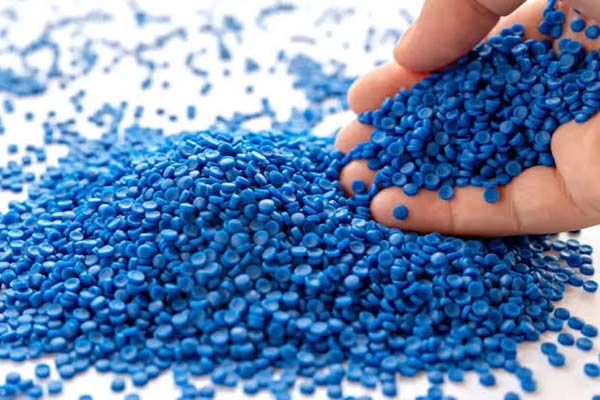
plastic granules


Why Is GMS Used in So Many Applications?


The reason is its surface-active structure.

GMS contains a glycerol portion and a long fatty acid chain. This allows it to interact with different components in a formulation.
As a result, GMS can provide different functions depending on where it is used:
 
Application Typical Function
Bakery Emulsification, texture improvement
Ice cream Fat structure and texture control
Margarine and spreads Emulsification and structure
Cosmetics Emulsification, emollience
Pharmaceuticals Pharmaceutical aid, formulation support
Plastics Lubrication, dispersion, antistatic or processing support

These are general functions. The actual performance depends on the grade, dosage, formulation, and processing conditions.


GMS 40 vs. High-Purity GMS


Not all GMS products are the same. GMS 40 generally has a lower monoglyceride content than high-purity monoglyceride products. This can affect its performance, dosage requirements, and suitability for different applications.

A higher-purity product may be preferred when stronger or more predictable monoglyceride functionality is required. GMS 40 may be attractive when the required performance can be achieved at a more economical cost. Therefore, manufacturers should compare products based on specification and application performance, not only price.

Food-Grade GMS 40 vs. Industrial-Grade GMS


This distinction is particularly important when purchasing GMS for international production. Food-grade GMS 40 must meet the requirements applicable to food ingredients in the target market.
Cosmetic, pharmaceutical, or industrial grades may have different purity requirements, specifications, manufacturing standards, and permitted applications. Therefore, manufacturers should not select a GMS product solely because the chemical name appears similar.

Before purchasing, request the technical data sheet, specification, certificate of analysis, and relevant regulatory or compliance documents. If the material will be used outside food production, confirm that the supplier specifically supports the intended application.

Frequently Asked Questions


Is GMS 40 the same as GMS?


Not exactly. GMS is a general abbreviation for glycerol monostearate, while GMS 40 normally identifies a specific grade with around 40% monoglyceride content. The exact specification should be confirmed with the supplier.

Is GMS 40 the same as E471?


No. E471 is a broader food additive category covering mono- and diglycerides of fatty acids. GMS refers specifically to glycerol monostearate. The exact composition should be checked on the product specification.


What is GMS 40 mainly used for?


GMS 40 can be used in food applications such as bakery products, ice cream, and fat-based spreads. Depending on the grade and specification, related glyceryl monostearate products are also used in cosmetics, pharmaceuticals, plastics, and other industrial applications.

Can food-grade GMS 40 be used in cosmetics?


Not automatically. Cosmetic applications have their own specification and regulatory requirements. A food-grade GMS 40 should only be used when its documentation confirms suitability for the intended cosmetic application.

Is GMS 40 suitable for ice cream?


It can be suitable for some ice cream formulations. Its performance depends on monoglyceride content, fat composition, stabilizers, processing conditions, and dosage. Testing in the actual formulation is recommended.


Is GMS 40 suitable for pharmaceuticals?


Not every GMS 40 product is suitable for pharmaceutical use. Pharmaceutical applications require the appropriate grade, specifications, and regulatory documentation.

Final Thoughts  


GMS 40 is mainly used as a functional ingredient that helps control emulsification, texture, fat behavior, lubrication, or dispersion. Its applications include bakery products, ice cream, margarine and spreads, cosmetics, pharmaceuticals, plastics, and other formulations. The specific function changes according to the product and processing system.

For manufacturers, choosing GMS 40 should start with the application, not simply the product name. Check the monoglyceride content, technical specifications, regulatory requirements, and actual application performance before purchasing.

CHEMSINO supplies food-grade GMS and other food emulsifiers for bakery, ice cream, margarine, spreads, confectionery, and other food applications. Contact us at info@cnchemsino.com for product specifications, samples, and technical support.
Start earning substantial
profits in your country today!
Email
Whatsapp