Home
Products
Emulsifier List
Application
Gallery
News
Blog
About Us
About Us
Contact Us
Your Position : Home > Blog

What Does DMG Actually Do in Bread?

Date:2026-09-14
Read:
Share:
DMG appears on bread labels as "mono- and diglycerides of fatty acids." It's in virtually every commercial sandwich bread, burger bun, and dinner roll on the market. Most people who work in baking know it's an anti-staling agent. Far fewer know exactly why it works, why the purity of the DMG matters, or why the same dosage produces different results depending on how it's added.

This article answers the question completely — the mechanism, the variables that determine effectiveness, and the practical implications for commercial bread production.

What DMG Is? 


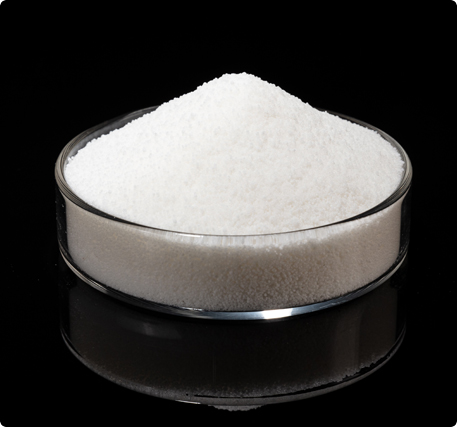
DMG stands for Distilled Monoglyceride. It is produced by reacting glycerol with a fatty acid — typically stearic acid (C18:0) from palm or sunflower oil — to form a monoglyceride, then concentrating the monoglyceride fraction through molecular distillation to 90% purity or above.

The distillation step is what separates DMG from standard Glycerol Monostearate (GMS). Crude glycerol esterification produces a mixture of mono-, di-, and triglycerides. Standard GMS contains 40–60% monoglycerides. DMG removes the di- and triglycerides, leaving 90–95%+ monoglycerides.

This purity difference is not cosmetic. Diglycerides cannot perform the key functions of monoglycerides in bread — and they actively interfere with them. More on that below.


The Problem DMG Solves: Bread Staling


To understand what DMG does, you first need to understand what happens when bread goes stale — because staling is not what most people think it is.

Bread does not go stale by drying out. A loaf sealed in plastic loses almost no moisture yet becomes firm within days. What's happening is a structural change in the starch.

During baking, starch granules absorb water, swell, and gelatinize. The amylose component — the straight-chain fraction of starch — unwinds from the granule and disperses into the crumb matrix. During cooling and subsequent storage, these amylose chains realign and recrystallize with each other through hydrogen bonding. This process is called retrogradation, and it converts soft, springy crumb to the firm, dense texture we recognize as stale bread.

Retrogradation of amylose happens fast — mostly within the first 24 hours. Retrogradation of amylopectin (the branched fraction) is slower, continuing over days and weeks. Both contribute to staling, but amylose retrogradation is responsible for the sharpest texture change in the early shelf life period.

How DMG Slows Staling


DMG works by intercepting amylose before it can recrystallize.

The monoglyceride molecule has a specific geometry: a glycerol backbone, one long fatty acid chain, and two free hydroxyl groups. The fatty acid chain (in the case of stearate-based DMG, a straight C18:0 chain) is non-polar and hydrophobic. The amylose helix coils into a hollow cylinder with a hydrophobic interior, which can accommodate this fatty acid chain in its core.

When DMG is present during starch gelatinization and amylose chain unwinding, the fatty acid chains insert into the amylose helices, forming amylose-lipid inclusion complexes. These are stable, helical structures where the amylose chain is wrapped around the monoglyceride's fatty acid tail.

Amylose in complex with a monoglyceride molecule cannot participate in retrogradation. The inclusion complex is more stable than the retrograded crystalline structure, so the amylose stays complexed rather than recrystallizing. The more amylose that forms complexes with DMG, the slower the crumb firms.

The key numbers: Bread made with high-purity DMG at 0.3–0.5% (flour basis) typically shows 30–50% lower crumb firmness at day 3 and day 5 compared to bread without DMG, as measured by Texture Profile Analysis. This is a meaningful commercial difference — the gap between a product that meets a 7-day softness specification and one that doesn't.


Why Diglycerides Can't Do What Monoglycerides Do? 


This is the part that explains why purity matters.

Forming an inclusion complex with amylose requires a single, straight fatty acid chain that can fit inside the amylose helix. Diglycerides have two fatty acid chains. The geometry doesn't fit — the second chain creates steric interference that prevents the molecule from inserting into the amylose helix.

So diglycerides cannot form amylose inclusion complexes. But they don't just fail to help — they compete with monoglycerides for the same interface space at starch granule surfaces, without providing the complexation benefit. They dilute the effective concentration of active monoglycerides in the system.

In practical terms: a product containing 1g of standard GMS at 50% monoglycerides delivers 0.5g of active monoglyceride and 0.4–0.45g of interfering diglycerides. The same weight of high-purity DMG at 90% monoglycerides delivers 0.9g of active monoglyceride and less than 0.05g of diglycerides.

This is why switching from high-purity DMG to standard GMS at the same dosage — without adjusting the formula — consistently produces faster staling. It's not that GMS is a different molecule. It's that the active ingredient concentration is half, and the inactive fraction actively interferes.

Does DMG Do Anything Else in Bread?


Anti-staling is DMG's primary function in bread, but it has secondary effects worth knowing:

Fat emulsification. In enriched doughs — brioche, sweet rolls, milk bread — DMG helps distribute fat through the dough matrix, contributing to finer crumb structure and more uniform fat distribution. This is a less important function than anti-staling in lean bread but meaningful in high-fat formulations.

Crumb softening beyond anti-staling. DMG contributes to initial crumb softness through its effect on starch gelatinization. Bread crumb gelatinized in the presence of DMG has a slightly different texture on day 1 compared to bread without DMG — softer and more elastic — independent of the anti-staling effect.

Minor gluten effect. Unlike SSL and DATEM, DMG does not significantly strengthen the gluten network. It is not the emulsifier to reach for when the problem is low loaf volume or poor gas retention. Those functions belong to SSL and DATEM.

DMG in the Context of the Full Emulsifier System


In commercial bread, DMG is rarely used alone. The standard combination is:
# DMG (0.3–0.5% flour basis): Anti-staling via starch complexation
# SSL (0.25–0.5% flour basis): Gluten strengthening, volume, gas retention
# DATEM (0.25–0.4% flour basis, where applicable): Dough extensibility, freeze-thaw stability
Each emulsifier works on a different structural element. DMG works on starch. SSL and DATEM work on gluten. Because their targets don't overlap significantly, they complement rather than compete. The combination addresses both the structural (SSL/DATEM) and shelf life (DMG) dimensions of bread quality simultaneously.

Removing DMG from this system while keeping SSL and DATEM produces bread with good initial volume and crumb structure that stales faster than specification. Removing SSL while keeping DMG produces bread that stays soft at the crumb level but has lower volume and less uniform structure. The full system is greater than the sum of its parts.

Practical Dosage and What Affects It

 
Variable Effect on Required DMG Dosage
Target shelf life Longer shelf life → higher dosage
Flour protein content Higher protein → slightly lower DMG needed (less starch dilution)
Added protein ingredients Higher added protein → higher DMG needed (more competition for starch interface)
DMG monoglyceride purity Lower purity → higher dosage needed (recalculate on active MG content)
Alpha-gel vs. dry powder Alpha-gel → same or lower dosage for equivalent effect
Baking temperature and time Higher temperature → more effective complexation (higher dosage less critical)

The baseline for standard white sandwich bread is 0.3–0.4% DMG at 90%+ monoglyceride content, added as alpha-gel. Adjustments from this baseline follow the factors above.


Frequently Asked Questions


Is DMG the same as GMS? They're related but not equivalent. Both contain monoglycerides, but DMG is purified to 90%+ monoglycerides through molecular distillation, while standard GMS contains only 40–60% monoglycerides. The rest of standard GMS is diglycerides, which cannot perform the anti-staling function and interfere with the monoglycerides that can. For bakery applications where anti-staling is the goal, high-purity DMG is the correct specification.

Can I use DMG to fix a volume problem in bread? No. DMG works on starch, not gluten. If the problem is low loaf volume or poor oven spring, the emulsifier to adjust is SSL (which binds to gluten proteins) or DATEM (which modifies gluten viscoelasticity). DMG will not improve volume.

How do I know if my DMG is in the right crystal form? In practice, most manufacturers don't test crystal form on incoming material — the test requires X-ray diffraction or DSC, which are not routine QC tools in a bakery. The practical solution is to use alpha-gel preparation consistently (controlling the crystal form through the preparation process) rather than relying on the dry powder to be in the right form.

What is the maximum permitted level of DMG in bread? In the US, mono- and diglycerides are GRAS under 21 CFR 184.1505 — permitted at levels consistent with good manufacturing practice, without a specific maximum. In the EU, E471 is permitted in bread under Regulation (EC) No 1333/2008 at quantum satis (the minimum amount needed to achieve the technical effect). Typical commercial dosages (0.3–0.5% flour basis) are well within these limits in all markets.

Does DMG affect bread flavor? At normal dosage levels (0.3–0.5% flour basis), DMG has no detectable effect on bread flavor. At excessive dosage — particularly with low-purity material — slight off-notes from the diglyceride fraction can be detectable in some formulations. This is another argument for using high-purity DMG at correct dosage rather than compensating with excess standard GMS.

Regulatory and Labeling

 
Market Designation Label Declaration
USA GRAS — 21 CFR 184.1505 "Mono- and diglycerides"
EU E471 "Mono- and diglycerides of fatty acids"
JECFA (WHO/FAO) ADI "not specified"

The label declaration "mono- and diglycerides of fatty acids" covers both standard GMS and high-purity DMG. There is no regulatory distinction between purity grades — the performance difference is invisible to regulators and consumers but fully measurable in shelf life data.


Working with CHEMSINO on DMG for Bread


CHEMSINO manufactures high-purity DMG — 90%+ monoglyceride content confirmed by GC assay — for commercial bread and bakery customers. We supply DMG in dry powder and flake form, and provide alpha-gel preparation guidance for customers who want to maximize anti-staling performance.

Emulsifiers are our only business. Our technical team works with DMG specifically in bread applications — answering dosage questions, helping with grade selection between standard GMS and high-purity DMG, and troubleshooting shelf life problems where the emulsifier system is the variable.

Every batch ships with a full CoA including actual monoglyceride content by GC assay, acid value, saponification value, iodine value, and moisture. Samples are available for trial baking before any purchase commitment.
Start earning substantial
profits in your country today!
Email
Whatsapp