Home
Products
Emulsifier List
Application
Gallery
News
Blog
About Us
About Us
Contact Us
Your Position : Home > Blog

Emulsifiers Oils, Fats, and Spreads: Functions and Applications

Date:2026-10-30
Read:
Share:
Oils and fats are widely used in margarine, shortening, peanut butter, chocolate spreads, and other food products. However, maintaining a smooth texture, uniform fat distribution, and stable emulsion can be challenging during production.

Food emulsifiers help solve these problems. They improve the interaction between oil and water, control texture, and support product stability. Different emulsifiers offer different benefits, so choosing the right one depends on the product formulation and production requirements.

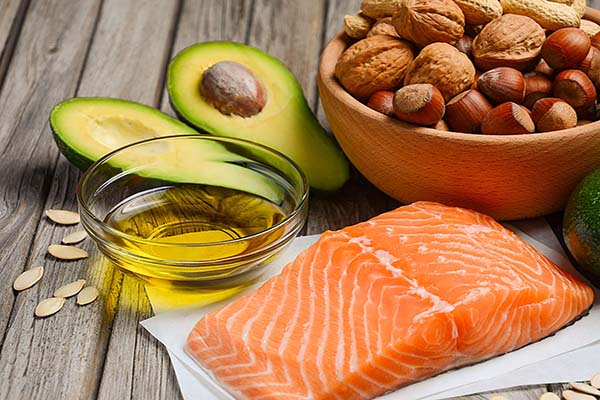
/oil and fats


Why Are Emulsifiers Used in Oils, Fats, and Spreads?


Oil and water naturally separate when mixed. Emulsifiers help stabilize the interface between them, making it easier to produce consistent food products.

In oils, fats, and spreads, emulsifiers are mainly used to:

# Improve emulsion stability and reduce phase separation.
# Create a smooth and uniform texture.
# Improve fat distribution and ingredient dispersion.
# Influence fat crystallization and product structure.
# Improve processing performance and product consistency.

The results depend on the emulsifier, formulation, and processing conditions.

Common Emulsifiers for Oils, Fats, and Spreads


Different food emulsifiers have different functional properties and applications.
 
Emulsifier Main Functions Typical Applications
GMS Supports emulsification and texture control Margarine, spreads, and bakery fats
DMG Helps control fat and starch interactions Bakery spreads and fat-based fillings
PGE Helps stabilize selected food emulsions Margarine and fat-based products
Lecithin Improves ingredient dispersion and reduces viscosity Chocolate, peanut butter, and spreads
PGPR Reduces yield stress and improves flow Chocolate and compound chocolate
Polysorbates Supports emulsification in suitable formulations Selected fat-containing products

The best emulsifier depends on the type of food, fat composition, and desired texture.


Practical Applications of Food Emulsifiers


1. Margarine and Shortening


Margarine is typically a water-in-oil (W/O) emulsion, with small water droplets distributed throughout a continuous fat phase. A stable structure is essential for good texture, spreadability, and storage quality.
GMS and certain polyglycerol esters (PGE) can help improve emulsification and influence fat crystal structure. Lecithin may also be used in selected formulations.
In shortening production, emulsifiers are selected mainly to improve processing performance and achieve the required fat properties for baking.

2. Peanut Butter and Nut Spreads


Oil separation is a common problem in peanut butter. During storage, liquid oil may rise to the surface, making the product less uniform and harder to spread.
Lecithin is commonly used to improve ingredient dispersion and flow properties. It helps create a smoother texture and makes peanut butter easier to process.
However, emulsifiers alone cannot completely prevent oil separation. Particle size, fat composition, and storage conditions also play important roles.

3. Chocolate Spreads and Fat-Based Fillings


Chocolate spreads and cream fillings often contain vegetable oils, cocoa, sugar, and milk powders. Manufacturers need to maintain a smooth texture and suitable flow properties.
Lecithin helps improve ingredient dispersion and reduce viscosity. GMS and other suitable emulsifiers may also be used depending on the formulation.
For manufacturers, the main goals are consistent texture, easy processing, and good product quality during storage.

4. Compound Chocolate and Chocolate Coatings


Viscosity is an important factor in compound chocolate production. Chocolate that is too thick can cause problems during pumping, depositing, and coating.
Lecithin and PGPR are two commonly used emulsifiers, but they work in different ways.
Lecithin improves particle wetting and dispersion, helping reduce viscosity. PGPR mainly reduces yield stress, allowing chocolate to flow more easily.
Some manufacturers combine the two to achieve better flow properties. The appropriate ratio depends on the chocolate formulation and processing requirements.

How to Choose the Right Emulsifier


Selecting an emulsifier requires more than looking at its general function. Manufacturers should consider several factors:

1. Emulsion type: Determine whether the product is oil-in-water (O/W) or water-in-oil (W/O). Different emulsifiers are suitable for different systems.
2. Fat composition: Different oils and fats have different melting points and crystallization properties, which can affect emulsifier performance.
3. Desired texture: Consider whether the product needs better spreadability, smoothness, stability, or flow properties.
4. Processing conditions: Mixing temperature, cooling rate, and storage conditions can all affect the final product.
5. Product specifications: Check the emulsifier's technical data sheet (TDS), certificate of analysis (COA), recommended applications, and applicable food regulations.

Small-scale formulation trials are recommended before introducing a new emulsifier into commercial production.

Conclusion


Food emulsifiers help improve the stability, texture, and processing performance of oils, fats, and spreads. GMS and PGE are used in selected margarine formulations, lecithin is common in peanut butter and chocolate, while PGPR helps control chocolate flow properties.

Choosing the right emulsifier depends on the product formulation and manufacturing process. Understanding the functions of each emulsifier can help food manufacturers achieve more consistent results.
CHEMSINO offers a range of food emulsifiers for different food manufacturing applications. Contact us to learn more about our products and find suitable solutions for your production needs.

Frequently Asked Questions


What emulsifiers are commonly used in margarine?

GMS and certain polyglycerol esters are used in margarine production to support emulsification and product texture. The choice depends on the fat composition and desired product properties.

Which emulsifier is used in peanut butter?

Lecithin is commonly used to improve ingredient dispersion and flow properties, helping produce smoother peanut butter.

What is the difference between lecithin and PGPR in chocolate?

Lecithin mainly reduces viscosity by improving particle dispersion, while PGPR reduces yield stress and improves chocolate flow.

Can GMS be used in fat-based food products?

Yes. GMS is used in selected margarine, spread, and other fat-containing food formulations. Its performance depends on the specific grade and recipe.

How do emulsifiers help prevent oil separation?

Emulsifiers help stabilize oil-water interfaces in suitable food systems. However, oil separation can also be affected by fat composition, particle size, and storage conditions.
Related Blog
What are Span 60 and Tween 60
What are Span 60 and Tween 60?
31 Dec 2025
Span 60 and Tween 60 are widely used non-ionic emulsifiers in food, cosmetic, and pharmaceutical formulations. Although both are derived from sorbitan monostearate, they differ significantly in solubility, HLB value, and emulsion type. This article explains what Span 60 and Tween 60 are, compares their key differences, and explores how they can be used individually or together to improve texture, stability, and shelf life in industrial formulations.
glycerol monolaurate functions and applications
Glycerol Monolaurate (GML): Properties, Functions, and Applications
06 Mar 2026
Glycerol Monolaurate (GML) is a versatile food ingredient that functions as both an emulsifier and a broad-spectrum antimicrobial agent. Its unique combination of emulsifying, antibacterial, and anti-inflammatory properties allows it to perform multiple roles in a single formulation, making it valuable for bakery, beverage, dairy, and nutritional products. GML helps improve texture, extend shelf life, and support food safety in a wide range of applications.
Monoglyceride: Key Properties, Uses, and Considerations
26 Aug 2024
Distilled Monoglyceride (DMG) is a vital food additive and industrial auxiliary agent. It is extensively used across various industries, including food, plastics, and cosmetics. Its unique physical and chemical properties make it indispensable in these sectors. This article provides a detailed overview of the characteristics, applications, and considerations related to distilled monoglycerides, helping readers gain a better understanding of how to effectively utilize this substance.
Start earning substantial
profits in your country today!
Email
Whatsapp