Home
Products
Emulsifier List
Application
Gallery
News
Blog
About Us
About Us
Contact Us
Your Position : Home > Blog

Emulsifiers in Fat Reduction Formulations

Date:2026-03-16
Read:
Share:
When fat is reduced in a food formulation, emulsifiers step in to rebuild what's lost — texture, stability, mouthfeel, and shelf life. This article covers how emulsifiers work in reduced-fat systems, which ones are most commonly used, and what to consider when applying them across different food categories.
 

Why Fat Is Hard to Replace


Fat contributes creamy mouthfeel, smooth texture, and rich flavor release. It also stabilizes emulsions and helps retain moisture throughout a product’s shelf life. When fat is removed without adjusting the formulation, these properties decline quickly.

For example, reducing fat from 10% to 3% in ice cream changes how the emulsion behaves, how ice crystals develop, and how the product feels in the mouth. In reduced-fat cakes, removing shortening affects air cell stability, crumb softness, and freshness during storage.

Although the specific challenges differ by product, the core issue is the same: fat performs multiple functional roles in a formulation.

Emulsifiers help compensate by supporting key functions such as emulsion stabilization, air incorporation, and moisture management.


How Emulsifiers Compensate for Reduced Fat


Stabilizing the Emulsion


In sauces, dressings, and dairy alternatives, lowering fat changes the oil-to-water ratio and can lead to separation during storage.

Emulsifiers position themselves at the oil-water interface and create a protective layer around oil droplets, preventing them from merging. This keeps the product stable and visually consistent even at lower fat levels.

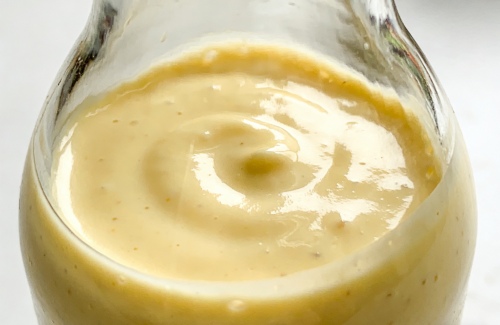
For example, in a low-fat salad dressing, lecithin combined with polysorbate 80 can stabilize an oil-in-water emulsion at much lower oil concentrations.

low-fat salad dressing


Rebuilding Creamy Mouthfeel


Creaminess is strongly influenced by fat droplet size and distribution. Smaller, evenly dispersed droplets create a smoother and richer sensory perception.

Emulsifiers improve droplet dispersion during processing, helping reduced-fat products maintain a creamy mouthfeel despite lower fat levels. This is why well-formulated low-fat yogurt or creamer can still feel smooth and satisfying.


Maintaining Texture and Structure in Bakery


In baked products, fat normally lubricates the gluten network, stabilizes air cells, and helps keep the crumb soft. When fat is reduced, these functions must be replaced.

Mono- and diglycerides (DMG/E471) interact with starch and slow retrogradation, helping retain moisture and softness. DATEM (E472e) strengthens the gluten network and stabilizes gas cells, supporting loaf structure when fat levels are reduced.

In a reduced-fat sandwich bread formula, using DMG at 0.3–0.5% of flour weight alongside DATEM at 0.2–0.4% can largely compensate for texture losses when shortening is significantly reduced.


Supporting Shelf Life


Reduced-fat products sometimes have shorter shelf lives because fat normally slows moisture migration and structural changes.

Emulsifiers help maintain balanced water distribution within the product, which slows texture deterioration and improves storage stability. In packaged baked goods, this can extend ambient shelf life from about five days to around ten days, depending on the formulation.


Common Emulsifiers Used in Fat Reduction Formulations


Mono- and diglycerides (E471)


Widely used in reduced-fat bakery, dairy, and spreads. They improve crumb softness, moisture retention, and emulsion stability. Typical bakery usage is 0.3–0.5% of flour weight.

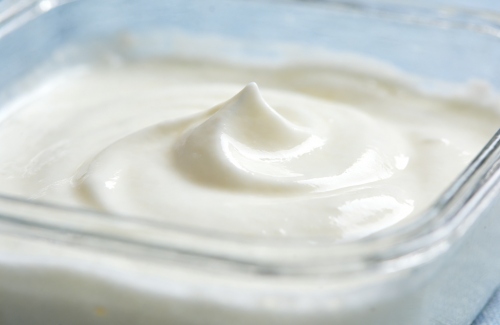
reduced-fat dairy


Polysorbates (such as Polysorbate 80, E433)


Effective in beverages, dairy products, and sauces where stable emulsions are required at low oil levels. Often used in low-fat ice cream and non-dairy creamers.
 

Lecithin (E322)


A natural emulsifier used in chocolate, bakery, and dressings. It improves fat dispersion and batter smoothness and is commonly chosen for clean-label formulations.
 

DATEM (E472e)


Widely used in bread to strengthen dough structure when fat levels are reduced, improving oven spring and crumb consistency.
 

SSL — Sodium Stearoyl Lactylate (E481)


Improves crumb softness and batter stability. It works well with DMG in reduced-fat bakery formulations and can also be used in dairy systems.
 

Applications Across Food Categories


In reduced-fat bakery, emulsifiers are usually combined. DMG supports moisture retention and anti-staling, while DATEM or SSL improves dough strength and loaf volume.

In low-fat dairy and dairy alternatives, polysorbates and mono- and diglycerides help maintain smooth texture and prevent phase separation in products such as low-fat ice cream, creamers, and plant-based yogurts.

In sauces and dressings, lecithin and polysorbate 80 stabilize oil-in-water emulsions at reduced oil levels. Achieving small, uniform droplets requires both the right emulsifier and sufficient mixing shear.

In plant-based foods, emulsifiers help recreate the creamy texture typically provided by animal fats. This is one of the fastest-growing application areas and often requires balancing functionality with clean-label expectations.

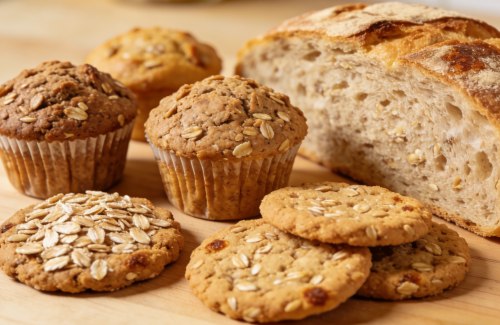
 reduced-fat bakery products


Formulation Considerations


Emulsifiers are rarely the only adjustment in a reduced-fat formulation. Food technologists often combine them with hydrocolloids such as xanthan gum or carrageenan to improve body and stability.

Other factors may also be adjusted, including water content, protein levels, and processing conditions. The optimal emulsifier and dosage depend on the product type, the degree of fat reduction, and the desired shelf life.

A practical approach is to first identify the main function fat provides — structure, emulsion stability, or mouthfeel — and then select emulsifiers that best replace that function.


Conclusion


Reducing fat while maintaining product quality requires thoughtful formulation. Emulsifiers help stabilize emulsions, rebuild mouthfeel, maintain structure, and support shelf life in reduced-fat foods — roles normally performed by fat itself.

Choosing the right emulsifier, at the correct dosage and for the right application, is essential for developing successful reduced-fat products.

Chemsino supplies a full range of food-grade emulsifiers for fat-reduction applications, including DMG, DATEM, SSL, and Polysorbates. Contact us for more details or request samples.
Start earning substantial
profits in your country today!
Email
Whatsapp