
Key Cold Chain Considerations for Food Emulsifiers
Date:2026-03-23
Read:
Share:
Cold chain management is usually linked to products like meat, dairy, and frozen foods. But food emulsifiers—whether powders, flakes, or liquids—are also sensitive to temperature and moisture, just in less obvious ways. When they are damaged by heat or humidity, you won’t see clear signs like spoilage. Instead, the problem shows up later during production, such as poor texture, weak aeration, or unstable emulsions.
Understanding how emulsifiers react to temperature, humidity, and transport conditions is important for anyone buying or storing them. This blog explains the key cold chain points to watch—what can go wrong, why it happens, and what to check before using the product.
Why Temperature Control Matters for Emulsifiers
Emulsifiers are functional ingredients. Their value isn't just in what they are — it's in how they perform in your formulation. Temperature affects four things directly: physical form, dispersibility, melting and crystallization behavior, and shelf-life consistency.
A slightly degraded emulsifier might still look fine when it arrives. The problem only surfaces when it fails to deliver the expected crumb softness in your bread, or the emulsion breaks in your sauce, or your cake volume drops by 10% with no obvious explanation. At that point, the root cause is hard to trace — which is exactly why cold chain discipline matters upstream.
Solid Emulsifiers: Cool and Dry, Not Refrigerated
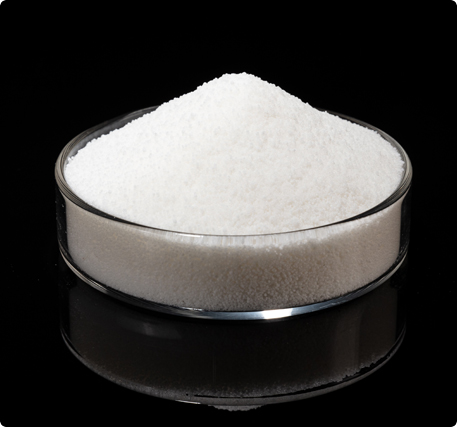
Solid emulsifiers — including E471 (mono- and diglycerides), DATEM (E472e), and SSL (E481) — are typically supplied as powders, flakes, or beads. They don't require refrigeration, but they do require stable, controlled conditions.
The main risks are moisture absorption and partial melting. Most solid emulsifiers have melting points in the 55–70°C range, which sounds safe, but warehouse temperatures in tropical or summer conditions can push surface temperatures higher than expected, especially in unventilated containers or near heat sources. Even without full melting, softening at the particle level leads to clumping and caking, which disrupts dosing accuracy on your production line.
The other risk is condensation. If the product heats up during loading and then cools rapidly in a refrigerated container or cold warehouse, moisture condenses inside the packaging. This is a common cause of caking that gets misidentified as a quality problem when it's actually a handling problem.
Practical standard: Store below 25°C, in a dry, well-ventilated area. Keep pallets off the floor. Check warehouse humidity as carefully as you check temperature — high humidity at moderate temperatures causes as much damage as heat.
At low temperatures, viscosity increases significantly, which affects pumpability and accurate dosing in production. At freezing temperatures, some liquid emulsifiers undergo phase separation that doesn't fully reverse on rewarming. The product may appear normal, but perform inconsistently.
At high temperatures, oxidation and hydrolysis accelerate, shortening functional shelf life even if the product is still within its stated expiry date.
Practical standard: Store liquid emulsifiers between 15–25°C. Never allow freezing. For international shipments crossing climate zones, insulated packaging or temperature-monitored containers are worth the cost.
The Biggest Risk in Real Logistics: Temperature Cycling
In practice, the most damaging scenario isn't sustained heat or cold — it's repeated temperature fluctuation. A shipment that heats during loading, cools during ocean transit, warms again at port, and cools in a warehouse has gone through multiple cycles by the time it reaches your facility.
Each cycle creates an opportunity for condensation, particle-level structural changes, and gradual performance degradation. The product may still test within specification on basic quality checks — but its functional behavior in your formulation has shifted.
This is why working with suppliers who understand logistics — not just chemistry — matters. Consistent packaging standards, proper sealing, and moisture-resistant materials are the difference between a product that travels well and one that doesn't.
What to Check When a Shipment Arrives
Don't rely on documentation alone. A quick physical check at receiving catches most cold chain issues before they reach your production floor.
For solid emulsifiers: check that the powder or flake is still free-flowing. Any caking, clumping, or hardening indicates moisture exposure or temperature stress during transit. Check for color changes — yellowing or darkening in white emulsifier powders is a sign of heat damage or oxidation.
For liquid emulsifiers: check viscosity. If it pours significantly slower than normal, the product may have been exposed to cold. Check for any visible separation or cloudiness, which can indicate phase instability.
If you find issues, document them with photos before opening packaging — this protects your claim with the supplier and helps identify where in the cold chain the problem occurred.
Conclusion
Cold chain management for food emulsifiers comes down to three things: temperature stability (not refrigeration, but consistency), moisture control, and proper packaging for the shipping route. Most emulsifier performance problems traced back to storage or transport are preventable with the right handling standards in place. Small discipline in the cold chain reliably prevents larger problems in production.
Chemsino ships E471, DATEM, SSL, polysorbates, whipping cream powder, and other food-grade emulsifiers globally, with consistent packaging standards and clear storage guidance for every product. Contact us to discuss your shipment requirements or request samples.