Home
Products
Emulsifier List
Application
Gallery
News
Blog
About Us
About Us
Contact Us
Your Position : Home > Blog

DMG vs GMS: What's the Difference?

Date:2026-06-24
Read:
Share:
DMG and GMS appear on supplier catalogs and ingredient specs, sometimes listed as alternatives, sometimes as if they're the same thing. They're not — and substituting one for the other without adjusting your formulation is one of the more common reasons baked goods go stale faster than expected, or whipped toppings collapse on the shelf.

This article explains the actual difference, why it matters functionally, and which one belongs in which application. 

What are DMG and GMS?


Both DMG and GMS are monoglycerides. Both are made by esterifying glycerol with fatty acids from vegetable sources like palm oil. The confusion comes from the fact that the two names describe different things about the same molecule.

GMS (Glycerol Monostearate) identifies the molecule by its fatty acid: one stearic acid chain (C18:0) attached to glycerol. The name says nothing about purity.

DMG (Distilled Monoglyceride) identifies the molecule by its manufacturing process: the crude glycerol ester mixture is put through molecular distillation to concentrate the monoglyceride fraction to 90%+ purity, removing the di- and triglycerides that dilute functional performance.

A distilled monoglyceride based on stearic acid is technically both — it's GMS by composition and DMG by purity. The problem is that commercial "GMS" products vary enormously: some contain 40–50% monoglycerides, others 90%+. When a supplier lists "GMS 90" or "Distilled GMS," they mean the same thing as DMG. Standard GMS without a purity qualifier is a much less concentrated product.
That purity gap is where most formulation problems originate.

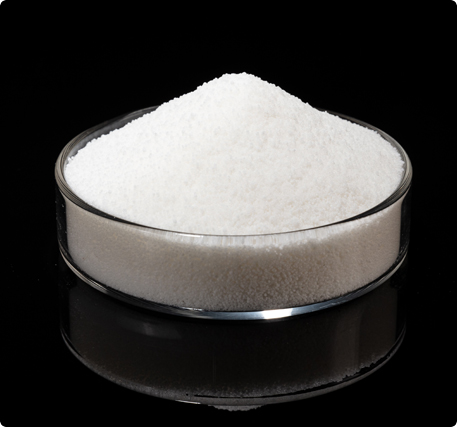
DMG Distilled Monoglycerides Powder


Key Differences at a Glance

 
Property Standard GMS DMG (Distilled Monoglyceride)
Monoglyceride content 40–60% 90–95%+
Di- and triglyceride content 30–50% < 5%
Active emulsifier content Lower Higher
Emulsification efficiency Moderate High
Crystal form control Less precise More precise
HLB ~3.8 ~3.5–3.8
Typical usage level Higher Lower
Cost Lower Higher

Why Purity Changes Everything?


The monoglyceride fraction does the work. Di- and triglycerides are largely inert as emulsifiers — they dilute the active component and interfere with the crystal structures that determine functional performance.
Three mechanisms are directly affected by purity:

Starch complexation. In bread, monoglycerides form helical inclusion complexes with amylose, blocking the starch retrogradation that makes bread go stale. Di- and triglycerides can't participate in this complexation. Lower monoglyceride purity means weaker, less consistent anti-staling — even at the same total addition level.

Alpha-crystal formation. Monoglycerides can exist as alpha (α), beta-prime (β'), or beta (β) polymorphs. The alpha form is the most surface-active and functionally useful, particularly for aeration and emulsification. High-purity DMG forms and maintains the alpha crystal structure more reliably than standard GMS. This is why DMG is typically hydrated into an alpha-gel before use in bakery and dairy applications — a step that doesn't work predictably with lower-purity material.

Interfacial film stability. In whipped and aerated products, monoglycerides migrate to the fat-water interface and form a protective film around air bubbles. Di- and triglycerides disrupt this film. The result of using standard GMS in a whipped topping isn't just slightly less stable foam — it's unpredictable foam that may perform fine one batch and collapse the next.

Which One for Which Application


Bread and Rolls


Use DMG. Starch complexation is the mechanism, and it requires high monoglyceride purity. DMG at 0.3–0.5% (flour basis) consistently extends softness over shelf life. Standard GMS at the same addition level delivers roughly half the active monoglyceride — not enough to achieve the same effect without increasing the dosage, which raises cost and may affect dough handling.

Whipped Toppings and Non-Dairy Cream


DMG is required. Alpha-gel formation is critical for foam stability and overrun. Standard GMS doesn't reliably produce the alpha-crystal structure this application depends on. This is not a premium-vs-standard trade-off — standard GMS simply doesn't function the same way here.

Ice Cream and Frozen Desserts


Use DMG. Monoglycerides control partial fat coalescence — the process that builds ice cream's texture and melt resistance. High-purity DMG enables consistent fat network formation. Standard GMS produces variable results, which translate to variable texture and melt behavior across production runs.

Cakes and Chemically Leavened Products


Both work; DMG for premium products. Monoglycerides improve fat emulsification and crumb structure in cakes. Standard GMS is common in cost-sensitive formulations. DMG is preferred where shelf life and crumb consistency are specified requirements.

Margarine and Spreads


Standard GMS is acceptable for commodity products; DMG for texture-critical applications. Both stabilize water-in-fat emulsions. DMG produces more consistent fat crystal behavior and smoother mouthfeel. Standard GMS is adequate where exact texture is less critical.

Compound Coatings and Confectionery


Standard GMS is often sufficient. For viscosity reduction and basic fat crystal control in compound coatings, standard GMS works in most formulations. DMG is used where gloss, snap, or bloom resistance needs to be tightly controlled.


Substituting One for the Other: The Math That Gets Missed


If you need to substitute standard GMS for DMG — or vice versa — the active monoglyceride content must be recalculated.

Example: A bread formula calls for 0.4% DMG at 90% monoglyceride purity. That delivers 0.36% active monoglyceride (flour basis).
Replacing with standard GMS at 50% monoglyceride content at the same 0.4% addition delivers only 0.20% active monoglyceride — roughly half. To match the original performance, the GMS addition needs to increase to approximately 0.72%.

This adjustment is obvious when written out, but it's skipped constantly in practice — usually because the two products look similar, cost differently, and the person making the purchasing decision isn't the same person watching shelf life data come in six weeks later.

Regulatory Status


Both GMS and DMG are approved under the same regulatory frameworks. Neither requires separate labeling:
 
Region Status Reference
USA GRAS FDA 21 CFR 184.1505
EU Approved food additive (E471) Regulation (EC) No 1333/2008
International ADI "not specified" JECFA (WHO/FAO)

On a finished product label, both appear as "mono- and diglycerides of fatty acids" or "glyceryl monostearate." Regulators don't distinguish between purity grades. Your formulation outcomes will.


The Short Version

 
If your application needs... Use...
Anti-staling in bread DMG
Foam stability in whipped toppings DMG
Consistent texture in ice cream DMG
Cost-effective emulsification in margarine Standard GMS
Precise crystal control in premium coatings DMG
General emulsification in cake Either with dosage adjustment

 Working with CHEMSINO on GMS and DMG

Choosing between GMS and DMG is straightforward once the chemistry is clear. What's harder to control is lot-to-lot consistency — monoglyceride content, crystal form, fatty acid profile, and moisture all vary if manufacturing discipline isn't there. A DMG that tests at 88% monoglycerides in one lot and 93% in the next isn't the same product in practice, even if both pass specification.

CHEMSINO has focused exclusively on food-grade emulsifiers for over a decade — GMS, DMG, SSL, sorbitan esters, and related products. Because it's the only category we work in, our technical team knows these products in depth: how they behave at different usage levels, how they interact with other ingredients, and where standard GMS genuinely substitutes for DMG versus where it doesn't. When a customer comes to us with a formulation inconsistency, we diagnose the cause — we don't just offer a replacement product.

Every batch ships with a full Certificate of Analysis covering monoglyceride content, acid value, saponification value, iodine value, and moisture. Samples and technical datasheets are available before any purchase commitment.
Start earning substantial
profits in your country today!
Email
Whatsapp