Home
Products
Emulsifier List
Application
Gallery
News
Blog
About Us
About Us
Contact Us
Your Position : Home > Blog

Why HLB Value Matters in Food Emulsion Design

Date:2026-01-05
Read:
Share:
The HLB value is a simple numerical indicator, but it plays a crucial role in determining the interaction of emulsifiers with the oil and water phases, and is therefore essential for food emulsion formulation design.

This blog will explain the meaning of the HLB value, its relationship to different types of emulsions, how it affects food performance and importance, and how to use the HLB value to select or blend emulsifiers, thereby helping manufacturers produce stable, high-quality food products.


What Is HLB Value?


HLB stands for Hydrophilic–Lipophilic Balance. It is a numerical scale, typically ranging from 0 to 20, that indicates whether an emulsifier is more water-loving (hydrophilic) or oil-loving (lipophilic).

Low HLB (3–6): More oil-loving

Medium HLB (7–9): Balanced

High HLB (10–18): More water-loving

The HLB system was developed to give formulators a clearer, more predictable way to select emulsifiers, rather than relying only on trial and error. In food applications, this makes HLB especially valuable, as it helps predict whether an emulsifier will perform better in water-based systems or fat-rich systems.

Emulsions-types


HLB Value and Emulsion Type


Different food products require different emulsion structures, and the HLB value helps determine which emulsifier is suitable.
 

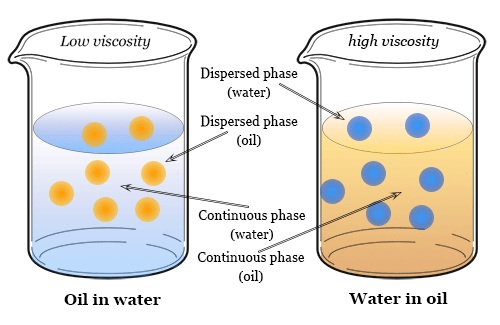
Water-in-Oil (W/O) Emulsions


Examples: Margarine, butter, fat spreads

Require: Low HLB emulsifiers

Typical emulsifiers:

Span series

Glycerol Monostearate (GMS)

These emulsifiers are more oil-soluble and help stabilize small water droplets within the fat phase, improving structure, spreadability, and stability.


Oil-in-Water (O/W) Emulsions


Examples: Beverages, sauces, dairy drinks

Require: High HLB emulsifiers

Typical emulsifiers:

Tween series (e.g., Tween 20)

DATEM (E472e)

High-HLB lecithin types

Using the wrong HLB value often leads to phase separation, creaming, or poor texture.

Dairy-drinks


How HLB Affects Food Product Performance


From a practical formulation perspective, emulsion stability depends on how effectively an emulsifier can reduce the tension between oil and water and form a protective layer around dispersed droplets.

When the HLB value is well matched to the emulsion type:

Oil and water remain evenly dispersed
Droplets resist coalescence
The product stays stable during storage

When the HLB value is not suitable, the emulsifier cannot fully protect the droplets, which often results in separation, cloudiness, or changes in texture over time.


Using HLB to Select or Blend Emulsifiers


Many food formulations use blended emulsifiers to achieve a specific target HLB value. By combining a low-HLB emulsifier (more oil-soluble) with a high-HLB emulsifier (more water-soluble), formulators can fine-tune emulsion stability, texture, and processing performance.

For example:

Glycerol Monostearate (GMS, low HLB) + Tween 20 (high HLB)

This combination allows formulators to adjust the overall HLB to match different food systems, such as dairy beverages, sauces, and bakery creams. GMS emulsifier helps improve structure and mouthfeel, while Tween 20 enhances dispersion and stability in water-based formulations.

This blending approach offers greater flexibility in emulsifier selection and helps achieve more consistent results across a wide range of food applications.


Why HLB Matters in Industrial Food Processing


In real-world production, food emulsions are exposed to heat, shear, pH changes, and long storage times. These conditions place stress on the emulsion system.

A well-matched HLB value helps emulsions remain stable under these conditions, reducing the risk of separation, quality complaints, and product loss. For manufacturers, understanding HLB means:

Faster formulation development
Fewer stability issues
More consistent product quality


Final Thoughts


The HLB value plays a crucial role in food emulsion formulation design. Whether you are developing beverages, dairy products, sauces, or baked goods, understanding the meaning of the HLB value, its relationship to emulsion type, and how it affects stability and processing performance, along with collaborating with a reliable ingredient expert, will help you select the appropriate emulsifier, thereby reducing formulation problems and achieving consistent results.
Start earning substantial
profits in your country today!
Email
Whatsapp