Home
Products
Emulsifier List
Application
Gallery
News
Blog
About Us
About Us
Contact Us
Your Position : Home > Blog

Key Specifications to Check When Buying CITREM E472c Emulsifier

Date:2026-03-02
Read:
Share:
CITREM E472c (citric acid esters of mono- and diglycerides) is a food-grade emulsifier formed by esterification of citric acid with monoglycerides and diglycerides of fatty acids. It has an HLB value between 3 and 8, and is more lipophilic than hydrophilic. It is commonly used in baked goods, margarine, meat products, confectionery, and plant-based foods.

This blog mainly discusses the key specifications that must be checked when purchasing CITREM E472c.


Key Specifications to Check When Buying CITREM E472c Emulsifier


1. Total Citric Acid Content: 13–50%


This is one of the most defining parameters of CITREM, and one that suppliers handle differently.

Citric acid is what gives CITREM its acidifying and chelating properties. A higher citric acid content generally means stronger emulsification activity and better performance in high-acid or sensitive food systems. For example, in meat emulsification, pH control matters.

What to check: Ask for the exact citric acid percentage in the COA, not just "within specification". A result around 29–32% is typical for a well-balanced, general-purpose CITREM. If your application requires more acidifying function (such as processed meats or coatings), you may want a product at the higher end of the range.

CITREM emulsifier in processed meat


2. Total Fatty Acid Content: 37–81%


Fatty acids are the lipid component of CITREM. They determine how well the emulsifier interacts with fats and oils in your formulation.

The specification range here is wide (37–81%), which reflects the diversity of CITREM grades available on the market. In practice, most commercial CITREM for food use falls in the 50–60% range for fatty acids.

Why it matters: If total fatty acid content is too low, CITREM emulsifier won't integrate well into fat-based systems like margarine or shortening. If it's unusually high, it may affect solubility and dispersibility in your process.

What to ask: Request the typical value from recent production batches, not just the spec range. A result around 53–55% is a reliable indicator of a well-manufactured product.


3. Total Glycerol Content: 8–33%


Glycerol is the backbone that links the fatty acids and the citric acid together in the CITREM molecule. The total glycerol content reflects the completeness of the esterification reaction during manufacturing.

Why it matters: Glycerol content affects the water-binding behavior of the emulsifier. In bakery applications, for example, adequate glycerol helps CITREM interact with both the starch and gluten matrix to improve dough consistency.

What to check: A typical result around 20–22% indicates a well-reacted product. Very low glycerol values may suggest incomplete synthesis, which can lead to inconsistent emulsification behavior.


4. Free Glycerol: 4.0% Maximum


This is a purity indicator. Free glycerol refers to glycerol that hasn't been chemically bound into the emulsifier structure — it's essentially a manufacturing by-product.

Why it matters: Excess free glycerol can cause issues in processing. It increases hygroscopicity (the product absorbs moisture more easily), which leads to clumping, caking, and reduced flowability during storage or blending. In some applications, it can also affect taste.

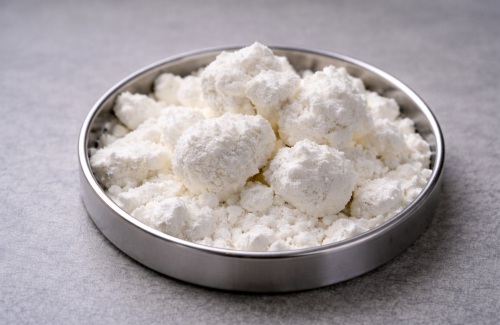
Clumped Citrem emulsifier

What to look for: The specification limit is 4.0% max. A quality product typically comes in well below this — around 2.5–3% is a sign of good manufacturing control.

Practical tip: If you're storing CITREM in a humid warehouse or blending it with other dry ingredients, free glycerol is especially worth watching. Ask your supplier for the actual tested value, not just confirmation it's "within spec".


5. Sulphated Ash: 10.0% Maximum


Sulphated ash measures the inorganic residue left after burning the sample — essentially, the mineral content. This is an indicator of how clean the raw materials and manufacturing process are.

Why it matters: High ash content points to impurities, likely from substandard raw material sourcing or inadequate refining steps. This can affect both the sensory properties of your final product and regulatory compliance.

What to check: The upper limit is 10.0%, but a well-made product should return a result well under 1% — typically around 0.4–0.5%. If a supplier shows you a result close to the 10% limit, that's a quality concern worth raising.


6. Heavy Metals (Lead/Pb)


Lead contamination in food ingredients can come from raw materials, processing, or storage. For CITREM E472c, the regulatory maximum is 2.0 ppm, but high-quality products should measure 0.1–0.2 ppm or lower.

What to check: Ensure the supplier provides a recent heavy metals test. For stricter markets like the EU or North America, also consider arsenic, cadmium, and mercury testing.


7. Physical Appearance and Particle Consistency


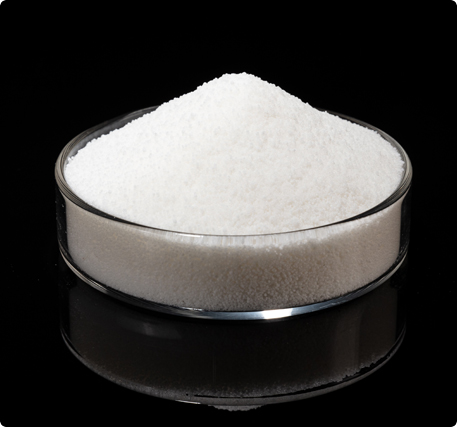
CITREM E472c should be a uniform white to off-white powder, free of lumps, discoloration, or off-odors. Clumping, yellowing, or a rancid smell can indicate moisture exposure, overheating, or aging.

What to do: Request a sample before large orders and check for:

# Uniform color (white to light ivory)
# Free-flowing, lump-free powder
# Neutral or faintly waxy smell

Physical inspection often reveals storage or handling issues before lab tests.

Normal CITREM E472c powder


Beyond the Spec Sheet: Additional Checks


Technical specifications are important, but other factors show whether a supplier is reliable for ongoing production:

Certifications: Look for current Halal, Kosher, ISO 9001/22000, and RSPO certificates if sustainable sourcing is relevant.

Documentation: A good supplier should provide COA, TDS, and MSDS promptly; delays can signal organizational issues.

Shelf Life & Storage: CITREM E472c usually lasts 12 months unopened, stored below 25 °C in a dry, ventilated area away from sunlight. Always check the manufacturing date.

Packaging: Standard packs are 25 kg; confirm if custom packaging is needed for your line or warehouse.


Quick Reference: CITREM E472c Specification Summary

 
Parameter Specification Typical Result
Appearance White to ivory powder White powder
Total Citric Acid 13–50% ~29–32%
Total Fatty Acid 37–81% ~53–55%
Total Glycerol 8–33% ~20–22%
Free Glycerol ≤4.0% ~2.5–3.0%
Sulphated Ash ≤10.0% <0.5%
Heavy Metals (Pb) ≤2.0 ppm <0.2 ppm


Final Thoughts


Selecting the right CITREM E472c is about more than the label — purity, acid/fat content, and supplier reliability are critical. Partnering with experienced suppliers like Chemsino, which provides food-grade CITREM and other emulsifiers to over 50 countries with Halal, Kosher, ISO, and RSPO certifications, ensures consistent performance and technical support for your production.
Start earning substantial
profits in your country today!
Email
Whatsapp