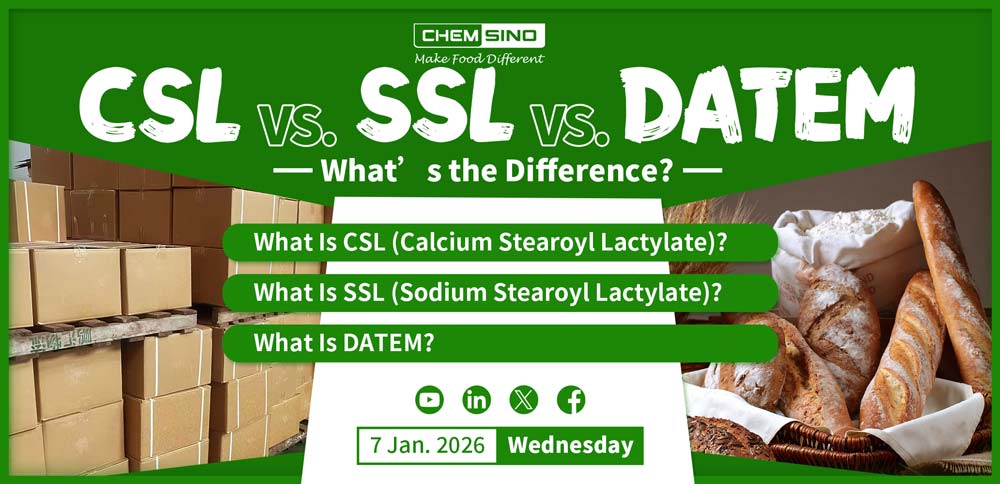
Distilled monoglycerides (DMG), also known by their food additive code E471 or as glyceryl monostearate (GMS) when derived from stearic acid, are among the most widely used emulsifiers in the global food ingredients industry. Produced through the glycerolysis of vegetable or animal fats followed by molecular distillation — a process that purifies monoglyceride content to 90% or higher — DMG delivers consistent emulsification, starch anti-aging, and texture-improvement performance across a remarkable range of applications.
In 2026, the global distilled monoglycerides market is navigating a period of robust expansion, driven by surging demand in bakery, dairy, frozen desserts, and plant-based foods, combined with rising adoption in pharmaceuticals, personal care, and industrial sectors. This article discovers the market's current size and trajectory, the key trends shaping demand, regional dynamics, supply chain considerations, and what it all means for buyers sourcing DMG today.

1. Market Size and Growth: A Multi-Billion Dollar Ingredient
The global distilled monoglycerides market reached an estimated valuation of USD 1.21 billion in early 2026, and is projected to more than double over the next decade, reaching approximately USD 2.24–2.28 billion by 2032–2034. Multiple research sources converge on a compound annual growth rate (CAGR) of approximately 7.95% through 2034, with some estimates for specific molecular distillation-grade segments placing near-term CAGR in the 3.5–8.8% range depending on the product tier and application focus.
This growth is structurally anchored across several concurrent drivers:
* Rising consumption of processed, packaged, and convenience foods globally
* Expansion of the bakery and frozen desserts sectors in emerging economies
* Growing demand for clean-label, plant-based, and non-GMO emulsifiers
* Increasing use of DMG in pharmaceutical drug delivery and personal care formulations
* New industrial applications in bioplastics, polymer processing, and green lubricants
The market's breadth across both food and non-food sectors is one of its most important characteristics for long-term demand stability.
2. What Distilled Monoglycerides Do — and Why Buyers Value Them
Before examining market trends, it is worth grounding the discussion in what makes DMG so functionally valuable. Distilled monoglyceride is a lipophilic, non-ionic surfactant with an HLB value of approximately 3.8. In practical terms, this means it is particularly effective at stabilizing water-in-oil emulsions and working synergistically with hydrophilic emulsifiers in complex formulations.
In food applications, DMG performs several critical roles:
Bread and Baked Goods: DMG is the most widely used dough conditioner in commercial baking. It complexes with starch to delay retrogradation — the process that makes bread go stale — extending crumb softness from approximately two days (without DMG) to three days or more. It also improves dough handling, loaf volume, and crust uniformity. Approximately 47% of commercial bakery producers globally now incorporate high-purity monoglycerides in their formulations.
Dairy and Ice Cream: In ice cream and frozen desserts, DMG prevents the formation of large ice crystals and improves body and texture. It enhances the mix's whipping ability, producing a smoother, drier product with better heat-shock resistance. In cheese and cream products, it assists in texture control and reduces fat separation.
Margarine and Shortening: DMG promotes uniform fat distribution and improves spreadability. Further distilled to 90%+ purity, it is suitable for the most demanding applications, including icing, cream filling, and puff pastry shortening.
Confectionery: In caramel, chocolate coatings, and chewing gum, DMG reduces stickiness, improves fat dispersion, and controls melting properties.
Pasta: DMG functions as an anti-sticking agent, preventing pasta strands from clumping during and after cooking.
These multifunctional properties — all from a single GRAS-approved, E-number classified ingredient — explain why DMG remains so deeply embedded in modern food manufacturing.

3. Key Market Trends Driving Growth in 2026
The Clean-Label and Natural Emulsifier Movement
The clean-label trend is perhaps the most discussed force shaping the DMG market today, and its impact is nuanced. On one hand, some consumers react negatively to additive-sounding ingredient names, creating pressure on formulators to minimize emulsifier use or switch to less-processed alternatives. On the other hand, DMG derived from plant-based oils and produced through enzymatic or molecular distillation processes can legitimately be positioned as a natural, plant-derived emulsifier — particularly when sourced from non-GMO sunflower, rapeseed, or certified sustainable palm oil.
The net effect has been positive for high-quality, certified DMG. Demand for non-GMO and organic monoglycerides is growing at a faster rate than the overall market, with manufacturers offering plant-based variants seeing a 38% increase in product launches in 2025. Regulatory preferences for natural emulsifiers over synthetic alternatives are accelerating this shift, particularly in European and North American markets.
The Plant-Based Food Revolution
The explosive growth of vegan, vegetarian, and flexitarian food products is creating a significant new demand channel for DMG. Plant-based dairy alternatives, meat substitutes, and vegan bakery products all require effective emulsifiers to replicate the texture, mouthfeel, and stability that animal-derived fats naturally provide. DMG — particularly when sourced from plant oils — is highly compatible with the clean-label positioning of most plant-based brands, making it a formulation staple in this fast-growing category.
Functional and Low-Fat Food Applications
Consumer demand for healthier food options is driving formulators to explore reduced-fat and low-calorie product lines. DMG is especially valuable in this context: it enables fat reduction by mimicking some of the textural contributions of fat, maintaining mouthfeel and moisture in products where total fat content has been decreased. Natural emulsifier R&D spending in the food ingredients industry rose by 41% in 2025, with a substantial share directed at improving DMG functionality in low-fat and high-fiber matrices.
Pharmaceutical and Drug Delivery Applications
The pharmaceutical segment is growing at the fastest rate of any DMG application, driven by the global expansion of generic drug manufacturing, particularly in India and China, and the increasing use of DMG as an excipient in topical formulations, suppositories, and solid dosage forms. In pharmaceutical applications, DMG functions as an emulsifying agent, release modifier, and lubricant in tablet manufacturing. The growing pipeline of drug formulations incorporating lipid-based drug delivery systems (LBDDS) is creating new demand for high-purity, pharmaceutical-grade monoglycerides with tightly controlled fatty acid profiles.
Industrial Applications: Bioplastics and Polymer Processing
One of the most significant structural shifts in the 2026 DMG market is the accelerating pivot toward industrial non-food applications. DMG is gaining traction as a non-toxic antistatic agent and internal lubricant in bioplastic processing, where its biodegradable profile makes it preferable to synthetic plasticizers. It also finds application in adhesives, sealants, elastomers, and coatings as a surface tension modifier. Asia-Pacific production volumes of industrial-grade DMG are rising to meet this demand. Over the 2026–2040 horizon, some industry analysts anticipate DMG transitioning from a specialty food additive to a platform chemical for the circular economy, including potential use as a building block for compostable packaging materials.
Technological Advances in Production
Advances in molecular distillation and enzymatic glycerolysis are raising purity levels, improving yield efficiency, and enabling greater control over fatty acid composition. Flexible manufacturing lines that can switch between palm, sunflower, soybean, and rapeseed oil feedstocks — depending on price and sustainability certification availability — are becoming increasingly common among leading producers. Automation and process optimization are also enabling manufacturers to meet the stringent documentation and traceability requirements demanded by food safety auditors in regulated markets.
4. Regional Market Dynamics
Asia-Pacific — The Volume Engine
Asia-Pacific dominates the global DMG market, commanding over 49% of global revenue share in 2026. China alone accounts for approximately 28% of global market value, making it the single largest national market. India and Southeast Asian nations round out a region characterized by rapidly expanding food processing industries, large and urbanizing populations, growing middle-class incomes, and strong domestic demand for processed and packaged foods.
China has invested heavily in DMG production infrastructure, positioning itself as the leading global exporter, with products flowing primarily to Southeast Asia, Europe, North America, and the Middle East. India is growing rapidly as both a consumer and a manufacturer, driven by expansion of the bakery, dairy, and pharmaceutical sectors. The Asia-Pacific region as a whole is expected to maintain the highest growth rate through the forecast period.
Europe — The Premium and Regulatory Leader
Europe contributes approximately 22–26% of global DMG consumption, with Germany, France, and the UK as the largest single national markets within the region. European demand is characterized by strict regulatory standards (EFSA approval, additive E471 listing), strong preference for non-GMO and sustainably sourced ingredients, and high demand from well-developed bakery, confectionery, and dairy industries. The region has seen a 26% rise in demand for organic emulsifiers driven by regulatory pressure and clean-label consumer preferences. The UK, in particular, is growing at a CAGR of 3.3%, supported by the integration of DMG into dairy, bakery, and processed food reformulations targeting natural ingredient standards.
North America — Clean-Label Premium Growth
North America accounts for approximately 28% of global DMG consumption, sustained by a large, mature food processing industry with strong demand for high-purity, certified food-grade emulsifiers. The region is seeing a growing bifurcation between commodity DMG (facing margin pressure) and certified, non-GMO, traceable DMG (commanding price premiums from consumer packaged goods companies under ESG and ingredient transparency commitments). The United States is one of the world's largest bakery and convenience food markets, with DMG usage embedded across commercial bread, cake, and frozen dessert production at scale.
Middle East & Africa — The Fastest-Growing Frontier
Despite a smaller absolute base at approximately 7% of global market share, the Middle East and Africa region is forecast to register among the highest regional growth rates through 2031. Expanding urbanization, a young and growing population, rising incomes, and increasing investment in domestic food processing infrastructure are driving demand for food emulsifiers. Halal certification is a critical procurement requirement in this region, making certified Halal DMG sourced from palm or vegetable oil a strong market fit.
Latin America
Latin America accounts for approximately 9% of the global DMG market share, with Brazil as the primary consumer. Brazil's position as a major agricultural and food-producing nation supports strong domestic demand in baking, confectionery, and dairy. Growth in packaged food consumption and food service expansion are the primary demand drivers.
5. Competitive Landscape and Key Players
The global competitive landscape for distilled monoglycerides is moderately consolidated, with the top five companies holding approximately 45% of the global market share. Key multinational players include Danisco (DuPont/IFF), Kerry Group, Corbion, BASF, and Palsgaard A/S — all competing on product quality, technical service capability, global distribution networks, and the ability to offer customized emulsifier solutions for specific applications.
Regional and mid-tier suppliers, particularly from China, such as CHEMSINO, play an important role as cost-competitive producers serving global buyers through direct export. These suppliers have progressively improved quality standards, with leading Chinese DMG producers now holding ISO 22000, Halal, Kosher, and RSPO certifications — enabling them to serve regulated food markets in the EU, US, and GCC countries.
M&A activity in the DMG sector has been moderate, with larger players acquiring specialized manufacturers to broaden product portfolios and geographic reach. Market consolidation is estimated to have increased by approximately 5% between 2020 and 2025 and is expected to continue.
6. Supply Chain Considerations: Feedstocks, Pricing, and Risk
Feedstock Dependence and Price Volatility
DMG production economics are directly linked to the price and availability of upstream vegetable oils — primarily palm oil, soybean oil, sunflower oil, and rapeseed oil. These agricultural commodities are subject to weather-related yield variability, geopolitical export policy changes (such as Indonesia's evolving biodiesel blending mandates, which directly affect crude palm oil availability and pricing), and seasonal demand cycles.
Over 52% of DMG production facilities report raw material sourcing variability as a significant operational challenge. Nearly 45% of manufacturers experienced increased procurement costs as global trade policies on agricultural commodities tightened in 2024–2025. Buyers should anticipate that DMG pricing will continue to correlate with movements in crude palm oil (CPO) and soybean oil futures, and should factor this into procurement planning and contract structures.
RSPO, Sustainability, and Deforestation Concerns
Palm oil is the dominant feedstock for DMG in Asia-Pacific due to its cost advantages and integrated supply chains in Indonesia and Malaysia (which together account for approximately 83% of global palm oil output). However, environmental concerns surrounding deforestation and land use change associated with palm oil expansion are creating regulatory and reputational pressure for buyers in European and North American markets. This is driving demand for RSPO-certified (Roundtable on Sustainable Palm Oil) DMG and pushing some buyers toward sunflower- or rapeseed-derived alternatives.
Sustainable sourcing certification — RSPO, ISCC, and equivalent schemes — is increasingly a baseline requirement for DMG buyers supplying European retail chains or multinational food brands with public sustainability commitments.
China as a Strategic Supply Hub
China has established itself as a dominant force in global DMG exports, combining scale manufacturing, competitive pricing, and progressively higher quality standards. For global buyers, Chinese DMG suppliers offer:
* Competitive ex-works pricing relative to European and North American producers
* Growing availability of Halal, Kosher, and RSPO-certified products
* Flexible packaging (25 kg bags for powder/flake forms, as well as bulk options)
* Shipping lead times of 15–25 days to most global destinations
Buyers sourcing from Chinese manufacturers should verify purity specifications (minimum 90% monoglyceride content for food-grade DMG), fatty acid profile documentation, batch-specific certificates of analysis, and applicable food safety certifications for their target market.
7. Challenges and Risk Factors
Raw Material Cost Volatility: As noted above, DMG pricing is directly linked to vegetable oil commodity markets. Buyers should consider long-term supply agreements with price adjustment mechanisms to manage this exposure.
Regulatory Complexity: Approved usage levels and labeling requirements for DMG (E471) vary by region and application. Buyers sourcing for multiple markets need suppliers capable of providing market-specific documentation and compliance support.
Health Perception Headwinds: Some consumer advocacy groups have raised questions about high-fat emulsifier consumption, and some research has examined potential effects of emulsifier-heavy diets on gut microbiome health. While DMG remains GRAS-approved by the FDA and E471-approved by EFSA, formulators in health-conscious segments may face pressure to minimize or disclose emulsifier usage.
Palm Oil Sustainability: Regulatory restrictions around palm oil sourcing have already affected approximately 37% of sourcing contracts among surveyed DMG buyers. This will likely intensify as the EU Deforestation Regulation (EUDR) continues to take effect.
8. Outlook: What to Expect Through 2030
The structural growth case for distilled monoglycerides remains compelling. Rising global food processing volumes, continued expansion of the bakery and frozen dessert sectors in emerging economies, the growth of plant-based food, and new industrial applications collectively support sustained demand growth at a CAGR of 5–8% through 2030.
The premium segment — encompassing non-GMO, plant-based, RSPO-certified, and pharmaceutical-grade DMG — will outperform the commodity tier as buyers in regulated markets intensify quality and traceability requirements. Suppliers capable of providing full chain-of-custody documentation, flexible fatty acid profiles, and multi-certification credentials will be increasingly well-positioned.
For procurement managers, 2026 presents a favorable environment for establishing or renegotiating DMG supply agreements. Competitive pricing from Asian producers, combined with growing availability of certified sustainable products, makes this an opportune moment to optimize both cost and supply chain resilience.
How Chemsino Supports Your DMG Sourcing Needs
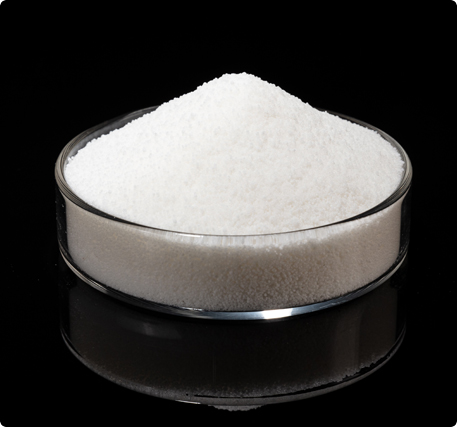
Founded in 2006 and headquartered in Zhengzhou, China, Chemsino is a certified manufacturer and supplier of food-grade emulsifiers, including Distilled Monoglycerides (DMG / E471 / GMS). Our DMG products are available in powder and flake form, with a minimum monoglyceride content of 90%, and are suitable for a wide range of applications, including:
* Bakery: Dough conditioning, crumb softening, anti-staling, volume improvement
* Dairy & Frozen Desserts: Ice crystal control, texture smoothing, whipping improvement
* Margarine & Shortening: Fat distribution, spreadability, aeration
* Confectionery: Anti-sticking, fat dispersion, melt control
* Pasta: Anti-sticking and cooking stability
* Pharmaceuticals & Personal Care: Emulsifying agent, excipient, skin conditioner
All Chemsino DMG products carry ISO 9001, ISO 22000, Halal, and Kosher certifications, ensuring compliance with food safety requirements across global markets including the EU, US, GCC, and Southeast Asia. We offer flexible packaging in 25 kg bags, no minimum order quantities on samples, and shipment within 15–20 days from confirmed order. Ready to discuss your distilled monoglyceride requirements today?

 Emulsifier List
 About Us

 In Chocolate.jpg)