Home
Products
Emulsifier List
Application
Gallery
News
Blog
About Us
About Us
Contact Us
Your Position : Home > Blog

SP vs. Traditional Cake Emulsifiers: What's the Difference?

Date:2026-03-11
Read:
Share:
In cake production, emulsifiers are crucial for shaping batter structure, aeration, and final texture. Many bakers traditionally use single emulsifiers like GMS, PGMS, or lecithin, while modern production often relies on compound emulsifiers such as SP cake gel. Both methods enhance cake quality, but they work differently and offer distinct advantages depending on the recipe and production process.

This blog explains what traditional cake emulsifiers are, how SP emulsifier works, and compares their performance in cake production to help manufacturers better understand when each option may be suitable.


What "Traditional Cake Emulsifiers" Actually Means


Traditional cake emulsifiers are single-ingredient additives, used alone or manually blended:

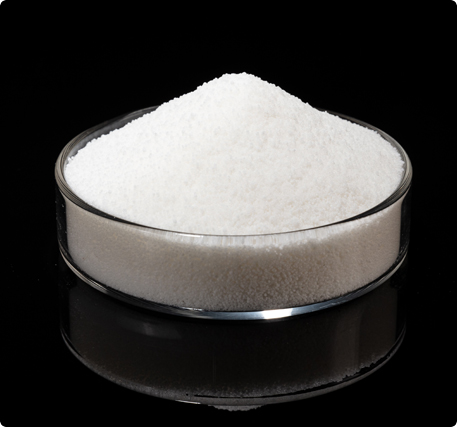
GMS (Glycerol Monostearate, E471) — stabilizes fat-in-water emulsions, retains moisture, softens crumb

PGMS (Propylene Glycol Monostearate, E477) — strong foaming agent, widely used for aeration

Lecithin (E322) — natural emulsifier from soy or sunflower, smooths batter, disperses fat

PGPR (E476) — reduces viscosity, mostly in chocolate, occasionally in cake

SSL (Sodium Stearoyl Lactylate, E481) — stabilizes batter, improves crumb texture

Each of these emulsifiers serves a specific purpose, but their effects are limited to certain functions. GMS helps retain moisture but contributes little to aeration; PGMS improves aeration but has minimal impact on shelf life; lecithin aids fat dispersion but offers limited foam stability. In many cake recipes, combining multiple emulsifiers can help achieve balanced texture, volume, and softness.

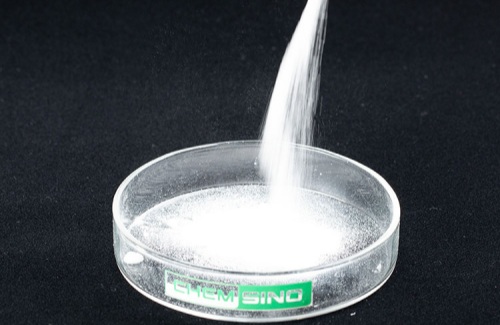
GMS 90 fine powder


What SP Actually Is


SP is a compound emulsifier — a pre-formulated blend of multiple emulsifiers designed for cake production. A typical SP contains GMS, PGMS, Tween 80, SSL, and sometimes PGE or propylene glycol, all processed into a paste or powder.

The key difference is not any single ingredient, but how they work together. When these emulsifiers are combined and processed as a system, they can complement each other in ways that are difficult to achieve using individual emulsifiers alone. The result is a more consistent batter that supports aeration, helps stabilize foam, distributes fat more evenly, and improves moisture retention — often with just one addition.


Performance Comparison: SP vs. Traditional Cake Emulsifiers


Aeration and Batter Volume: PGMS alone aerates batter effectively. SP, containing PGMS plus GMS and SSL, stabilizes air cells, preventing collapse and creating a higher, more stable batter with better oven rise.

Mixing Speed: SP accelerates aeration, often reducing whipping time by 30–50% compared to single emulsifiers. Faster mixing means higher throughput in industrial production.

Batter Tolerance: Traditional emulsifiers produce batter sensitive to overmixing or delay between mixing and baking. SP-stabilized batter holds structure better, making it ideal for high-output production lines.

Shelf-Life and Softness: SP combines effects — GMS forms complexes with starch to slow staling, while SSL improves crumb structure. Cakes made with SP stay softer longer than those using individual emulsifiers at the same dosage.

Formula Simplicity: Traditional single emulsifiers often require careful blending and dosage control. SP simplifies production — one ingredient, one step, making it easier to achieve consistent results (typically 1–5% of batter weight).

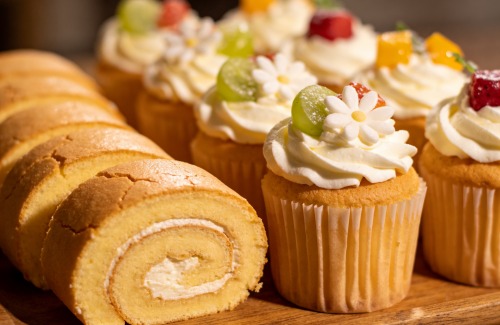
SP in cakes


When Traditional Cake Emulsifiers Are Still Useful


SP isn't always the answer. If you're producing a clean-label cake with a short ingredient list, individual emulsifiers give you more labeling flexibility. If you're working on a specialty formula where you need to fine-tune each functional property independently — say, a low-fat cake requiring specific aeration without added moisture — building a custom blend from single emulsifiers gives you more control.

SP is formulated to perform consistently in standard cake production, especially in high-aeration or soft-texture recipes. For unusual formulations, specialty cakes, or products with clean-label priorities, individual emulsifiers may offer more control and flexibility.


Conclusion


SP and traditional cake emulsifiers both play important roles in cake production. Individual emulsifiers like GMS, PGMS, or lecithin offer specific functional benefits, allowing formulators to adjust each property independently. SP, by contrast, combines multiple emulsifiers into a pre-formulated system—one that simplifies production while enhancing batter stability, aeration, and processing efficiency for most standard cake recipes. Understanding these differences helps bakers and food manufacturers select the most appropriate emulsifier strategy, aligned with their product goals, formulation requirements, and production conditions.

Chemsino offers SP emulsifier as well as various individual emulsifier ingredients, including GMS, PGPR, Tween 80, and more. Welcome to contact us to discuss your formulation requirements.
Start earning substantial
profits in your country today!
Email
Whatsapp