Choosing the right emulsifier is only half the job. Knowing whether it actually meets quality standards is what separates a reliable formulation from one that fails mid-production — or worse, on the shelf.
At CHEMSINO, we work with food manufacturers, cosmetic developers, and industrial formulators every day. These are the evaluation methods that matter most in practice.
Start with the HLB Value
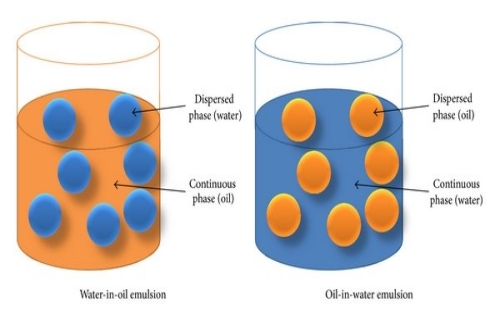
The Hydrophilic-Lipophilic Balance (HLB) is the first number to check. It tells you whether an emulsifier is suited for oil-in-water (O/W) or water-in-oil (W/O) systems:
# HLB 1–6: favors W/O emulsions — think margarine, cold cream
# HLB 8–18: favors O/W emulsions — think beverages, lotions, sauces
Don't just trust the spec sheet. Run an empirical test: prepare emulsions across a known range of oil phases and see where your emulsifier actually performs. A mismatch between the claimed and actual HLB is one of the clearest signs of batch inconsistency or adulteration.
Measure Interfacial Tension
A quality emulsifier migrates quickly to the oil-water interface and drives down interfacial tension. If it doesn't do this efficiently, your emulsion will be unstable regardless of how good it looks on paper.
Use a Du Noüy ring or Wilhelmy plate tensiometer. What you're looking for:
# Does the emulsifier reach the expected tension value at the stated concentration?
# Is there a clear, well-defined critical micelle concentration (CMC)?
A blurred CMC often signals contamination or degradation. Compare results against a previous approved lot, not just a generic reference value.
Run the Core Chemical Tests
Physical performance tells you how an emulsifier behaves. Chemical analysis tells you what it actually is. Both matter.
Acid Value Measures free fatty acid content. Elevated values indicate hydrolytic degradation — from poor manufacturing, improper storage, or age. Most food and pharmaceutical specifications set a strict upper limit here.
Saponification Value Reflects average molecular weight of the fatty acid chains. Deviations point to a changed fatty acid profile, which can happen with adulteration or a different raw material source.
Iodine Value Quantifies unsaturation in fatty acid chains. High iodine value + high-temperature storage = oxidation risk. This number is critical for predicting shelf stability.
Hydroxyl and Ester Values Essential for polyol-based emulsifiers like sorbitan esters or glycerol monostearate. They confirm the degree of esterification and directly influence functional performance.
For identity confirmation, FTIR provides rapid fingerprinting. NMR is the gold standard for structural verification. GC-MS resolves individual fatty acid profiles — useful when authenticity or origin needs to be proven.
Test the Emulsion Itself
Lab tests on the raw emulsifier are necessary, but performance inside a real formulation is the true measure of quality.
Droplet Size and Distribution: Use laser diffraction (e.g., Malvern Mastersizer) to measure droplet size distribution. A tighter distribution (lower polydispersity index) means more consistent performance. Track D[4,3] values across batches and flag any drift.
Stability Over Time: Prepare your emulsion under standard conditions, then observe it at ambient temperature and at 40–50°C over 4–8 weeks. Watch for creaming, sedimentation, and coalescence. Accelerated centrifugal testing can compress this timeline for quick lot screening.
Zeta Potential: For charged emulsifiers, zeta potential above ±30 mV generally indicates good electrostatic stabilization. Values closer to zero suggest the emulsion is at risk of flocculation.
Don't Skip the Safety Parameters
For food-grade, cosmetic-grade, or pharmaceutical-grade emulsifiers, microbial and contaminant limits are non-negotiable. Test for:
# Total aerobic microbial count (TAMC) and yeast/mold count (TYMC)
# Absence of pathogens: Salmonella, E. coli, Staphylococcus aureus
# Heavy metals (Pb, As, Cd, Hg) by ICP-MS or ICP-OES
# Residual solvents for extraction-derived emulsifiers such as lecithin or PEG esters
These parameters rarely cause visible problems early — and that's exactly why they get overlooked until something goes wrong.
Evaluate Your Supplier, Not Just the Product
A good test result on one batch means little if the supplier can't consistently deliver. Before approving any emulsifier source, review:
# Certificate of Analysis (CoA): Does it list actual test results, not just "conforms"? Are test methods referenced?
# Traceability: For lecithin and other natural-source emulsifiers, can the supplier trace raw material lots? Is a non-GMO or organic certification issued by an accredited body?
# Audit records: Current ISO 22000, FSSC 22000, or GMP certificates — not expired ones.
# Stability data: Does the supplier provide real storage data, not just projected shelf life?
At CHEMSINO, every product we supply comes with full documentation and transparent source traceability. We don't ask our customers to take quality on faith.
Compare Lots — Every Time
Even a well-qualified emulsifier varies between batches. Build a baseline from multiple approved lots and monitor key attributes using statistical process control (SPC). Include a retained reference sample from a previous approved lot in every incoming evaluation, tested in parallel on the same day. That single practice removes most of the day-to-day analytical noise from lot comparisons.
Stress-Test for Your Real Conditions
Standard lab conditions rarely reflect what an emulsifier will face in production. Design stress tests around your actual process:
# Freeze-thaw cycling for cold-chain products
# pH extremes for acidic dressings or alkaline bakery applications
# High electrolyte environments for products with high salt content
# Shear stress if you use high-pressure homogenization or rotor-stator equipment
An emulsifier that passes every standard test but fails your process conditions is not a quality emulsifier for your application.
A Quick Reference
| What to Test |
What It Tells You |
| HLB value |
Suitability for O/W or W/O systems |
| Interfacial tension / CMC |
Surface activity and purity |
| Acid/saponification/iodine values |
Degradation and composition |
| FTIR / NMR / GC-MS |
Identity and authenticity |
| Droplet size and PDI |
Emulsification consistency |
| Zeta potential/stability |
Shelf-life prediction |
| Microbial limits / heavy metals |
Safety and compliance |
| Supplier documentation |
Supply chain reliability |
Quality emulsifiers don't just meet specifications — they perform predictably, batch after batch, under real production conditions. That's the standard CHEMSINO holds itself to, and the standard we recommend every formulator apply when sourcing and evaluating emulsifiers.
Looking for a reliable emulsifier supplier? Contact the CHEMSINO team to request samples, technical data sheets, or a product consultation.

 Emulsifier List
 About Us