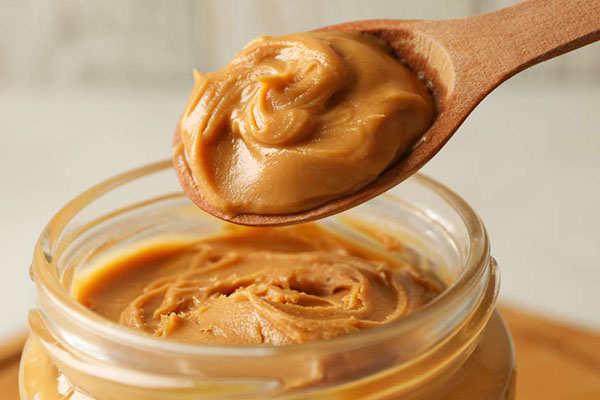
Peanut butter is popular all over the world. Oil separation is one of the most common problems in peanut butter. After storage, oil may rise to the surface, while the peanut solids become harder and less spreadable. The right emulsifier can help improve oil distribution, texture, and stability. But emulsifiers are only one part of the solution. Peanut variety, particle size, oil content, added fat, processing temperature, and storage conditions can also affect the final product. So, how should a food manufacturer choose an emulsifier for peanut butter?
Why Peanut Butter Separates
Peanut butter is roughly 50% fat. That fat is naturally present in peanuts as a mixture of triglycerides — mostly unsaturated (oleic, linoleic) and some saturated (palmitic, stearic). When peanuts are ground, the fat releases and coats the solid particles (protein, fiber, starch fragments). The resulting paste is not a true emulsion — there's no water phase. It's a suspension of solid particles in liquid fat. The problem is density. Solid particles are denser than liquid fat. Over time, solids settle, and free oil rises to the surface. The rate depends on fat content, particle size, temperature, and whether anything is present to structure the fat phase and slow migration. Emulsifiers slow this separation in two ways:
# By coating solid particles and reducing their tendency to aggregate and settle
# By modifying fat crystal structure — promoting a network of tiny fat crystals that increase viscosity and keep solids suspended
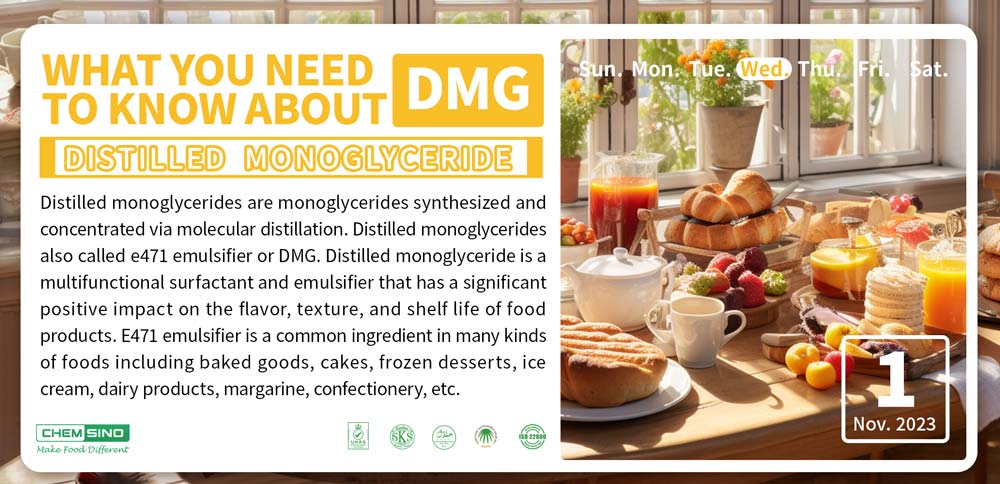
DMG for Peanut Butter
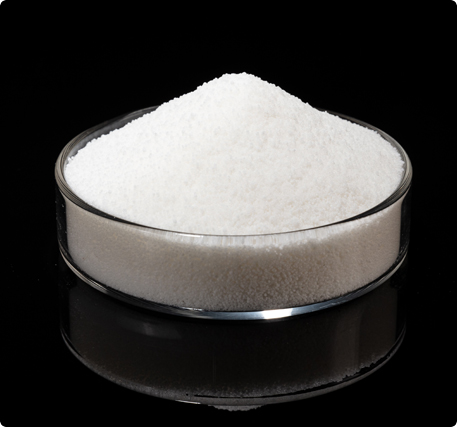
Monoglycerides are the primary and usually the only emulsifier in commercial peanut butter. They work differently here than in bread or cake: peanut butter has no water phase and no starch to complex with. The mechanism is fat crystallization control. When monoglycerides are added to peanut butter during processing, they modify how the fat phase solidifies on cooling. Natural peanut fat tends to crystallize into large, unstable beta crystals that release free oil and create a grainy texture. Monoglycerides promote a finer, more stable crystal network — specifically the beta-prime crystal form — that holds the fat phase together, keeps the oil from migrating upward, and produces a smooth, consistent texture. GMS vs DMG: In peanut butter, the distinction between standard GMS (40–60% monoglycerides) and high-purity DMG (90%+) matters less than in bread applications, because the starch-complexation mechanism that requires high purity isn't active here. Standard GMS is widely used in peanut butter and performs adequately for most applications. High-purity DMG provides more consistent results and is worth the premium in products targeting smoother texture, lower oil separation over extended shelf life, or in formulations with challenging fat compositions. Typical dosage: 0.5–2.0% of product weight. Higher than in most bakery applications because the task is structuring a large continuous fat phase rather than acting at a small oil-water interface. What to watch: Monoglycerides must be added at the right temperature. They should be incorporated during the hot mixing stage (above 60°C) when the fat is fully liquid, and then the product is cooled under controlled conditions. If added cold, they don't distribute evenly, and the crystal network doesn't form properly. Uneven distribution is one of the most common causes of oil separation, even with correct dosage.
Lecithin for Peanut Butter
Lecithin is the second emulsifier used in peanut butter, though less universally than monoglycerides. Lecithin's role here is particle coating rather than fat crystal control. Its phospholipid molecules coat protein and fiber particles, reducing their tendency to aggregate and settle. This contributes to a smoother mouthfeel and more uniform paste texture. It also slightly reduces viscosity — peanut butter with lecithin pours and spreads more easily, which matters for soft-set or spreadable products. Soy lecithin is most commonly used — cost-effective and widely available. Sunflower lecithin is the alternative for non-GMO and soy-allergen-free positioning. Typical dosage: 0.1–0.3% of product weight. Small addition, meaningful texture effect. When to use it: Lecithin is most useful in peanut butter with lower fat content (where there's less fat to build the crystal network) or in products targeting a very smooth, spreadable consistency. In standard commercial peanut butter, monoglycerides alone often suffice. Lecithin becomes more valuable when the formulation or fat blend makes monoglycerides less effective on their own.
How Much Emulsifier Should You Use?
There is no single dosage that works for every peanut butter. The required level depends on the emulsifier, peanut solids, oil content, particle size, fat system, processing conditions, and regulatory requirements. A practical way to determine the dosage is to test several levels while keeping the rest of the formulation unchanged. This makes it easier to see whether the emulsifier is actually improving stability. The goal is not to use as much emulsifier as possible. It is to find the lowest effective level that delivers the required product performance.
FAQ
What is the best emulsifier for peanut butter? There is no single best emulsifier for every peanut butter. Lecithin and mono- and diglycerides can both be considered, but the right choice depends on the fat system, particle size, target texture, processing conditions, and desired oil stability. Can an emulsifier prevent oil separation in peanut butter? An emulsifier can help improve oil distribution and stability, but oil separation is also affected by particle size, fat composition, processing, cooling, and storage conditions. Can DMG be used in peanut butter? Yes. Mono- and diglycerides can be used in peanut butter formulations and may help control oil retention and product consistency. Application testing is needed to determine the appropriate product and dosage. How do you test an emulsifier for peanut butter? Compare different emulsifiers or dosage levels under the same production and storage conditions. Measure oil separation, texture, spreadability, viscosity, and appearance over time.
Final Thoughts
Choosing an emulsifier for peanut butter starts with understanding the product, not simply choosing the most commonly used ingredient. Oil separation, spreadability, texture, and storage stability can all be affected by the emulsifier, but also by particle size, fat content, processing, and storage conditions. Lecithin, DMG, and other emulsifier systems can be evaluated depending on the formulation and target performance. The most practical approach is to test suitable options under real processing and storage conditions and select the lowest effective dosage. CHEMSINO provides food-grade emulsifiers for peanut butter and other food applications, with product specifications and technical support to help manufacturers find a suitable solution for their formulations.