Food emulsifiers are used in many everyday products—bread, sauces, ice cream, drinks, and even dairy alternatives. Even though they are added in very small amounts, they can make a big difference in the texture, stability, and overall quality of the food.
This blog explains, in a simple way, how emulsifiers work at the molecular level and why they are such effective ingredients.
1. Amphiphilic Structure: One Molecule, Two Personalities
The key to an emulsifier's function is its amphiphilic structure.
Each molecule has two different ends:
Hydrophilic head – likes water
Lipophilic (hydrophobic) tail – likes oils and fats
Because of this dual nature, emulsifiers naturally sit where oil and water meet.
The water-loving end stays in the water, and the fat-loving tail goes into the oil.
This unique position helps bring together ingredients that normally stay separate.
Oil and water do not mix because the tension between them is high.
Emulsifiers lower this tension, making it easier for oil to break into tiny droplets in water (or the other way around).
This results in:
# Smaller, finer droplets
# Smoother texture
# Better stability
# Easier mixing and processing
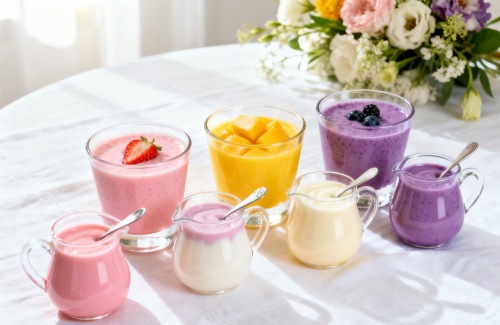
This function is especially useful in sauces, creamers, flavored drinks, and ice cream bases.
3. Creating a Protective Layer Around Droplets
Once the droplets are formed, emulsifiers create a thin protective layer around them.
This keeps the droplets from sticking together or separating over time.
Some emulsifiers also bind to starch molecules and slow down starch retrogradation.
This helps bread stay:
# Softer
# Moist for longer
# Less crumbly
GMS (Glycerol Monostearate) is commonly used for this effect.
5. Stabilizing Air Cells in Baked Goods
In baking, emulsifiers help more than just mixing oil and water—they also stabilize air.
At the molecular level, they strengthen the thin walls of the small air bubbles in dough and batter.
This results in:
# Better gas retention
# Higher loaf volume
# A finer crumb structure
# Softer texture
DATEM E472e, SSL, and GMS emulsifiers are commonly used for improving air stability in baked products.
6. Supporting Freeze-Thaw Stability
Frozen foods often go through freeze–thaw cycles. Without help, large ice crystals can form and damage the texture.
Emulsifiers help by:
# Controlling how water moves
# Strengthening the fat–water network
# Preventing large ice crystal growth
This is especially important in ice cream, frozen dough, and frozen beverages.
Conclusion
At the molecular level, the dual structure of emulsifiers enables them to reduce interfacial tension, keep droplets stable, interact with proteins and starches, and help distribute air and moisture more evenly. Because of these functions, many foods gain better texture, stability, volume, and shelf life.
Chemsino is a trusted emulsifier supplier with over ten years of experience. If you're looking for a reliable long-term partner, feel free to contact us for more details.