Home
Products
Emulsifier List
Application
Gallery
News
Blog
About Us
About Us
Contact Us
Your Position : Home > Blog

Halal and Kosher Emulsifiers Guide

Date:2026-05-25
Read:
Share:
Whether an emulsifier is Halal or Kosher depends on three things: what it is made from, how it is processed, and what else runs on the same production line. The E number alone tells you nothing. E471 (mono- and diglycerides) made from palm oil is fully Halal-certifiable. The same E471 made from lard is not. Getting this wrong costs market access — so it is worth understanding clearly. 

Halal Requirements for Emulsifiers


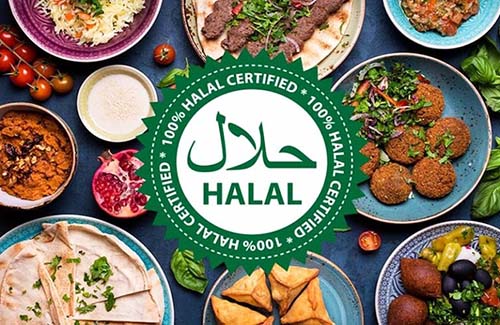
Islamic dietary law is straightforward on emulsifiers: pork and any derivative of it are strictly prohibited. Animal-derived emulsifiers from other species (cattle, poultry) are permissible only if the animal was slaughtered according to Islamic law (zabiha). In practice, most commercial food manufacturers resolve this by specifying vegetable-derived emulsifiers with a certificate from a recognized Halal authority.

Three areas require attention:

Raw material source. Plant-derived emulsifiers — from palm, soybean, sunflower, or rapeseed oil — are Halal when certified. Emulsifiers labeled "animal or vegetable" without further specification must be verified or avoided. The supplier should be able to state the fatty acid source explicitly and back it with documentation.
Processing solvents. Some emulsifiers, particularly lecithin, may use ethanol-based solvents in extraction. If residual ethanol is present in the final product, Halal compliance is at risk. Ask your supplier to confirm that no haram solvents were used in production.
Production environment. Shared equipment between Halal and non-Halal production lines is a common audit failure point. Either dedicated lines or a validated cleaning protocol with records is required for a Halal certificate to be meaningful.


Kosher Requirements for Emulsifiers


Kosher law (kashrut) also prohibits pork entirely. Beyond that, the most important rule for emulsifier buyers is the separation of meat and dairy. A Kosher emulsifier falls into one of three categories:
 
Category Meaning Typical examples
Pareve Neither meat nor dairy Plant-oil DMG, sorbitan esters, soy or sunflower lecithin
Dairy (Chalav) Contains or contacts dairy Whey-derived emulsifiers; some SSL/CSL
Meat (Fleishig) Contains or contacts meat Animal-fat emulsifiers on meat lines

Pareve is the most commercially useful classification.
 A Pareve emulsifier can go into any Kosher product — dairy, meat, or neutral — without restriction. For ingredient suppliers, Pareve certification is the broadest possible Kosher credential.

Unlike Halal, Kosher does not prohibit alcohol. Wine is Kosher. Beer is Kosher. But supervision requirements are strict: certification must come from a recognized Rabbinical authority (OU, KOF-K, Star-K, cRc), and equipment inspection is part of the process.


Halal vs. Kosher at a Glance


Both systems prohibit pork and require ingredient source verification. The differences matter for suppliers targeting multiple markets:
 
Rule Halal Kosher
Pork prohibited Yes Yes
Meat/dairy separation Not required Required (Pareve system)
Animal slaughter method Zabiha Shechita (different method)
Alcohol Prohibited Permitted
Certification body JAKIM, MUI, IFANCA, ESMA OU, KOF-K, Star-K, cRc

An emulsifier that is Halal is not automatically Kosher, and vice versa. Holding both certifications gives suppliers access to the broadest range of markets with a single formulation, and is increasingly expected by multinational food brands.


Halal and Kosher Status of Common Emulsifiers


Mono- and Diglycerides / DMG (E471)


Source risk: high. This is the most widely used food emulsifier globally and also the one with the most variable raw material origin. E471 can be produced from palm oil, soybean oil, rapeseed oil, beef tallow, or lard. Without explicit source confirmation, the E number alone is meaningless from a compliance standpoint.

Vegetable-derived DMG certified by a recognized authority is fully Halal and Kosher Pareve. Always request a Certificate of Origin alongside the Halal/Kosher certificate, and ask your supplier directly: "Is the fatty acid derived from vegetable oil or animal fat?" A supplier who cannot answer clearly is a compliance risk.

Halal: certifiable (vegetable source) | Kosher Pareve: certifiable (vegetable source)

Lecithin (E322)


Soy lecithin and sunflower lecithin are plant-derived and generally Halal. The two common complications are that some extraction processes use ethanol-based solvents (requiring solvent verification for Halal), and egg yolk lecithin may be classified as Dairy under strict Kosher rulings.

Sunflower lecithin is the cleanest option — no GMO concerns, no ethanol extraction, no allergen labeling issues, and straightforwardly Pareve. Soy lecithin is fine for most markets when the extraction process is verified and non-GMO certification is not required.

Halal: certifiable (soy or sunflower, non-ethanol extraction) | Kosher Pareve: certifiable (soy or sunflower)

Sorbitan Esters — Span Series (E491, E492, E493, E494, E495)


Sorbitan esters are made from sorbitol (corn or plant starch) esterified with fatty acids. Sorbitol is not the variable — the fatty acid is. Stearic or oleic acid from palm or vegetable oil makes the product Halal and Pareve certifiable.
Span 60 (Sorbitan Monostearate, E491) — used widely in chocolate, ice cream, and personal care — is fully certifiable when sourced from vegetable stearic acid, which is the case for all Chemsino products.

Halal: certifiable (vegetable fatty acid) | Kosher Pareve: certifiable

Polysorbates — Tween Series (E432–E436)


Polysorbates are synthetic emulsifiers made by ethoxylating sorbitan esters. The sorbitol backbone is plant-derived; the fatty acid and ethylene oxide are the compliance variables. When the fatty acid is from vegetable oil and no haram solvents are used in production, polysorbates are fully certifiable.

Polysorbate 80 (E433, oleate-based) and Polysorbate 60 (E435, stearate-based) are the most common in food applications. Both must be certified as Pareve — neither meat nor dairy — to hold Kosher status.

Halal: certifiable (vegetable fatty acid) | Kosher Pareve: certifiable

PGPR (E476)


PGPR is one of the most straightforward emulsifiers from a compliance standpoint. It is made from castor oil — a plant oil from the Ricinus communis plant — and vegetable-derived polyglycerol. Both inputs are entirely plant-based. There is no animal-derived ingredient and no ethanol in standard production.

Halal: certifiable | Kosher Pareve: certifiable

PGE — Polyglycerol Esters (E475)


Produced from polyglycerol and fatty acids from vegetable oils (palm, sunflower, soybean, rapeseed). As with DMG and sorbitan esters, the fatty acid source determines compliance. Vegetable-derived PGE is low-risk for both certifications.

Halal: certifiable | Kosher Pareve: certifiabl

SSL / CSL (E481 / E482)


Sodium and Calcium Stearoyl Lactylate are produced from stearic acid and lactic acid. Stearic acid from vegetable oil is Halal; from tallow, it requires verification. Lactic acid is typically fermented from plant sugars and is considered plant-derived. One nuance: under strict Kosher rulings, some SSL/CSL may be classified as Dairy if the lactic acid has a dairy origin — confirm with your certifier.

Halal: certifiable (vegetable stearic acid) | Kosher: certifiable (confirm lactic acid source)

PGMS (E477)


Propylene glycol monostearate is made from propylene glycol (petrochemical, non-animal) and stearic acid. Vegetable stearic acid source makes it certifiable for both systems.

Halal: certifiable (vegetable fatty acid) | Kosher Pareve: certifiable

Quick Reference Table

 
Emulsifier E No. Halal Kosher (Pareve) Key compliance check
Mono- & Diglycerides (DMG) E471 ✅ (veg.) ✅ (veg.) Fatty acid source — highest risk
Lecithin E322 ✅ (soy/sunflower) ✅ (soy/sunflower) Extraction solvent; egg = Dairy
Sorbitan Monostearate (Span 60) E491 ✅ (veg.) Fatty acid source
Polysorbate 80 E433 ✅ (veg.) ✅ Pareve Fatty acid source
Polysorbate 60 E435 ✅ (veg.) ✅ Pareve Fatty acid source
PGPR E476 Low risk — fully plant-based
PGE E475 Low risk — fully plant-based
SSL / CSL E481/E482 ✅ (veg.) ✅* *Confirm lactic acid source
PGMS E477 ✅ (veg.) Fatty acid source


What to Check When Sourcing Certified Emulsifiers


A Halal or Kosher logo on a bag is not enough. These are the documents and questions that actually matter:

Certifying body. For Middle East markets: JAKIM (Malaysia), MUI (Indonesia), ESMA (UAE), IFANCA (USA). For Kosher: OU, KOF-K, and Star-K are universally recognized. Regional-only certificates may not be accepted by your buyer.
Certificate of Origin. Confirms what the raw material actually was. Request this alongside — not instead of — the Halal/Kosher certificate.
Fatty acid source statement. For DMG, SSL, sorbitan esters, and polysorbates, ask your supplier in writing: "Is the fatty acid vegetable-derived or animal-derived?" Document the answer.
Solvent confirmation. For lecithin, confirm no ethanol or haram processing solvents were used.
Equipment segregation records. Ask whether the production line also runs non-Halal products, and if so, what the cleaning protocol is and whether records are kept.
Pareve vs. generic Kosher. If your product goes into both dairy and non-dairy applications, you need Pareve — confirm this explicitly rather than assuming all Kosher certificates cover it.
Certificate validity. Halal and Kosher certificates typically expire annually. Confirm the certificate covers your current order, the specific product grade, and the named production facility.

Which Markets Need Which Certification? 

 
Market What's needed Notes
Middle East (GCC) Halal ESMA (UAE) and SASO (Saudi Arabia) recognize specific bodies
Southeast Asia Halal JAKIM and MUI are the most widely accepted
Other Muslim-majority markets Halal Pakistan (PNAC), Turkey (Giimdes), Egypt (HFCE)
Israel Kosher OU or Israeli Rabbinate
North America Kosher (commercial) Often required as a quality signal, not a religious mandate
Europe Both (market-driven) No legal requirement; retailer and brand specs increasingly demand it
Multinational brands Both Halal + Kosher dual certification is increasingly a baseline requirement


Frequently Asked Questions


Q: Are all E471 emulsifiers Halal? No. E471 can be made from vegetable oil or animal fat, including lard. Only E471 produced from plant oil and certified by a recognized Halal authority is Halal. Always request the fatty acid source.
Q: Is soy lecithin Halal? Generally, yes — it is plant-derived. The risk is the extraction solvents. If ethanol is used in processing and residues remain, Halal compliance is in question. Sunflower lecithin avoids this issue entirely.
Q: What does "Pareve" mean? Pareve is a Kosher classification meaning neither meat nor dairy. A Pareve emulsifier can be used in any Kosher product — dairy, meat, or neutral — without restriction. It is the most versatile Kosher status for ingredient suppliers.
Q: Can an emulsifier be both Halal and Kosher? Yes, and most vegetable-derived, properly certified emulsifiers are. Halal prohibits alcohol; Kosher does not. Kosher requires meat/dairy separation; Halal does not. Both prohibit pork. A vegetable-derived emulsifier made without haram solvents and processed on segregated equipment can hold both simultaneously.
Q: Is PGPR Halal and Kosher? Yes. PGPR is made entirely from castor oil and vegetable glycerol — no animal inputs — making it straightforwardly certifiable as both Halal and Kosher Pareve.
Q: How often do certificates expire? Typically, once a year. Confirm that your certificate covers the current production period, the specific product grade, and the named facility. A certificate for a different plant or an older batch does not cover your current purchase.

Chemsino Halal and Kosher Certified Emulsifiers


All Chemsino emulsifiers are produced from vegetable-derived raw materials and certified by internationally recognized Halal and Kosher authorities.
 
Product E Number Halal Kosher
Distilled Monoglycerides (DMG) E471 ✅ Pareve
Mono- and Diglycerides E471 ✅ Pareve
Sorbitan Monostearate (Span 60) E491 ✅ Pareve
Polysorbate 60 E435 ✅ Pareve
Polysorbate 80 E433 ✅ Pareve
PGPR E476 ✅ Pareve
PGE E475 ✅ Pareve
Lecithin (Soy / Sunflower) E322 ✅ Pareve
SSL / CSL E481 / E482 ✅ 

Also certified:
ISO 9001 · ISO 22000 · RSPO Documentation provided: COA, TDS, MSDS, Halal certificate, Kosher certificate, Certificate of Origin. Free samples available. No minimum order. Ships in 15–20 days.
Start earning substantial
profits in your country today!
Email
Whatsapp