Home
Products
Emulsifier List
Application
Gallery
News
Blog
About Us
About Us
Contact Us
Your Position : Home > Blog

Emulsifier Selection Guide for Sugar-Free Products

Date:2026-08-19
Read:
Share:
Developing a sugar-free product is not simply a matter of removing sucrose and adding a different sweetener. Sugar contributes much more than sweetness. It affects solids, viscosity, moisture distribution, freezing point, texture, browning, and the way other ingredients behave during processing. Once it is removed, the formulation can respond very differently. That is why choosing the right emulsifier for sugar-free products requires more than looking at an emulsifier's basic function.

The right choice depends on the product, fat system, sugar replacement, processing conditions, and the specific problem the formulator is trying to solve. For sugar-free bakery products, for example, the priority may be batter stability and crumb softness. In chocolate, viscosity and flow may matter more. In ice cream, fat destabilization, air incorporation, and melting behavior become much more important.

This guide looks at how to approach emulsifier selection for different sugar-free food applications and where emulsifiers such as DMG, GMS, PGE, PGPR, DATEM, and SSL fit into the formulation.


Why Sugar-Free Products Often Need Reformulation


When sucrose is removed, the obvious change is sweetness. The less obvious change is the structure of the food.
In a conventional cake, sucrose contributes to batter properties and the final crumb. In ice cream, it contributes to soluble solids and freezing-point depression. In chocolate, sugar makes up a large part of the solid phase and affects particle distribution and rheology.

Replacing sucrose with erythritol, maltitol, xylitol, sorbitol, stevia, sucralose, or a combination of sweeteners does not necessarily reproduce these functions.
The result can be a product that is technically sugar-free but noticeably different in texture and processing.

Common problems include:

# Lower cake or bread volume
# Dry or firm crumb
# Changes in batter viscosity
# Poor fat dispersion
# Higher chocolate viscosity
# Difficult processing
# Poor aeration in whipped products
# Different ice cream melting behavior
# Changes in mouthfeel during storage

An emulsifier can help with some of these issues, but it should be viewed as one part of the formulation strategy, not a replacement for all the functions of sugar.

How to Choose an Emulsifier for a Sugar-Free Formulation


There is no single emulsifier that works best across every sugar-free product.
A useful way to approach selection is to start with the formulation problem rather than the emulsifier name.

Start with the Product


The first question should be:

What type of sugar-free food are you making?

A bread dough, chocolate mass, frozen dessert, and whipped topping have completely different physical structures.
For example, a bakery emulsifier needs to interact with flour, starch, water, fat, and often gluten proteins. Chocolate emulsifiers mainly influence the fat phase and flow characteristics. Frozen dessert systems need to balance fat, water, proteins, air, and stabilizers.
The application should therefore determine the initial emulsifier candidates.

Look at the Sugar Replacement


The second question is what has replaced the sugar.
Erythritol, maltitol, xylitol, sorbitol, and high-intensity sweeteners do not behave in the same way.
A polyol may contribute bulk and solids but have a different effect on water activity or freezing behavior. A high-intensity sweetener may provide sweetness at a very low use level while contributing almost no bulk.
This distinction matters because the emulsifier may not be the only ingredient that needs adjustment.
In many formulations, the best result comes from adjusting the sweetener system, fat phase, hydrocolloid or starch system, and emulsifier together.

Examine the Fat System


Fat type is another major consideration.

Palm oil, cocoa butter, milk fat, coconut fat, and liquid vegetable oils have different melting and crystallization behaviors. An emulsifier that performs well with one fat system may not give the same result with another.
Before selecting an emulsifier, it is useful to understand:

# What fat or combination of fats is being used?
# What is the total fat level?
# Is the fat solid or liquid during processing?
# What temperature is the product processed at?
# Is the product baked, frozen, whipped, or tempered?
# What texture is expected after storage?

These details often narrow down the emulsifier options much faster than looking at an ingredient list alone.

Emulsifier Selection for Sugar-Free Bakery Products


Bakery is one of the most challenging areas for sugar reduction because sucrose affects both the formulation and the finished product.
When sugar is reduced or removed, cakes may lose volume or softness, while cookies and other baked products can develop a different spread, bite, or crumb structure.

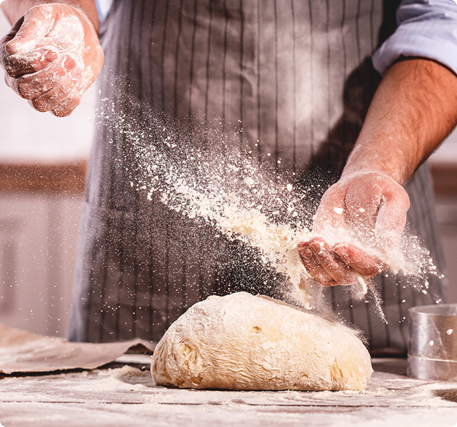
DMG and GMS for Sugar-Free Cakes and Bakery Products


Distilled Monoglycerides (DMG) and Glycerol Monostearate (GMS) are useful candidates when the formulation needs better fat dispersion, batter stability, and texture.
DMG is widely used in bakery applications and can help improve the interaction between fat, water, and starch-based components.
GMS can also be evaluated when the target is a smoother texture and more uniform distribution of the fat phase.
For a sugar-free cake, the practical question is not simply whether DMG or GMS "works." The more useful question is:
What changed after the sugar was removed, and which function needs to be restored?
If the batter has become unstable, the approach may be different from a formulation where the main problem is dry crumb or poor volume.

DATEM and SSL for Sugar-Free Bread


Sugar-free bread presents a different problem.
Here, dough strength, gas retention, loaf volume, and crumb structure may be more important than simply improving emulsification.
DATEM and SSL (Sodium Stearoyl Lactylate) can therefore be considered for yeast-raised bakery applications where dough conditioning and gas retention are important.
This is also why it is usually a mistake to use the same emulsifier strategy for every sugar-free bakery product.
A sugar-free cake and a sugar-free bread may both contain flour, water, fat, and an emulsifier, but their processing requirements are fundamentally different.

Emulsifiers for Sugar-Free Chocolate


Sugar-free chocolate is another application where formulation changes can become immediately noticeable.
Replacing sucrose with maltitol, erythritol, or another sweetening system can change particle behavior, viscosity, mouthfeel, and processing characteristics.
For chocolate manufacturers, one of the most common formulation questions is not simply "How do I emulsify the chocolate?" but:
How can I achieve the required flow and processing behavior without changing the chocolate's sensory profile too much?

PGPR for Chocolate Flow and Viscosity


PGPR (Polyglycerol Polyricinoleate) is particularly relevant when viscosity and flow are major concerns.
PGPR is a lipophilic emulsifier that primarily acts in the fat phase. It can reduce internal friction and improve the flow behavior of high-fat systems. CHEMSINO's technical material also notes that PGPR is commonly used together with other emulsifiers rather than functioning as a complete emulsification system by itself.
This makes PGPR especially interesting when developing sugar-free chocolate where the replacement of sucrose has changed the rheology of the chocolate mass.
However, PGPR should not automatically be increased whenever chocolate becomes too thick.
The manufacturer should first determine whether the increased viscosity comes from the sweetener, particle size distribution, fat level, refining conditions, or emulsifier system.
That diagnosis can prevent unnecessary formulation changes.

PGE in Sugar-Free Chocolate Formulations


PGE (Polyglycerol Esters of Fatty Acids) can also be evaluated in applications where emulsification and fat-phase management are important.
PGE is a versatile food emulsifier used across several food systems, including bakery and dairy-related applications.
For a sugar-free chocolate formulation, however, the final choice should be based on actual rheology and processing trials rather than simply selecting an emulsifier because of its E-number or general application range.

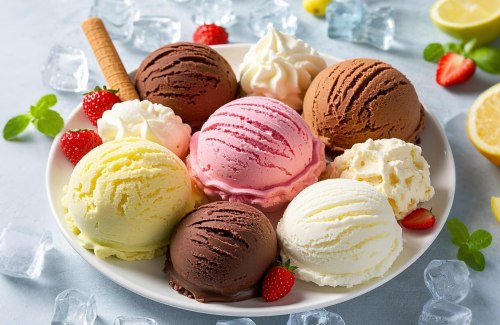
Emulsifier Selection for Sugar-Free Ice Cream


Sugar reduction can be particularly complicated in ice cream.
Sucrose affects sweetness, freezing point, and the amount of soluble solids in the mix. When it is replaced, the formulation may show changes in hardness, melting behavior, body, and mouthfeel.
This is where an emulsifier needs to work together with the rest of the ice cream system.

PGE for Sugar-Free Frozen Desserts


PGE can be considered when developing sugar-free ice cream and other frozen desserts where control of the fat-water interface, fat destabilization, and air incorporation are important.
But PGE should not be expected to solve freezing-point problems caused by removing sucrose.
If a sugar-free ice cream is too hard, for example, simply increasing the emulsifier may not be the right solution. The sweetener system and total solids may need to be reviewed first.
This distinction is important in commercial product development:

An emulsifier can improve the structure of a formulation, but it cannot replace every physical function of sugar.

Emulsifiers for Sugar-Free Whipped Toppings


Whipped toppings and whipping cream products require a different type of stability.
The product must form a stable foam while maintaining the desired creamy texture.
Sugar reduction can change viscosity and total solids, which may influence whipping time, overrun, foam stability, and mouthfeel.
Depending on the fat system and product format, DMG, GMS, and PGE-based emulsifier systems can be evaluated.
For whipping cream powder, the situation becomes more complex because the emulsifier must also perform effectively after drying and subsequent reconstitution.
A formulation that works well in liquid cream does not automatically perform the same way after spray drying.
For this reason, manufacturers developing sugar-free whipping cream powder should evaluate the emulsifier under the actual reconstitution and whipping conditions rather than relying only on laboratory dispersion tests.

Sugar-Free Confectionery: Don't Overlook the Fat Phase


Sugar-free confectionery often relies on polyols such as maltitol, sorbitol, xylitol, or isomalt.
These ingredients can influence crystallization, viscosity, moisture behavior, and mouthfeel.
If the product contains a significant fat phase, an emulsifier may help improve the dispersion and interaction between fat and other ingredients.
However, confectionery is highly sensitive to processing temperature and crystallization behavior. The emulsifier should therefore be evaluated together with the fat type, moisture level, sweetener system, and processing conditions.
In other words, the question is not simply:
"Which emulsifier is used in sugar-free candy?"
It is:
"What is happening to the fat and solid phases after sucrose is removed?"
That is the question that usually leads to a more useful formulation decision.

Sugar-Free Product Emulsifier Selection at a Glance


Application Emulsifiers to Evaluate Main Considerations
Sugar-free cakes DMG, GMS Batter stability, texture, volume
Sugar-free bread DATEM, SSL, DMG Dough strength, gas retention, crumb
Sugar-free cookies DMG, GMS Fat distribution, texture, spread
Sugar-free chocolate PGPR, PGE Viscosity, flow, fat-phase behavior
Sugar-free ice cream PGE, DMG/GMS systems Fat destabilization, air incorporation, texture
Sugar-free whipped toppings DMG, GMS, PGE systems Whipping, foam stability, mouthfeel
Sugar-free confectionery GMS, PGE and other suitable systems Fat dispersion, texture, processing

These are
starting points rather than fixed formulations. The appropriate emulsifier and dosage need to be confirmed through application testing.

Why Combining Emulsifiers Can Make Sense


One of the more common formulation mistakes is assuming that one emulsifier should perform every function.
In reality, different emulsifiers influence different parts of a food system.
For example, in bakery products, one emulsifier may contribute more to fat dispersion and crumb texture, while another may provide stronger dough-conditioning effects.
In chocolate, PGPR may be selected primarily for flow control, while another emulsifier may contribute to overall fat-phase management.
This is why emulsifier blends and multi-emulsifier systems are common in commercial food formulations.
The goal is not to use as much emulsifier as possible.
The goal is to find the combination that provides the required processing and sensory performance at an appropriate use level.

How to Test an Emulsifier in a Sugar-Free Product


A good emulsifier trial should compare the finished product, not just the raw material.
For bakery products, monitor batter behavior, specific volume, crumb structure, softness, and texture after storage.
For chocolate, rheology and flow behavior should be evaluated under actual processing conditions.
For ice cream, overrun, hardness, melting behavior, body, and mouthfeel are more meaningful indicators.
For whipped products, whipping time, overrun, foam stability, and post-whipping texture should be considered.
It is also worth testing several dosage levels rather than comparing only "with emulsifier" and "without emulsifier."
A small change in dosage can sometimes produce a significant difference in texture or processing behavior.
More importantly, evaluate the product after storage, not only immediately after production. Some formulation problems become visible only after several days or weeks.

A Practical Example: Sugar-Free Cake Formulation


Consider a cake manufacturer replacing sucrose with erythritol and a high-intensity sweetener.
The new cake has acceptable sweetness, but the batter is less uniform, and the finished product has lower volume and a firmer crumb.
Increasing the sweetener does not solve the problem because sweetness is not the issue.
The manufacturer would need to look at several factors:
1. Solids: Has the replacement changed the total solids of the batter?
2. Moisture: Has water distribution changed?
3. Fat phase: Is the fat being dispersed effectively?
4. Batter structure: Has the change affected aeration or starch-protein interactions?
5. Emulsifier system: Could DMG or GMS improve the interaction between the fat and aqueous phases?
Only after these questions are answered does it make sense to optimize emulsifier dosage.
This is a more reliable approach than simply adding more emulsifier whenever the finished product does not meet expectations.

Don't Select a Food Emulsifier by HLB Alone


HLB can be a useful reference when discussing emulsification, but it should not be treated as the final selection criterion for complex food systems.
A sugar-free food can contain fats, proteins, starches, polyols, fibers, hydrocolloids, minerals, and other functional ingredients.
Processing also matters.
The same emulsifier at the same dosage may behave differently under different mixing temperatures, shear conditions, baking processes, freezing conditions, or tempering profiles.
For commercial formulation work, application performance should ultimately carry more weight than a single theoretical parameter.

Regulatory Considerations for Sugar-Free Products


The term "sugar-free" is regulated differently across markets, so manufacturers should always check the requirements of the country where the finished product will be sold.
In the United States, for example, FDA regulations generally define "sugar free" as containing less than 0.5 g of sugars per reference amount customarily consumed and per labeled serving, subject to additional conditions. The regulations also distinguish "sugar free" from claims such as "no added sugar" and "reduced sugar." (U.S. Food and Drug Administration)
This is important because replacing sucrose with a sweetener does not automatically make a product eligible for a "sugar-free" claim.
The finished formulation, ingredient statement, nutrition information, and applicable local regulations all need to be considered.

How CHEMSINO Can Help with Sugar-Free Product Development


Choosing an emulsifier becomes much easier when the supplier understands the actual application.
CHEMSINO focuses on food emulsifiers and supplies a broad portfolio including DMG, GMS, PGE, PGPR, DATEM, SSL, PGMS, ACETEM, CITREM, LACTEM, and other specialty emulsifiers.
For sugar-free product development, the most useful starting point is usually not a request for "the best emulsifier."
Instead, provide the supplier with a few basic details:

# Product type
# Current formulation or main ingredients
# Fat source and fat level
# Sugar replacement being used
# Processing method
# Current emulsifier, if any
# The specific problem you want to solve
# Target market and required certifications

With this information, the emulsifier selection can be narrowed down much more efficiently.
For example, a manufacturer developing sugar-free bread may need to focus on DATEM, SSL, or DMG, while a sugar-free chocolate manufacturer may be more interested in PGPR or PGE. A sugar-free ice cream formulation may require a different emulsifier system altogether.
CHEMSINO's product portfolio is designed to support these different food applications rather than forcing every formulation into the same emulsifier solution.

Need Help Choosing an Emulsifier for Your Sugar-Free Product?


If you are developing a sugar-free or reduced-sugar food product, send us your product type, fat source, sugar replacement, processing method, and current formulation problem.
CHEMSINO can help you identify suitable emulsifier options and discuss which products are worth testing in your application.
Tell us what you are making and what problem you are seeing.
The more specific the formulation information, the more useful the emulsifier recommendation can be.

FAQ


What is the best emulsifier for sugar-free products?


There is no single best emulsifier for every sugar-free food. DMG and GMS are useful candidates for many bakery applications, while PGPR and PGE are often considered for chocolate and other high-fat systems. The right choice depends on the formulation and processing conditions.

Which emulsifier is best for sugar-free cake?


DMG and GMS are useful starting points for sugar-free cakes when the formulation requires better batter stability, fat dispersion, texture, or volume. The optimum emulsifier and dosage depend on the complete cake formula.

What emulsifier is used in sugar-free chocolate?


PGPR is commonly evaluated when chocolate viscosity and flow are important. PGE may also be considered depending on the formulation and desired functionality.

Can PGE be used in sugar-free ice cream?


Yes. PGE can be evaluated in sugar-free ice cream and frozen desserts where fat-phase management, emulsification, air incorporation, and texture are important. However, it cannot replace the freezing-point function of sugar, so the sweetener and solids system also need to be considered.

Does sugar-free food require more emulsifier?


Not necessarily. Increasing emulsifier dosage is not always the solution. The first step is to identify what changed after sugar reduction and determine whether the issue is related to fat dispersion, viscosity, moisture, solids, aeration, or another part of the formulation.

Can one emulsifier work for all sugar-free foods?


Usually, no. Bakery, chocolate, ice cream, whipped toppings, and confectionery have different formulation structures and processing requirements. Emulsifier selection should therefore be application-specific.

Final Thoughts


Sugar-free product development is fundamentally a formulation balancing exerciseWhen sucrose is removed, the changes can extend far beyond sweetness. Fat distribution, viscosity, solids, aeration, texture, freezing behavior, and processing performance may all shift. That is where emulsifiers can make a meaningful difference.

DMG, GMS, DATEM, SSL, PGE, and PGPR each have different strengths, and the right choice depends on what the product actually needs. For manufacturers, the most efficient approach is to start with the formulation problem, identify the changed physical properties, and then screen suitable emulsifier systems under real processing conditions. For CHEMSINO, that is also the most useful starting point for a technical discussion: tell us what you are making, what has changed after sugar reduction, and what result you need to achieve.
Start earning substantial
profits in your country today!
Email
Whatsapp