Home
Products
Emulsifier List
Application
Gallery
News
Blog
About Us
About Us
Contact Us
Your Position : Home > Blog

E492 vs PGPR vs Lecithin: Which Emulsifier Is Best for Your Application?

Date:2026-04-29
Read:
Share:
In chocolate, margarine, and many fat-based systems, choosing the right emulsifier is not just a technical decision—it directly affects product quality, processing efficiency, and cost.

Three of the most commonly used emulsifiers are:

* Sorbitan Tristearate (E492)
* PGPR (Polyglycerol Polyricinoleate, E476)
* Lecithin (E322)


At first glance, they may seem interchangeable. In reality, they serve very different roles.

If you choose the wrong one, you may face:

* High viscosity
* Poor flow
* Unstable emulsions
* Increased production cost

This guide explains the real differences and helps you choose the right combination for your product.

Quick Comparison: E492 vs PGPR vs Lecithin

 
Property     E492 (Span 65) PGPR (E476) Lecithin (E322)
Function Structure & stability Strong viscosity reduction Basic emulsification
HLB Very low (~2.1) Extremely low Medium
Solubility Oil-soluble Oil-soluble Amphiphilic
Main Role Fat structuring Flow improvement General emulsifier
Typical Dosage Low–medium Very low Medium
Cost Efficiency  Medium High (low dosage) Low–medium


What Each Emulsifier Actually Does? 


Sorbitan Tristearate (E492): Structure Builder


Sorbitan Tristearate, also known as Span 65, is mainly used to build and stabilize fat structure.

In real applications, E492 helps:

* Strengthen fat crystal networks
* Improve product stability
* Support water-in-oil emulsions
* Enhance texture in margarine and chocolate

It is commonly used in:

* Margarine and spreads
* Chocolate and compound coatings
* Bakery fat systems

It is often searched as:

* E492 emulsifier for margarine
* Span 65 for chocolate stability


PGPR (E476): Viscosity Reducer


PGPR is one of the most effective emulsifiers for reducing viscosity in chocolate.
Its main function is:

* Dramatically improve flow properties
* Reduce yield stress
* Enable better molding and coating

In chocolate production:

* PGPR allows lower cocoa butter usage
* Improves processing efficiency
* Reduces production cost

It is widely used in:

* Chocolate
* Compound coatings
* Confectionery

Lecithin (E322): Basic Emulsifier


Lecithin is one of the most widely used emulsifiers in food.

It provides:

* Basic oil-water emulsification
* Improved mixing
* Moderate viscosity reduction

However, compared to PGPR:

* Its viscosity reduction effect is limited
* Higher dosage is required

It is commonly used in:

* Chocolate
* Bakery
* Dairy and beverages


The Real Difference: How They Work Together


In real formulations, these emulsifiers are not competitors—they are complementary.
Each one solves a different problem:

* Lecithin → provides basic emulsification
* PGPR → improves flow and reduces viscosity
* E492 → strengthens structure and stability

This is why many manufacturers use them together instead of choosing only one.


Application Example: Chocolate Production


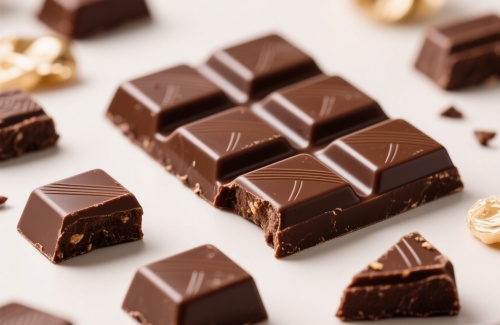
Chocolate is the best example to understand their differences.

If you use Lecithin only:

* Basic emulsification works
* But viscosity may still be high

If you add PGPR:

* Viscosity drops significantly
* Chocolate flows better
* Processing becomes easier

If you also add E492:

* Structure becomes more stable
* Texture improves
* Final product quality is more consistent

This combination allows:

* Lower fat usage
* Better processing
* More stable final products


Application Example: Margarine


In margarine systems:

* Lecithin → helps initial emulsification
* E492 → stabilizes water-in-oil structure
* PGPR → usually not required

Here, E492 plays a much more important role than PGPR.


How to Choose the Right Emulsifier?
 

Instead of asking “which one is best,” ask:

1. Do you need flow or structure?

* Choose PGPR → for flow and viscosity reduction
* Choose E492 → for structure and stability

2. What is your system?

* Chocolate → Lecithin + PGPR (+ E492 for optimization)
* Margarine → E492 + Lecithin
* Bakery → Lecithin + E492

3. What is your cost target?

* PGPR reduces fat cost (very efficient)
* Lecithin is economical but less powerful
* E492 improves stability (reduces defects and waste)

Common Mistakes to Avoid


Many buyers make these mistakes:

* Using only lecithin and expecting low viscosity
* Replacing PGPR with E492 (they are not interchangeable)
* Ignoring structure in fat-based systems
* Choosing based on price only

In reality, the right combination often reduces total cost.


Why Supplier Quality Matters? 


Even with the same emulsifier type, performance can vary.

Key factors include:
* Raw material quality
* Production process control
* Consistency between batches

Low-quality emulsifiers may lead to:

* Unstable products
* Processing issues
* Higher overall cost

Working with experienced suppliers like CHEMSINO helps ensure consistent performance and technical support for different applications.


FAQ: E492 vs PGPR vs Lecithin


1. What is the difference between E492 and PGPR?

E492 builds structure and stability, while PGPR mainly reduces viscosity and improves flow.

2. Can PGPR replace lecithin?

No. PGPR cannot fully replace lecithin because it does not provide basic emulsification.

3. Which emulsifier is best for chocolate?

A combination of lecithin + PGPR is most common. E492 can be added for better structure and stability.

4. Is E492 necessary in chocolate?

Not always, but it improves stability and texture, especially in compound coatings and fat-based systems.

5. Which emulsifier reduces viscosity the most?

PGPR is the most effective emulsifier for viscosity reduction.


Final Thoughts


E492, PGPR, and Lecithin are not substitutes—they are tools with different roles. Understanding how they work allows you to improve product quality, optimize processing, and reduce formulation cost. 
In most real-world applications, the best solution is not choosing one, but combining them correctly.
Start earning substantial
profits in your country today!
Email
Whatsapp