Home
Products
Emulsifier List
Application
Gallery
News
Blog
About Us
About Us
Contact Us
Your Position : Home > Blog

Span 60 vs Span 65 vs Span 80

Date:2026-04-27
Read:
Share:
If you are working with food emulsifiers, you have probably come across Span 60, Span 65, and Span 80. At first glance, they look similar. In reality, they behave quite differently in formulations.

Choosing the wrong one can lead to unstable emulsions, poor texture, or processing issues. Choosing the right one can improve stability, reduce cost, and simplify your formulation.

This guide explains the real differences between Span 60, Span 65, and Span 80—and how to choose the right one for your application.


What Are Span Emulsifiers?


Span emulsifiers are a group of sorbitan esters of fatty acids. They are non-ionic, oil-soluble emulsifiers with low HLB values, mainly used in water-in-oil (W/O) systems.

The key difference between them comes from the type of fatty acid used.

* Span 60 → Sorbitan Monostearate (E491)
* Span 65 → Sorbitan Tristearate (E492)
* Span 80 → Sorbitan Monooleate (E494) 

This difference directly affects melting point, stability, and application performance.


Quick Comparison: Span 60 vs Span 65 vs Span 80


Property Span 60 Span 65 Span 80
Chemical Name Sorbitan Monostearate Sorbitan Tristearate Sorbitan Monooleate
E Number E491 E492 E494
HLB Value ~4.7 ~2.1 ~4.3
Fatty Acid Type Saturated Highly saturated Unsaturated
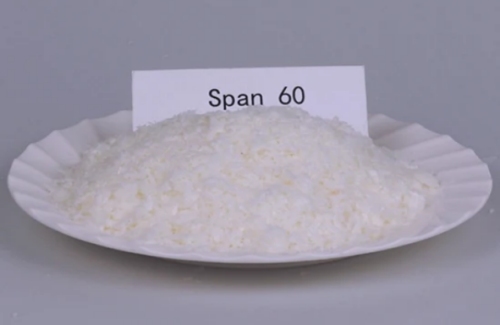
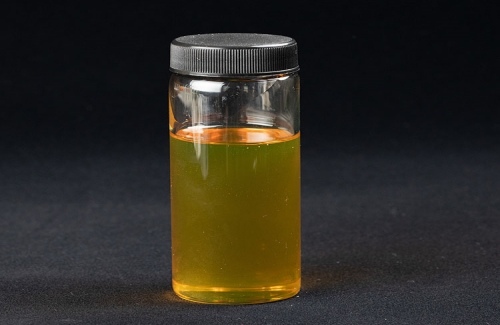
Physical Form Solid Hard waxy solid Liquid
Melting Point Medium High Low
Best For General emulsification Strong structure & stability Flexibility & fluid systems


Key Differences Explained Simply


1. Structure and Stability


The biggest difference between Span 60, Span 65, and Span 80 is how strong a structure they create.

* Span 65 creates the strongest and most stable fat structure
* Span 60 provides moderate structure and is more versatile
* Span 80 creates the least structure but offers better flexibility

This is why Span 65 is often used in margarine and fat-rich systems, while Span 80 is more common in fluid emulsions.


2. Melting Behavior


Melting point directly affects processing and final texture.

* Span 65 → high melting point → more stable under heat
* Span 60 → medium melting point → balanced performance
* Span 80 → low melting point → easy to handle and disperse

If your process involves high temperatures or requires a firm texture, Span 65 is usually the better choice.


3. Fatty Acid Composition


This is the root cause of their performance differences.

* Span 60 → based on stearic acid (saturated)
* Span 65 → higher stearic acid content (more rigid structure)
* Span 80 → based on oleic acid (unsaturated, more flexible)

In simple terms:

* More saturation → more stability
* More unsaturation → more flexibility


4. Application Behavior


In real production:

* Span 60 → “all-rounder,” works in many systems
* Span 65 → “structure builder,” ideal for fat systems
* Span 80 → “flow improver,” suitable for liquid systems


When to Use Span 60 (Sorbitan Monostearate E491)? 


Span 60 is a good choice when you need balanced performance.

Typical uses:

* Bakery emulsifiers
* General food emulsification
* Creamers and fillings

It provides:

* Moderate stability
* Good compatibility with other emulsifiers
* Easy formulation adjustment


When to Use Span 65 (Sorbitan Tristearate E492)? 


Span 65 is the best option when structure and stability are critical.

Typical applications:

* Margarine and fat spreads
* Chocolate and compound coatings
* High-fat systems

It is often searched as:

* Span 65 emulsifier for margarine
* Sorbitan tristearate for chocolate

It provides: 

* Strong fat crystal network
* Excellent stability
* High heat resistance


When to Use Span 80 (Sorbitan Monooleate E494)? 


Span 80 is more suitable for flexible and liquid systems.

Typical uses:

* Flavor emulsions
* Beverage emulsifiers
* Low-viscosity systems

It provides:

* Better fluidity
* Easier dispersion
* Improved flexibility

However, it offers less structural strength compared to Span 60 and Span 65.


Can You Combine Span 60, Span 65, and Span 80?


Yes—and in many cases, this is the best approach.

In real formulations, a single emulsifier is rarely enough. Combining them allows you to balance performance.

Examples:

* Span 65 + Span 80 → stability + flexibility
* Span 60 + Span 80 → balanced emulsification
* Span 65 + Tween → strong W/O + O/W system

This is how formulators fine-tune texture, stability, and processing behavior.


How to Choose the Right One? 


Instead of asking “which is better,” ask:

* Do I need structure or flexibility?
* Is my system fat-based or fluid?
* What is my processing temperature?
* Do I need long-term stability or easy dispersion?

Quick guide:

* Choose Span 65 → if stability and structure are critical
* Choose Span 60 → if you need a balanced, versatile emulsifier
* Choose Span 80 → if your system is liquid and requires flexibility


Why Quality Matters? 


Even within the same product (Span 60, 65, or 80), performance can vary.

Key factors include:

* Raw material quality
* Esterification level
* Consistency between batches

Poor-quality emulsifiers can lead to:

* Unstable emulsions
* Texture problems
* Production inefficiency

Working with experienced suppliers like CHEMSINO helps ensure consistent performance, especially in large-scale production.


FAQ: Span 60 vs Span 65 vs Span 80


What is the main difference between Span 60, 65, and 80?


The main difference is the fatty acid used, which affects stability, melting point, and application performance.
 

Which Span emulsifier is best for margarine?


Span 65 is usually the best choice because it provides strong structure and stability in fat systems.
 

Which Span is best for chocolate?


Span 65 is commonly used to improve viscosity and stability, often combined with other emulsifiers.
 

Can Span 80 replace Span 60 or Span 65?


Not directly. Span 80 is more flexible but provides less structure, so it is not suitable for applications that require stability.
 

Are Span emulsifiers water-soluble?


No. Span emulsifiers are oil-soluble and mainly used in water-in-oil systems.
 

Final Thoughts


Span 60, Span 65, and Span 80 may look similar, but they serve different roles in food formulations. 

Understanding their differences allows you to:

* Improve product stability
* Optimize processing
* Reduce formulation costs

In real-world applications, the best results often come from combining them strategically rather than relying on just one.
Start earning substantial
profits in your country today!
Email
Whatsapp