In commercial bakery production, achieving consistent product quality is often more challenging than developing a formula for a single successful batch. A bread manufacturer may have the same recipe, the same ingredients, and the same equipment, yet experience differences in loaf volume, crumb structure, and freshness due to variations in flour quality, processing conditions, or storage time. This is why bakery manufacturers rely on functional ingredients such as emulsifiers to improve production stability and product performance.
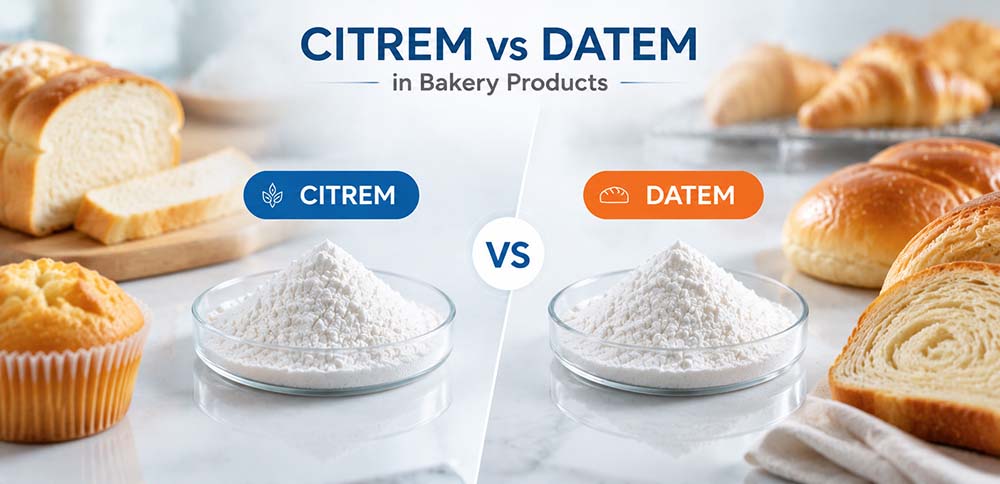
Among bakery emulsifiers, CITREM (Citric Acid Esters of Mono- and Diglycerides, E472c) and DATEM (Diacetyl Tartaric Acid Esters of Mono- and Diglycerides, E472e) are two important solutions widely used in bread and bakery applications. Although both emulsifiers are based on mono- and diglycerides, they are designed to solve different formulation challenges.
DATEM is mainly known as a powerful dough-strengthening emulsifier, helping improve gluten structure, gas retention, and bread volume. CITREM, on the other hand, provides excellent emulsification performance and texture improvement, helping manufacturers achieve stable formulations with better softness and mouthfeel. For bakery producers, the choice between CITREM and DATEM depends not only on the ingredient itself, but also on the product target, production process, and consumer expectations.
The Role of Emulsifiers in Modern Bakery Manufacturing
Bread is a complex system where flour proteins, starch, water, fat, and air must work together during mixing, fermentation, and baking.
The gluten network formed from wheat proteins provides the structure needed to hold fermentation gases. If the gluten structure is weak, bread may have poor expansion, uneven crumb, and reduced volume.
At the same time, after baking, starch molecules gradually reorganize through a process known as retrogradation. This is one of the main reasons why bread becomes harder and loses freshness during storage.
A suitable emulsifier helps control these changes by improving interactions between:
# gluten proteins and dough components;
# fats and water phases;
# starch and moisture.
For industrial bakeries, emulsifiers are not simply ingredients that improve appearance. They are tools that help achieve stable production performance under commercial conditions.
DATEM in Bakery Applications: The Choice for Dough Strength and Bread Volume
How DATEM Works in Bread Production?
DATEM emulsifier is one of the most widely used dough conditioners in industrial bread manufacturing.
Its main advantage is its strong interaction with gluten proteins. During dough mixing, DATEM helps create a stronger and more elastic gluten network, allowing the dough to retain more carbon dioxide during fermentation.
This directly influences:
# dough expansion;
# loaf volume;
# crumb structure;
# production consistency.
For high-speed bakery operations, this function is especially valuable because dough must often withstand strong mechanical stress from mixers, dividers, and moulding equipment.
Practical Example: DATEM in Sandwich Bread Production
Consider a commercial sandwich bread manufacturer producing thousands of loaves per day.
The company may face a common problem: bread volume decreases during periods when flour quality changes. The dough becomes weaker, fermentation gas escapes more easily, and the final bread appears smaller with a denser crumb.
By introducing DATEM into the formulation, the manufacturer can strengthen the gluten network and improve gas retention.
The result is usually:
# more stable loaf volume;
# improved internal structure;
# better slicing performance;
# more consistent appearance between batches.
For this type of application, DATEM is often preferred because the primary challenge is dough strength rather than softness.
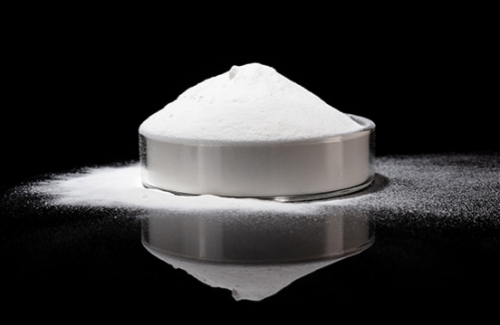
CITREM in Bakery Applications: Improving Emulsion Stability and Texture
How CITREM Works in Bakery Products?
CITREM emulsifier has excellent emulsification properties due to its citric acid ester structure.
Unlike DATEM, which mainly focuses on gluten strengthening, CITREM works more broadly on the interaction between fat, water, and other ingredients.
This makes it particularly useful in bakery products where fat distribution, texture, and mouthfeel are important.
CITREM can help create a more stable system by improving fat dispersion and reducing formulation instability.
Practical Example: CITREM in Cakes and Enriched Bakery Products
A cake manufacturer producing premium sponge cakes may face different challenges compared with a bread producer.
The key requirements are not maximum dough strength, but:
# fine crumb structure;
# soft texture;
# uniform fat distribution;
# pleasant mouthfeel.
In this situation, CITREM can provide advantages by improving batter stability and helping maintain a smooth texture after baking.
The final product may show:
# more delicate crumb;
# improved softness;
# better eating quality during storage.
For cakes, sweet breads, and fat-containing bakery products, CITREM is often a more suitable choice than strong dough conditioners.
CITREM vs DATEM: Different Functions for Different Bakery Goals
Although both CITREM and DATEM are bakery emulsifiers, they solve different problems.
A simple way to understand the difference is:
DATEM strengthens the structure.
CITREM improves the system.
DATEM is mainly used when manufacturers need stronger dough, higher volume, and better gas retention.
CITREM is more suitable when manufacturers need better emulsification, smoother texture, and improved product quality.
| Application Challenge |
Recommended Emulsifier |
| Low bread volume |
DATEM |
| Weak gluten structure |
DATEM |
| High-speed bread production |
DATEM |
| Poor fat distribution |
CITREM |
| Cake texture improvement |
CITREM |
| Smooth mouthfeel |
CITREM |
Can CITREM Replace DATEM in Bakery Products?
This is a common question from bakery manufacturers.
The answer depends on the product objective.
If the main goal is increasing bread volume and strengthening dough, CITREM cannot completely replace DATEM because their functional mechanisms are different.
For example, a large bread factory producing sandwich bread may require DATEM because loaf volume and production stability are critical.
However, if the manufacturer produces premium bakery products where texture and sensory quality are more important, CITREM may provide better overall performance.
In some formulations, CITREM and DATEM can also be combined to achieve balanced results.
Combining CITREM and DATEM for Better Bakery Performance
Many industrial bakery formulations do not rely on a single emulsifier.
A combination approach allows manufacturers to achieve multiple targets simultaneously.
For example:
A bread manufacturer may use DATEM to improve gluten strength and loaf volume, while adding CITREM to improve texture and eating quality.
This combination can provide:
# stronger dough structure;
# improved volume;
# softer crumb;
# better consumer acceptance.
The ideal ratio depends on:
# flour characteristics;
# fat content;
# product type;
# processing conditions;
# target shelf life.
This is where technical support from an experienced emulsifier supplier becomes important.
Choosing Between CITREM and DATEM for Different Bakery Products
Bread and Toast Products
For industrial bread products, DATEM is usually the preferred choice because volume and dough stability are key quality indicators.
Large-scale bread manufacturers often prioritize:
# production efficiency;
# consistent loaf size;
# strong crumb structure.
DATEM fits these requirements well.
Cakes and Sweet Bakery Products
For cakes, muffins, and enriched bakery products, texture is often more important than gluten strength.
CITREM can help improve:
# batter stability;
# softness;
# creamy mouthfeel.
Frozen Dough Applications
Frozen dough systems create additional challenges because freezing can damage gluten structure.
DATEM is commonly considered in these applications because stronger dough networks can better withstand freezing and thawing processes.
How CHEMSINO Supports Bakery Manufacturers with Emulsifier Solutions
Selecting the right emulsifier requires more than comparing product names. The same emulsifier may perform differently depending on formulation and processing conditions.
As a professional food emulsifier supplier, CHEMSINO provides CITREM, DATEM, DMG, SSL, GMS, PGPR, PGE, and other functional ingredients for global food manufacturers.
CHEMSINO works with customers to understand:
# target bakery products;
# production processes;
# texture requirements;
# shelf-life expectations.
Through product specifications, technical discussions, and application support, CHEMSINO helps bakery manufacturers identify suitable emulsifier solutions for their specific needs.
With certifications including ISO 9001, ISO 22000, Halal, Kosher, and RSPO, CHEMSINO focuses on consistent quality, reliable supply, and long-term cooperation with global customers.
Frequently Asked Questions
What is the main difference between CITREM and DATEM?
DATEM is mainly used for dough strengthening and improving bread volume, while CITREM focuses more on emulsification stability, texture improvement, and mouthfeel.
Which emulsifier is better for bread?
For industrial bread production, DATEM is often preferred because it improves gluten strength and gas retention. CITREM may be used when additional texture improvement is required.
Can CITREM and DATEM be used together?
Yes. Many bakery manufacturers combine emulsifiers to achieve balanced performance, improving both dough structure and final product texture.
Which emulsifier is suitable for cakes?
CITREM is often more suitable for cakes because it improves batter stability, crumb structure, and softness.
Final Thoughts
CITREM and DATEM are both valuable bakery emulsifiers, but they serve different roles in food production. DATEM is a powerful solution for manufacturers seeking stronger dough, higher bread volume, and improved production stability. CITREM is an excellent choice for products that require improved emulsification, a smoother texture, and enhanced eating quality. The right choice depends on the bakery product, processing conditions, and desired consumer experience.
With extensive experience in food emulsifiers, CHEMSINO provides CITREM, DATEM, and customized bakery emulsifier solutions to help manufacturers improve product quality, production efficiency, and market competitiveness. Contact CHEMSINO to discuss your bakery formulation requirements and find the right emulsifier solution for your products.

 Emulsifier List
 About Us