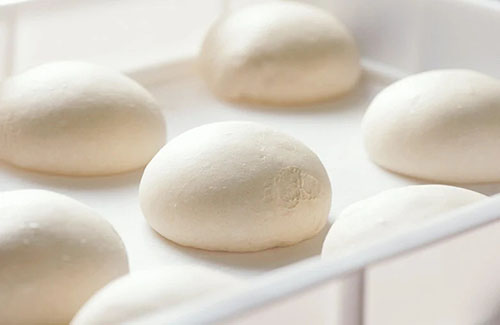
Frozen dough has become an essential technology for industrial bakeries, restaurant chains, and foodservice suppliers because it allows manufacturers to produce dough in advance, extend production flexibility, and provide freshly baked products closer to consumers. However, producing high-quality frozen dough is more challenging than producing fresh dough.
Many bakery manufacturers face the same problem: frozen dough performs well immediately after production but loses quality after several weeks of frozen storage. After thawing and baking, the dough may show reduced fermentation activity, lower bread volume, poor oven spring, and a harder crumb texture. This happens because freezing affects the internal structure of dough. Ice crystal formation can damage the gluten network, while frozen storage can reduce yeast performance and weaken dough elasticity.
To solve these challenges, manufacturers often use bakery emulsifiers for frozen dough applications to improve dough stability and maintain consistent baking performance. Among the commonly used emulsifiers, ACETEM (Acetic Acid Esters of Mono- and Diglycerides, E472a) and DATEM (Diacetyl Tartaric Acid Esters of Mono- and Diglycerides, E472e) are two important choices. Although both are used as food emulsifiers in bakery products, their functions are different. DATEM is mainly used as a dough strengthening emulsifier for frozen bread dough, while ACETEM is valued for improving frozen dough stability, texture, and processing performance.
Understanding the difference between ACETEM and DATEM helps bakery manufacturers select the right emulsifier according to their product type and production requirements.
Why Frozen Dough Requires Special Emulsifier Solutions?
Fresh dough and frozen dough do not behave the same way.
During normal bread production, gluten proteins form an elastic network that traps carbon dioxide generated by yeast fermentation. This structure allows dough to expand during proofing and baking.
However, freezing changes this system.
When dough is frozen, water forms ice crystals that can physically damage gluten structures. During thawing, the weakened dough may lose its ability to retain gas effectively.
This can lead to common problems such as:
# Reduced fermentation activity
# Lower bread volume
# Uneven crumb structure
# Poor dough handling after thawing
For industrial bakeries, these problems create significant production challenges because frozen dough is often stored for weeks before final baking.
A suitable emulsifier helps protect dough functionality by improving interactions between gluten, starch, fat, and water.
DATEM for Frozen Dough: The Preferred Solution for Bread Volume and Dough Strength
Why Is DATEM Used in Frozen Bread Dough?
DATEM is one of the most widely used bread dough strengthening emulsifiers in industrial bakery production.
Its main function is improving gluten network strength.
During dough mixing, DATEM interacts with gluten proteins and creates a stronger dough structure. A stronger gluten network allows dough to retain more fermentation gas during proofing and baking.
For frozen dough manufacturers, this is especially important because freezing weakens gluten structure over time.
Case Study: DATEM in Frozen Hamburger Bun Production
A frozen hamburger bun manufacturer supplying foodservice customers produces dough in a central factory and stores it frozen for several weeks before distribution.
The company noticed that some batches produced smaller buns after baking compared with freshly produced dough.
The main problems were:
# reduced dough elasticity after thawing;
# lower gas retention during proofing;
# inconsistent bun volume.
By incorporating DATEM into the frozen dough formulation, the manufacturer improved dough strength before freezing.
After optimization, the dough showed better:# freezing tolerance;
# fermentation performance;
# oven expansion;
# final bun consistency.
For this type of application, DATEM is often selected because the main requirement is maintaining bread volume after frozen storage.
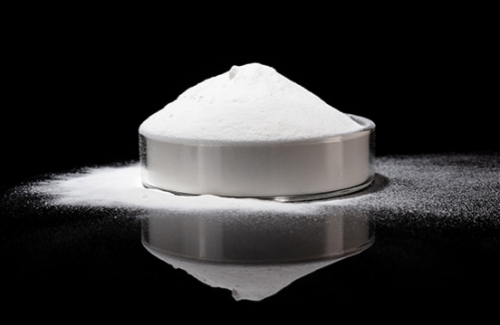
ACETEM for Frozen Dough: Improving Stability, Texture, and Processing Performance
How Does ACETEM Improve Frozen Dough Quality?
ACETEM is a functional bakery emulsifier that improves the interaction between fat, water, starch, and gluten components.
Compared with DATEM, ACETEM is not primarily designed as a gluten-strengthening agent. Instead, it provides balanced emulsification performance and helps maintain a stable dough system.
This makes ACETEM useful for applications where manufacturers need:
# better dough handling;
# improved texture;
# stable product quality after thawing.
Case Study: ACETEM in Frozen Croissant Dough
A frozen pastry manufacturer producing croissants experienced quality changes after extended frozen storage.
Although the dough could still be processed, the final baked products showed:
# reduced layer definition;
# uneven texture;
# inconsistent mouthfeel.
The main issue was not insufficient dough strength but instability of the fat and dough system during freezing and thawing.
By introducing ACETEM into the formulation, the manufacturer improved dough stability and maintained better product quality after storage.
The final croissants showed:
# improved dough machinability;
# more consistent lamination;
# better eating texture.
For frozen laminated dough products, ACETEM can provide advantages where texture and structural stability are more important than maximum dough strength.
ACETEM vs DATEM: Which Frozen Dough Emulsifier Should You Choose?
The choice between ACETEM and DATEM depends on the specific production challenge.
If a manufacturer produces frozen bread dough and the main problem is reduced loaf volume after freezing, DATEM is usually the better choice.
If the manufacturer produces frozen pastry products and needs better texture, handling, and storage stability, ACETEM may provide better performance.
In many commercial applications, the best solution is not choosing one emulsifier over another, but designing the right emulsifier system.
Can ACETEM and DATEM Be Used Together in Frozen Dough?
Yes.
Many industrial bakery manufacturers use combinations of emulsifiers to achieve balanced performance.
For example, a frozen bread manufacturer may combine:
# DATEM for gluten strengthening and volume improvement;
# ACETEM for texture improvement and frozen storage stability.
This approach helps manufacturers achieve both production efficiency and better consumer acceptance.
The optimal formulation depends on:
# flour quality;
# dough hydration;
# freezing temperature;
# storage period;
# final baking process.
.jpg)
Best Emulsifier for Frozen Bread Dough: ACETEM or DATEM?
There is no universal answer because different bakery products require different functional properties.
For frozen bread dough:
DATEM is often preferred because bread quality depends heavily on dough strength and volume.
For frozen pastry dough:
ACETEM may be more suitable because texture, flexibility, and fat distribution are critical.
For advanced industrial bakery systems:
A combination of ACETEM and DATEM may provide the most balanced performance.
How to Select a Frozen Dough Emulsifier Supplier?
For bakery manufacturers, selecting an emulsifier supplier is not only about purchasing ingredients.
The supplier should understand:
# bakery formulation requirements;
# frozen dough processing conditions;
# interaction between emulsifiers and other ingredients.
A professional food emulsifier manufacturer should provide:
# consistent product quality;
# technical documentation;
# application support;
# customized solutions.
CHEMSINO specializes in bakery emulsifiers and provides:
# ACETEM;
# DATEM;
# DMG;
# SSL;
# CITREM;
# GMS.
With certifications including ISO9001, ISO22000, Halal, Kosher, and RSPO, CHEMSINO supports global bakery manufacturers with reliable emulsifier solutions for frozen dough, bread, pastry, and other bakery applications.
Frequently Asked Questions
What emulsifier is used in frozen dough?
Common emulsifiers used in frozen dough include DATEM, ACETEM, SSL, DMG, and other mono- and diglyceride-based emulsifiers. The suitable choice depends on the product type and performance requirements.
What is the best emulsifier for frozen bread dough?
DATEM is commonly used for frozen bread dough because it improves gluten strength, gas retention, and bread volume after freezing.
How do emulsifiers improve frozen dough stability?
Emulsifiers improve interactions between gluten, fat, water, and starch, helping maintain dough structure and baking performance after freezing and thawing.
Can ACETEM replace DATEM in frozen dough?
ACETEM cannot always directly replace DATEM because they provide different functions. DATEM focuses more on dough strength, while ACETEM improves stability and texture.
Final Thoughts
Frozen dough manufacturers need emulsifiers that can maintain product quality throughout freezing, storage, thawing, and baking.
DATEM is an effective solution for improving gluten strength, gas retention, and bread volume. ACETEM provides excellent emulsification performance and helps improve dough stability, texture, and quality retention.
Choosing the right frozen dough emulsifier depends on the bakery product, processing conditions, and desired final characteristics.
As an experienced food emulsifier manufacturer, CHEMSINO provides ACETEM, DATEM, and customized bakery emulsifier solutions to help global manufacturers improve frozen dough performance and production consistency. Welcome to get in touch with us today to get your customized food solutions.

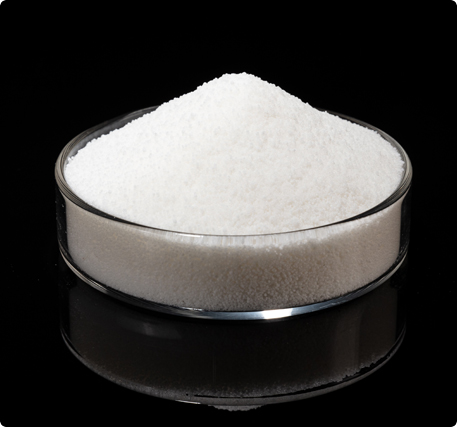 Emulsifier List
 About Us