Home
Products
Emulsifier List
Application
Gallery
News
Blog
About Us
About Us
Contact Us
Your Position : Home > Blog

Span 80 vs Tween 80: Differences, Applications, and How to Use Them Together

Date:2026-07-01
Read:
Share:
Span 80 and Tween 80 come from the same molecule. They're used in the same industries. And they appear on supplier catalogs as if they're interchangeable.

They're not. One is oil-soluble and stabilizes water-in-oil emulsions. The other is water-soluble and does the opposite. Getting them confused — or choosing one when you need both — is one of the more common sources of emulsion instability in food, cosmetic, and industrial formulation. 

Here's how they differ, where each one works, and how to use them together when the application calls for it.

What Are Span 80 and Tween 80?


Both start with sorbitan monooleate — sorbitol dehydrated to sorbitan, then esterified with oleic acid (C18:1). That's the shared foundation.

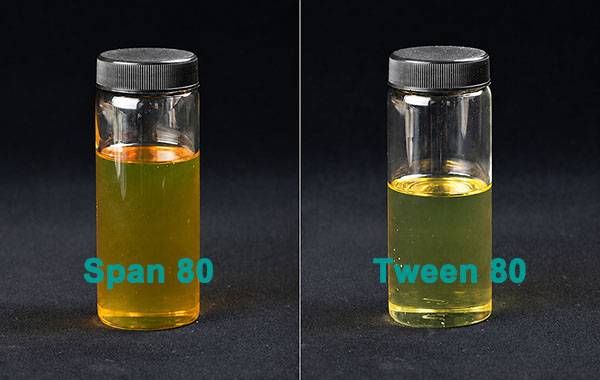
Span 80 stops there. Oil-soluble, HLB 4.3, stabilizes water-in-oil (W/O) emulsions.

Tween 80 goes further: 20 moles of ethylene oxide are added to the same sorbitan monooleate backbone. Those polyethylene glycol chains flip the molecule's character entirely — water-soluble, HLB 15.0, stabilizes oil-in-water (O/W) emulsions.

Same fatty acid. Same sorbitan base. One step of ethoxylation creates a 10.7-point HLB gap and two completely different functional profiles.


Side-by-Side Comparison

 
Property Span 80 Tween 80
Chemical name Sorbitan monooleate Polyoxyethylene (20) sorbitan monooleate
Also known as Sorbitan oleate, E494 Polysorbate 80, E433
Fatty acid Oleic acid (C18:1) Oleic acid (C18:1)
Ethoxylation None 20 moles EO
HLB value 4.3 15.0
Physical state Amber viscous liquid Amber viscous liquid
Solubility Oil-soluble Water-soluble
Emulsion type favored Water-in-oil (W/O) Oil-in-water (O/W)
FDA designation 21 CFR 172.842 21 CFR 172.840
Typical use level 0.1–2.0% 0.1–1.0%


What Each One Does at the Oil-Water Interface


Span 80 dissolves in the oil phase and positions at the interface with its hydrophilic head group pointing outward toward water. It stabilizes water droplets dispersed in a continuous oil phase — the W/O configuration — and works as a wetting agent for hydrophilic surfaces in oil-based systems.

Tween 80 dissolves in the water phase and anchors its oleic acid tail into oil droplets while its long PEG chains extend outward into water, creating a steric barrier that prevents droplet coalescence. It stabilizes oil droplets in water — O/W emulsions — and solubilizes oil-soluble ingredients into aqueous systems.

The two emulsifiers are mirror images of each other at the interface: one protects water droplets in oil, the other protects oil droplets in water.

Where Span 80 Is Used?


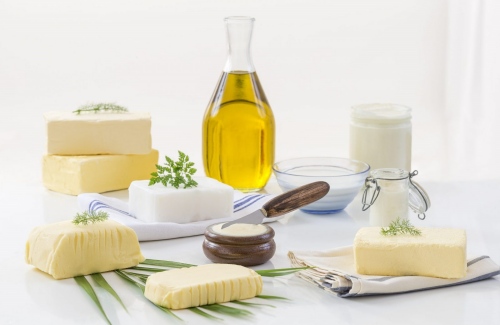
Food (W/O systems). In fat-continuous products — margarine, shortenings, fat-based spreads, compound coatings — Span 80 stabilizes water droplets in the fat phase, prevents water migration, and reduces viscosity during enrobing.

Agrochemical emulsifiable concentrates (ECs). This is one of Span 80's largest commercial uses. Pesticide and herbicide ECs are oil-based formulations that must self-emulsify when diluted in field water. Span 80 is the industry-standard oil-phase emulsifier in these systems, almost always paired with a higher-HLB co-emulsifier to reach the required HLB for the specific active ingredient.

Cosmetics (W/O creams and ointments). Rich creams, cold creams, and sun protection products use Span 80 as the oil-phase emulsifier anchor. Its oleic acid chain is skin-compatible and contributes a smooth, non-greasy feel. It's typically paired with Tween 80 or another high-HLB emulsifier to hit the target HLB for the specific oil blend.

Industrial emulsions. Metalworking fluids, textile lubricants, and rust-preventive coatings use Span 80 to stabilize W/O systems under mechanical and thermal stress.

Pharmaceutical adjuvants. Span 80 appears in topical preparations, oral formulations, and certain vaccine adjuvant emulsion systems — including Montanide ISA 51 and related adjuvant platforms — where defined emulsifier ratios and documented safety profiles are required.

Where Tween 80 Is Used?


Ice cream and frozen desserts. Tween 80 promotes partial fat coalescence during freezing and whipping — the controlled aggregation of fat globules around air cells that gives ice cream its body, texture, and melt resistance. Used at 0.1–0.3%, typically alongside mono- and diglycerides (GMS or DMG) in a complementary emulsifier system.

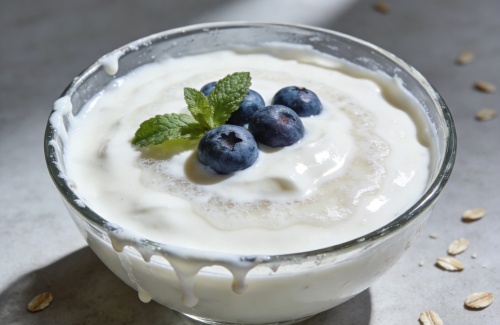
Dairy and beverages. In coffee creamers, flavored milks, and protein beverages, Tween 80 solubilizes fat-phase ingredients into aqueous systems and stabilizes O/W emulsions against creaming. Its water-solubility makes incorporation at ambient temperature straightforward.

Flavor and vitamin solubilization. Tween 80 is the standard choice for solubilizing oil-soluble flavors, fat-soluble vitamins (A, D, E, K), and nutraceuticals into water-based products. Effective at 0.05–0.2%, it produces clear or near-clear solutions that couldn't be achieved with oil-soluble emulsifiers alone.

Pharmaceuticals. Tween 80 is a critical excipient across multiple dosage forms: it stabilizes parenteral emulsions for IV drug delivery, improves dissolution of poorly water-soluble oral actives, stabilizes protein-based biologics and vaccines, and is used to coat nanoparticles for enhanced CNS drug delivery across the blood-brain barrier. Its USP-NF and European Pharmacopoeia status and decades of clinical use make it one of the most trusted pharmaceutical emulsifiers.

Cosmetics (O/W formulations). Lightweight lotions, serums, and micellar cleansers use Tween 80 to solubilize oil-phase ingredients and stabilize fine droplets. Often paired with Span 80 to tune the blended HLB.

How to Use Span 80 and Tween 80 Together?


This is where the chemistry pays off most directly. Because both emulsifiers share the same oleic acid chain and sorbitan backbone, they are fully compatible — no phase separation, no incompatibility issues. And their HLB values blend linearly by weight, which means you can target any HLB between 4.3 and 15.0 simply by adjusting the ratio.

The blending formula:

HLB (blend) = (weight fraction of Span 80 × 4.3) + (weight fraction of Tween 80 × 15.0)

Worked example — target HLB of 10:

Let x = weight fraction of Tween 80
10 = (1 − x) × 4.3 + x × 15.0
Solving: x = 0.533
Result: 53.3% Tween 80 + 46.7% Span 80 gives a blended HLB of 10.

Every oil and wax has a "required HLB" — the value at which it emulsifies most efficiently. Matching the emulsifier blend HLB to the required HLB of your oil phase is the foundation of rational emulsion design. The Span 80 / Tween 80 pair is particularly useful for this because their common molecular origin ensures consistent behavior and minimal interaction effects.

This approach is standard in cosmetic, pharmaceutical, and agrochemical formulation. In food, it's less common because food emulsifier systems often use functionally different molecules, but the principle applies wherever HLB tuning is needed.

Oxidative Stability: A Shared Limitation


Both Span 80 and Tween 80 contain oleic acid (C18:1) — one double bond, one site of oxidative attack. This is where lipid oxidation begins, producing the aldehydes and peroxides responsible for rancid off-flavors and degraded shelf life.

For most food and cosmetic applications, this is manageable with standard antioxidant protection (tocopherols, rosemary extract, BHA/BHT) and proper storage (cool, dark, low oxygen). For pharmaceutical applications — particularly injectable formulations and biologics — oxidative degradation of Tween 80 is a documented long-term stability concern, and peroxide value testing on each incoming lot is standard practice.

If oxidative stability is a primary constraint — long shelf life, warm distribution, minimal antioxidant — consider Span 60 (sorbitan monostearate, saturated C18:0) and Polysorbate 60 as more oxidatively stable alternatives, with the same HLB values and blending behavior.

Regulatory Status

 
Regulation Span 80 Tween 80
USA (FDA) 21 CFR 172.842 21 CFR 172.840
EU food additive E494 E433
JECFA (WHO/FAO) ADI established ADI established
EU cosmetics Approved (EC 1223/2009) Approved (EC 1223/2009)
Pharmaceutical USP-NF, EP recognized USP-NF, EP recognized

Both are accepted across major markets for food, cosmetic, and pharmaceutical use. Neither requires special labeling beyond standard additive declaration.


Quick Reference: Which One to Use

 
Application Span 80 Tween 80 Both
W/O emulsions (margarine, cold cream)    
O/W emulsions (dressings, lotions)    
Ice cream and frozen desserts    
Flavor and vitamin solubilization    
Agrochemical emulsifiable concentrates   Often paired
Cosmetic creams (HLB tuning)    
Pharmaceutical injectables    
Any target HLB between 4.3 and 15.0    


A Note on Quality and Sourcing


Span 80 and Tween 80 are commodity chemicals in the sense that they're widely produced. But wide availability doesn't mean consistent quality. Fatty acid composition, degree of ethoxylation, residual polyethylene glycol content, peroxide value, acid value, and water content all vary between suppliers and between lots from the same supplier — and all of them affect functional performance and shelf stability.

CHEMSINO has supplied sorbitan esters and polysorbates — including Span 80 and Tween 80 — to customers across food, cosmetics, agrochemicals, and pharmaceuticals for over a decade. Emulsifiers are our only business. That's not a marketing claim — it means our technical team works with these products every day, across the full range of applications covered in this article. When a customer comes to us with an unstable emulsion or a shelf life question, we can engage on the formulation, not just on the order.

Every batch ships with a full CoA: fatty acid profile, HLB, acid value, saponification value, hydroxyl value, peroxide value, water content, and color. Samples and technical datasheets are available before any purchase commitment.
Start earning substantial
profits in your country today!
Email
Whatsapp