Food emulsifiers play a critical role in improving texture, stability, and consistency in modern food production. However, their performance over time depends heavily on proper shelf life management, storage conditions, and formulation stability.
For food manufacturers and distributors, understanding how emulsifiers age and how to store them correctly helps prevent quality loss, production issues, and unnecessary waste.
Why Shelf Life and Storage Matter for Food Emulsifiers
Food emulsifiers are functional ingredients derived from fats, oils, or chemical esterification processes. Over time, exposure to heat, moisture, oxygen, or light can lead to:
1. Oxidation
2. Caking or agglomeration
3. Loss of emulsifying efficiency
4. Color or odor changes
Proper handling ensures consistent performance and compliance with food safety standards.
Typical Shelf Life of Food Emulsifiers
Shelf life varies depending on emulsifier type, physical form, and formulation.
General Shelf Life Ranges
3. Polysorbates (Tween series): 24 months
4. Lecithin: 12–18 months
Always refer to the manufacturer's TDS and COA for exact shelf life information.
Key Factors Affecting Emulsifier Shelf Life
1. Temperature
High temperatures accelerate oxidation and can cause emulsifiers to soften, melt, or degrade.
Recommended storage:
Cool, dry environment
Typically below 25°C (77°F)
2. Moisture and Humidity
Moisture absorption may cause:
· Caking
· Reduced flowability
· Microbial risk in certain emulsifiers
Best practice:
· Store in sealed packaging
· Avoid high-humidity warehouses
3. Oxygen Exposure
Oxygen can trigger lipid oxidation, leading to:
Off-odors
Reduced functional performance
Use airtight packaging and minimize repeated opening.
4. Light Exposure
UV light may degrade sensitive emulsifiers, especially liquid forms.
Store away from direct sunlight.
Storage Recommendations by Physical Form
Powdered Emulsifiers
Examples: monoglycerides, SSL
Storage tips:
· Keep in original, sealed bags
· Use pallets to avoid floor moisture
· Avoid stacking damage
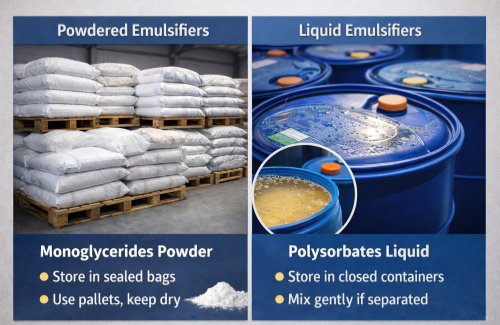
Liquid Emulsifiers
Examples: polysorbates, liquid lecithin
Storage tips:
· Store in tightly closed containers
· Prevent temperature fluctuations
· Mix gently before use if separation occurs
Stability of Food Emulsifiers in Food Applications
Thermal Stability
Most food emulsifiers are stable under baking, pasteurization, and cooking conditions, but excessive heat or long holding times may reduce effectiveness.
pH Stability
Non-ionic emulsifiers (e.g., monoglycerides, polysorbates) perform well across a wide pH range
Ionic emulsifiers may be more pH-sensitive
Storage Stability in Finished Products
In finished foods, emulsifier stability influences:
· Texture retention
· Emulsion integrity
· Shelf life consistency
Correct emulsifier selection and dosage are critical for long-term product stability.
Signs of Emulsifier Degradation
Before use, emulsifiers should be checked for:
· Unusual odor
· Color changes
· Lumping or hardening
· Reduced dispersibility
Any abnormal changes may indicate that the product is no longer within specification.
Regulatory and Quality Considerations
Using emulsifiers beyond their shelf life can:
Affect food safety compliance
Cause inconsistent product quality
Increase customer complaints
Manufacturers should implement FIFO (First In, First Out) inventory management and maintain proper documentation.
How Chemsino Ensures Emulsifier Stability
Chemsino supplies food emulsifiers with:
1. Clearly defined shelf life
2. Protective packaging
3. Consistent batch quality
4. Full technical documentation (TDS, COA)
We also provide guidance on storage, handling, and application stability to support smooth food production.
Best Practices Summary
To maximize emulsifier shelf life and stability:
1. Store in cool, dry, and well-ventilated areas
2. Keep packaging sealed when not in use
3. Avoid exposure to heat, moisture, and light
4. Follow manufacturer storage recommendations
Final Thoughts
Proper shelf life management, storage, and stability control are essential for maintaining the performance of food emulsifiers. By understanding how emulsifiers behave over time, manufacturers can reduce waste, ensure product consistency, and maintain regulatory compliance.
Need Storage Guidance or Technical Support?
Contact Chemsino to receive product-specific storage recommendations, samples, and technical assistance for your food emulsifier applications.

 Emulsifier List
 About Us

 Powder.jpg)

-Emulsifier.jpg)

