Home
Products
Emulsifier List
Application
Gallery
News
Blog
About Us
About Us
Contact Us
Your Position : Home > Blog

Mono-Propylene Glycol vs Propylene Glycol

Date:2025-09-22
Read:
Share:
“Monopropylene glycol” (often abbreviated MPG or Mono-PG) and “propylene glycol” (PG) are terms often encountered in food, pharmaceuticals, cosmetics, and industrial applications. Are they the same? When considering safety, purity, or functionality, which grade or variant should you use? This article details their meanings, how to compare them, and when to use each.


What Is Propylene Glycol?


Propylene Glycol (PG), also known as propane-1,2-diol (C₃H₈O₂), is a clear, colorless, slightly viscous liquid with a faintly sweet taste. It can be produced from petroleum or from plant-based feedstocks. Classified as a diol because it contains two hydroxyl groups, PG is miscible with water and many organic solvents, which makes it an exceptionally versatile humectant, solvent, and carrier.


Key Uses of Propylene Glycol


Food & Beverages: Works as a carrier for flavors, colors, and antioxidants, helping maintain uniform taste and appearance.

Cosmetics & Personal Care: Retains moisture and stabilizes formulations in creams, lotions, deodorants, and other products.

Pharmaceuticals: Function as a safe vehicle for active ingredients in syrups, oral solutions, and topical medicines.

Industrial Applications: Serves in antifreeze, de-icing fluids, and heat-transfer systems thanks to its low freezing point and thermal stability.

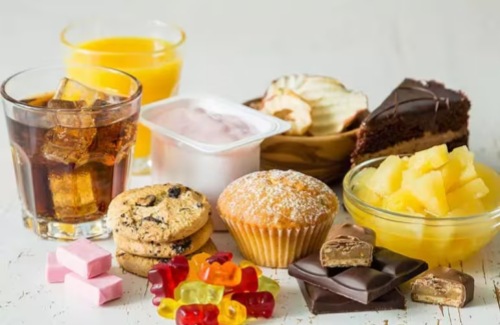
Propylene glycol in food and beverages


What Is Mono Propylene Glycol?


Mono Propylene Glycol (MPG) is essentially the same base chemical as Propylene Glycol (PG). The term “mono” distinguishes it from dipropylene glycol or other derivatives and refers to the single glycol molecule rather than polymeric forms.

MPG usually refers to food-grade or USP-grade Propylene Glycol, emphasizing its safety and compliance for applications that require strict quality standards.


Key Applications of MPG


Food Processing: Acts as a humectant, stabilizer, and solvent for flavors and colors.

Beverages: Helps blend ingredients in soft drinks, juices, and alcoholic beverages.

Pharmaceuticals & Cosmetics: Supports smooth texture and consistent performance in creams, ointments, and oral care products.


Key Differences & Clarifications


While they chemically refer to the same base molecule (1,2-propanediol), in industry, regulatory, or commercial contexts, the terms “Mono-PG/MPG” and “PG” often carry implied differences tied to purity, compliance, and use case. Below is a clarified breakdown:
 
Aspect Mono Propylene Glycol (MPG) Propylene Glycol (PG)
Definition High-purity, monomer-specific grade (no polymeric by-products like DPG/TPG). Generic term for 1,2-propanediol, covering all purity grades (including industrial).
Purity ≥99.5% pure, with minimal impurities (e.g., DPG ≤0.5%). Meets food/pharma standards (USP, E1520). Variable:
• Food/pharm grade: Same as MPG;
• Industrial grade: 95–99% pure (looser impurity controls).
Applications Human-contact uses: food/beverages, pharmaceuticals, cosmetics. All uses: same as MPG (when food/pharm grade) + industrial (antifreeze, solvents, etc.).
Safety Standards Adheres to strict regulations (FDA GRAS, USP/EP) – no toxic/taste-altering impurities. Depends on grade: food/pharm grade matches MPG; industrial grade has no human-safety requirements.
Packaging High-purity containers (drums, sterile small packs) to avoid contamination. Grade-dependent: same as MPG for food/pharm; bulk/non-food containers for industrial.

Tip: When buying for food or pharmaceutical production, always specify Mono Propylene Glycol (MPG) or “Propylene Glycol USP/E1520” (or your region’s equivalent standard, e.g., EP for Europe) to ensure you get the correct grade.

Mono propylene glycol in the bakery


How to Choose Between MPG and PG?


Check the Grade: For edible or personal-care products, only MPG or PG labeled “USP,” “Food Grade,” or “E1520” is appropriate.

Match to Application: Industrial PG can be used in de-icing fluids, heat-transfer systems, and other technical processes, but it’s not suitable for food or cosmetics.

Supplier Certification: Verify that the supplier meets ISO, Halal, or Kosher standards if relevant to your business.


Final Thoughts


In chemical identity, Mono-Propylene Glycol (MPG) and Propylene Glycol (PG) are basically the same molecule. The difference is about grade and use, not structure. For food, pharma, or cosmetics, choosing “mono” or USP/food-grade PG makes sure it’s safe for sensitive products, while industrial PG can be used in less demanding applications. Chemsino offers Mono-Propylene Glycol in food, cosmetic, and industrial grades, helping you pick the right quality for your needs.

 
Start earning substantial
profits in your country today!
Email
Whatsapp