
Home
Products
Emulsifier List
Application
Gallery
News
Blog
About Us
About Us
Contact Us
Your Position : Home > Blog

How to Read a Food Emulsifier Technical Data Sheet (TDS)

Date:2026-11-20
Read:
Share:
When purchasing food emulsifiers, buyers often compare prices, product names, and supplier quotations. However, these details alone cannot tell you whether an emulsifier is suitable for your food formulation. A Technical Data Sheet (TDS) provides important information about product properties, quality specifications, recommended applications, and storage conditions. Knowing how to read a TDS helps food manufacturers compare suppliers, select suitable emulsifiers, and avoid problems during production.

1. What Is a Food Emulsifier TDS?


A Technical Data Sheet (TDS) is a document that describes a product's technical properties, quality specifications, and recommended applications. For food emulsifiers, it usually includes product identification, appearance, physical and chemical parameters, functional properties, storage conditions, and shelf life.

A TDS helps buyers understand what a product is designed to do and whether it meets their requirements. However, it is not the same as a Certificate of Analysis (COA). A TDS generally provides standard specifications, while a COA reports the actual test results of a specific batch. Both documents are important when evaluating a food emulsifier supplier.

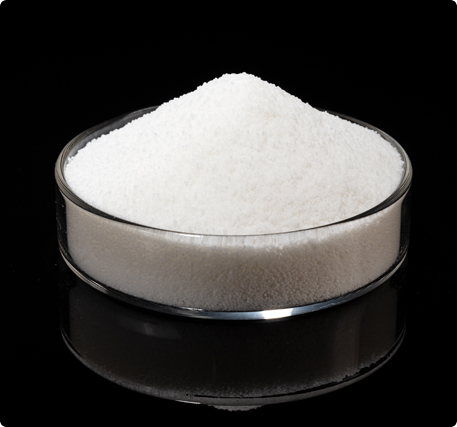
food emulsifier TDS


2. Check the Product Name and Identification


The first step is to confirm the exact product name, food additive number, and chemical identity. Similar emulsifiers may have different compositions and functions. For example, GMS, DMG, PGMS, and PGPR are all food emulsifiers, but they have different chemical structures and applications.
 
Product Common Name E Number Main Applications
GMS Glyceryl Monostearate E471 Bakery, cakes, fats and oils
DMG Distilled Monoglycerides E471 Bread, cakes, ice cream, fats
SSL Sodium Stearoyl Lactylate E481 Bread and bakery products
DATEM Diacetyl Tartaric Acid Esters of Monoglycerides E472e Bread and dough conditioning
PGPR Polyglycerol Polyricinoleate E476 Chocolate and fat-based products
PGE Polyglycerol Esters of Fatty Acids E475 Bakery, fats, and selected food systems

Always confirm the exact grade before making a purchase. Products with the same general name may differ in active content, composition, physical form, or functional performance. If you are replacing an existing emulsifier, check whether the new product has equivalent specifications and whether it requires formulation adjustments.


3. Understand the Appearance and Physical Properties


Appearance is one of the simplest parameters to check, but it can also provide useful information about the product. A TDS may describe an emulsifier as a white powder, cream-colored flakes, beads, a waxy solid, or a viscous liquid. These properties affect handling, storage, weighing, mixing, and the way the ingredient is added to production.

Physical properties are especially important when changing suppliers. For example, a powder emulsifier may blend more easily into dry ingredients, while a liquid emulsifier may be more convenient to add directly to fats. Differences in color, odor, or physical form may also affect your production process, so they should be checked against the agreed specification.

4. How to Read the Chemical Specifications


Chemical specifications are among the most important sections of a food emulsifier TDS. They help buyers understand product composition, quality consistency, and whether the emulsifier meets the requirements of the intended application. Different emulsifiers have different testing parameters, so buyers should not expect every product to use the same specification table.
 
Parameter What It Means Why It Matters
Acid Value Measures free fatty acids in a product Helps assess chemical quality and consistency
Saponification Value Indicates the amount of alkali required for saponification Helps characterize the product's composition
Iodine Value Measures the degree of unsaturation in fats or fatty acid components Helps understand fatty acid characteristics
Hydroxyl Value Measures hydroxyl groups in a substance Useful for characterizing certain emulsifiers
Moisture Indicates water content Excess moisture may affect stability or handling
Active Content Indicates the proportion of functional components, where applicable Helps compare products and functional performance
Heavy Metals Measures specified metal contaminants Important for food safety and regulatory compliance

These parameters should be interpreted according to the specific emulsifier and its manufacturing process. For example, monoglyceride content is particularly important when comparing GMS or DMG grades, while acid value and other chemical parameters may be relevant for PGPR and other ester-based emulsifiers. A specification is meaningful only when the test method and acceptance limits are clearly defined.


5. Pay Attention to Specification Limits and Typical Values


A TDS may show a specification range, a maximum or minimum limit, and sometimes a typical value. These numbers are not interchangeable. Specification limits define the acceptable range for the product, while typical values represent results commonly observed during testing or production.

For example, a product may have an acid value of Max. 6, while its typical result is 4.2. This means the product is required to meet the maximum limit of 6, but 4.2 is a representative result rather than a guaranteed value for every batch. Buyers should compare specification limits when evaluating suppliers and use batch-specific COAs to verify actual results.

6. Check the Recommended Applications and Functions


A food emulsifier TDS should provide information about its intended applications and functional properties. This helps buyers determine whether the product is suitable for their manufacturing process. However, an emulsifier may perform differently in bread, cakes, chocolate, margarine, and other food systems.

For example, SSL and DATEM are commonly used to improve dough strength and gas retention in bread. GMS and DMG may help with cake aeration, texture, or starch interaction, depending on the grade. PGPR is widely used in chocolate to reduce yield stress and improve flow. The application section should therefore be matched to your specific product rather than treated as a general recommendation.

7. Review Storage Conditions and Shelf Life


Storage information is essential for maintaining emulsifier quality throughout transportation, warehousing, and production. A TDS usually specifies the recommended temperature, storage environment, packaging, and shelf life. Some emulsifiers are sensitive to heat, moisture, or prolonged exposure to air and light.

Before purchasing, confirm the shelf life and whether it starts from the manufacturing date. Check the storage temperature and packaging requirements, especially if the product will be shipped to a different climate. Proper storage helps maintain product quality and reduces the risk of changes in appearance, physical properties, or functional performance before use.

8. TDS vs. COA vs. SDS: What Is the Difference?


Food ingredient suppliers may provide several technical documents. Each serves a different purpose, and buyers should understand which document is needed at each stage of purchasing and quality control.
 
Document Full Name Main Purpose
TDS Technical Data Sheet Explains product specifications, properties, functions, and applications
COA Certificate of Analysis Reports test results for a specific production batch
SDS Safety Data Sheet Provides information about hazards, handling, storage, and safety precautions

A TDS is mainly used for product evaluation and formulation selection. A COA is used to verify that a particular batch meets the agreed specifications. An SDS helps employees understand how to handle and store the product safely. During supplier qualification, buyers may need all three documents, together with food-grade declarations and relevant certification documents.


FAQs


1. What is a food emulsifier TDS?
A TDS provides technical information about an emulsifier, including its specifications, properties, applications, and storage conditions.

2. What is the difference between a TDS and a COA?
A TDS describes the product's general specifications, while a COA shows the actual test results of a specific batch.

3. What parameters should I check in an emulsifier TDS?
Check the appearance, active content, acid value, moisture, heavy metals, and recommended applications, depending on the product.

4. Are typical values the same as specifications?
No. Specifications define acceptable limits, while typical values are reference results that may vary between batches.

5. Can I choose an emulsifier based only on its TDS?
No. The TDS helps you shortlist products, but application trials are necessary to confirm performance in your formulation.

6. Why should I request a COA from my supplier?
A COA helps verify whether the supplied batch meets the agreed product specifications.
Start earning substantial
profits in your country today!
Email
Whatsapp