How to Prevent Surface Bubbles in Industrial Bread Production
Date:2025-12-19
Read:
Share:
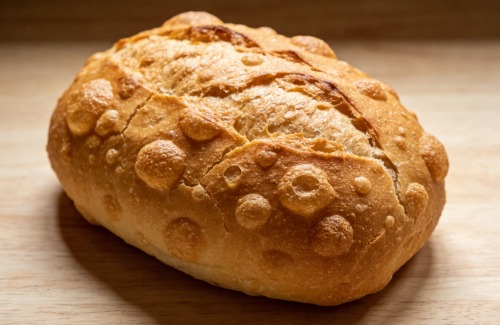
Surface bubbles on bread crust—often referred to as blisters—are a common quality issue in industrial bread production. While they may seem minor, surface bubbles can negatively impact product appearance, packaging efficiency, and brand perception. For large-scale bakeries, preventing this defect requires a structured approach combining process control, formulation optimization, and functional ingredients.
What Causes Surface Bubbles in Factory-Made Bread?
1. Over-Fermentation During Final Proofing
When final proofing exceeds optimal levels, excessive gas accumulates inside the dough. A weakened gluten structure allows gas to migrate toward the surface during baking, forming visible bubbles on the crust.
2. Insufficient Degassing and Poor Molding
High-speed dividing and molding may fail to remove large air pockets. These trapped gases expand rapidly in the oven, leading to surface blistering.
3. Weak Dough Structure
Inconsistent flour quality, improper mixing, or lack of functional dough conditioners reduces gas-holding capacity, resulting in uneven gas distribution.
4. Uneven Proofing Humidity
Low or unstable humidity can dry the dough surface and create a thin skin. During oven spring, this skin separates from the crumb and forms bubbles.
5. Incorrect Oven Temperature and Steam Control
Excessive initial heat or heavy steam causes the crust to set too quickly, forcing internal gas toward the surface.
How to Fix Surface Bubbles in Industrial Bread Production?
1. Optimize Final Proofing
Maintain proofing at 80–90% development
Temperature: 32–38°C
Relative humidity: 75–85%
Regular calibration of proofing systems
2. Improve Degassing and Dough Handling
Optimize divider pressure and rounding efficiency
Ensure uniform molding tension
Avoid air entrapment in high-speed production lines
3. Strengthen Dough Structure with Functional Ingredients
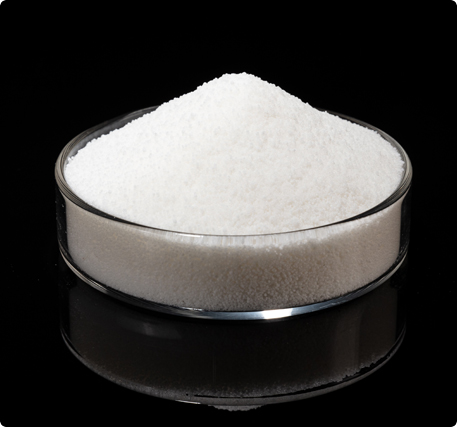
Chemsino offers a range of food-grade emulsifiers and bakery solutions specifically developed for industrial bread production, helping manufacturers achieve smooth crusts and consistent quality.
Promotes fine crumb structure, improves dough stability, and supports uniform crust appearance.
Application Benefits
Reduced surface blistering and crust defects
Improved dough strength and process tolerance
Consistent appearance across batches
Better slicing and packaging performance
Typical dosage: 0.2%–0.5% based on flour weight, adjustable according to flour quality and production conditions.
Chemsino's technical team can also provide customized bakery improver systems to match specific production lines, flour types, and finished product requirements.
4. Control Proofing Environment
Avoid direct airflow on dough surfaces
Maintain uniform humidity across proofing chambers
Prevent premature surface drying
5. Fine-Tune Baking Parameters
Reduce initial oven temperature by 5–10°C if needed
Moderate steam injection and shorten steam duration
Allow gradual crust setting for controlled oven spring
Why Surface Bubble Control Matters in Industrial Baking?
Surface bubbles are more than a visual defect—they signal process instability. Effective control leads to:
Better crust smoothness and visual appeal
Higher production consistency
Lower rejection and rework rates
Stronger brand image in competitive markets
Final Thoughts
Preventing surface bubbles in industrial bread production requires a balanced combination of precise fermentation control, optimized mechanical handling, functional emulsifiers, and accurate baking conditions. With Chemsino’s professional bakery ingredient solutions, manufacturers can achieve stable production, improved efficiency, and consistently high-quality bread.