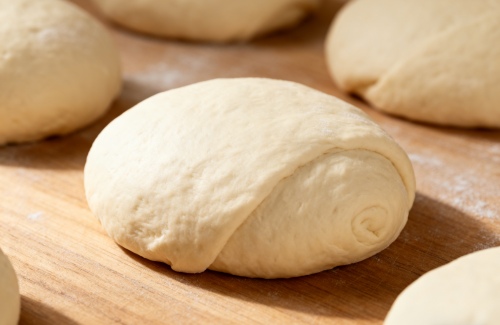
Flour stability is essential for consistent baking results, but flour quality can vary from batch to batch. Emulsifiers help stabilize flour by strengthening the gluten network, improving gas retention, and slowing starch retrogradation. They also enhance dough handling, resulting in baked goods with better texture, volume, and overall quality.
This blog will explain how emulsifiers enhance flour stability, and which emulsifiers work best for each function.
1. Improve Dough Strength and Gluten Development
A strong gluten network is crucial for dough elasticity and gas retention. Emulsifiers support gluten development, reinforcing the dough structure for improved stability.
Lecithin – hydrates proteins and enhances dough extensibility
Benefit: Consistent dough strength and improved gas retention for higher bread volume.
2. Increase Water Absorption and Hydration Uniformity
Stable water absorption ensures the dough behaves consistently across different flour batches. Emulsifiers help distribute water evenly, enhancing dough stability.
Key Emulsifiers:
Lecithin – improves water absorption and dough uniformity
Benefit: Baked goods achieve better volume, texture, and crumb uniformity.
5. Ensure Consistent Dough Performance Across Batches
Flour from different suppliers or harvests can behave differently. Flour improvers help standardize dough performance by maintaining consistent texture, elasticity, and handling properties.
Key Flour Improvers:
DATEM – supports uniform dough strength
SSL / CSL – improves elasticity and reduces variability
Lecithin – enhances dough flexibility and batch-to-batch consistency
Benefit: Predictable dough behavior and stable flour performance even with variable raw materials.
6. Stabilize Fat Distribution and Emulsion in Dough
In high-fat or enriched doughs, uneven fat distribution can cause weak spots and inconsistent texture. Emulsifiers disperse fats evenly, stabilizing the flour system and improving baking consistency.
Key Emulsifiers:
GMS – ensures even fat dispersion
Lecithin – improves emulsification in dough
PGE / Polysorbates – stabilize high-fat or sugar-rich systems
Benefit: Uniform fat and moisture distribution enhances flour stability and predictable dough performance.
Conclusion
Emulsifiers enhance flour stability by strengthening gluten, stabilizing dough, improving dough moisture content, and ensuring even distribution of oils and water. This helps manufacturers produce baked goods with consistent quality and excellent taste.
If you are looking for flour improvers that can improve flour stability in baking applications, Chemsino is a long-term partner worth considering. Contact us anytime for free samples or technical guidance.