Home
Products
Emulsifier List
Application
Gallery
News
Blog
About Us
About Us
Contact Us
Your Position : Home > Blog

Food Emulsifier Packaging and Storage Guide

Date:2026-06-05
Read:
Share:
An emulsifier that has been stored incorrectly does not fail dramatically — it just stops working as well as it should. The bread is slightly less soft. The ice cream runs wetter than the target. The chocolate viscosity creeps up. By the time these symptoms appear in production, the damage to the emulsifier has happened weeks earlier in the warehouse.

After nearly two decades supplying emulsifiers to food manufacturers across 50+ countries, the most preventable quality issues we see trace back to storage: wrong temperature, excess moisture, packaging left open after partial use. This guide explains what goes wrong, why, and exactly how to prevent it — product by product.

What Degrades Emulsifiers in Storage


Food emulsifiers are lipid-based — derived from fats, oils, or their esterification products. Four degradation mechanisms apply to all of them to varying degrees:
Oxidation. Oxygen exposure triggers lipid oxidation, producing peroxides and aldehydes that cause rancid off-odors and reduce surface activity. Oxidation rate roughly doubles for every 10°C rise in storage temperature. Oleate-based emulsifiers — Polysorbate 80, liquid PGPR — are the most sensitive. Saturated emulsifiers — Span 60, Polysorbate 65 — are significantly more stable.
Moisture absorption. Powder and flake emulsifiers (DMG, SSL, DATEM, Span 60, PGE) are hygroscopic. Above 65–70% relative humidity, they absorb moisture from the air, causing clumping and caking. Sustained moisture uptake also triggers hydrolysis of ester bonds, gradually degrading functional activity.
Crystal phase conversion. Distilled monoglycerides (DMG) exist in multiple crystalline phases with different functional properties. The active α-phase — critical for aeration in cake and fat destabilization in ice cream — is metastable. Above 30°C, it gradually converts to the less active β-phase. Product stored at 20°C for 24 months may outperform product stored at 35°C for 3 months, even if both are within formal shelf life.
Odor contamination. Emulsifiers absorb ambient odors readily. Storage near cleaning chemicals, solvents, or strongly flavored ingredients introduces off-notes that are detectable in the finished product. Once absorbed, they cannot be removed.

Packaging: What the Formats Protect Against


Solid, powder, and flake emulsifiers


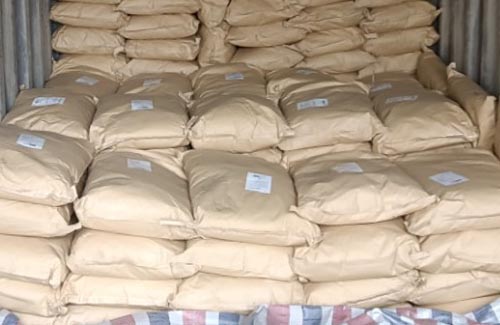
Standard format: 25 kg multi-layer kraft bag with PE inner liner. The PE liner is the functional barrier — it blocks moisture and oxygen. The kraft outer layer provides structural protection in transit.
The liner is only effective when intact and resealed. A punctured or loosely resealed liner in a humid warehouse exposes the product within hours. Inspect every bag on receipt. Reseal immediately after partial use — never fold and leave open.
Also available: 25 kg cartons with PE liner for products where stacking stability matters.

Liquid and paste emulsifiers


Standard formats: 200 kg plastic or iron drums (with inner plastic lining), or 1,000 kg IBC tanks for high-volume buyers.

Both formats exclude oxygen when properly sealed. The risk is headspace after partial use: an opened 200 kg drum with 50 kg remaining has significant air above the liquid — accelerating oxidation, particularly for PGPR and Polysorbate 80. After partial use, reseal tightly. For sensitive products, transfer remaining liquid to a smaller container filled close to the top, or purge headspace with nitrogen.
Liquid DMG gel must stay below 25°C to maintain its active α-crystalline phase. This is a functional requirement, not just a shelf-life one.

Storage Conditions by Product


These specifications apply to all products shipped from Chemsino. They are based on the actual degradation chemistry of each emulsifier — not generic ingredient guidelines.

Distilled Monoglycerides / GMS (DMG, E471)

 
Powder / flake Gel / paste
Temperature Below 25°C Below 20°C
Humidity Below 65% RH Keep sealed
Packaging 25 kg bag with PE liner 200 kg drum
Shelf life 12–24 months 12 months

The gel form has the strictest requirement. Above 30°C, the active α-phase converts to the less effective β-phase — the product may look and smell normal but will underperform in ice cream mix or cake batter. Do not store gel-form DMG in unventilated shipping containers in summer or tropical climates.


SSL (E481) / CSL (E482)

 
Temperature Humidity Packaging Shelf life
Below 25°C Below 65% RH 25 kg bag with PE liner 12–18 months

SSL is more hygroscopic than DMG. Above 70% RH, it agglomerates quickly. In Southeast Asia, the Middle East, and other high-humidity climates, warehouse dehumidification is not optional for SSL inventory — it is the difference between a usable and an unusable product. Do not store SSL alongside moisture-introducing ingredients (salt, hygroscopic sugars) in compound mixes.


DATEM (E472e)

 
Temperature Humidity Packaging Shelf life
Below 25°C Below 65% RH 25 kg bag with PE liner 12 months

DATEM is more stable than SSL under typical conditions, but its 12-month shelf life is the shortest of the major bakery emulsifiers. FIFO rotation is critical. Extended storage above 25°C accelerates ester hydrolysis that degrades surface activity — the product may pass visual inspection while failing functional performance.


PGPR (E476)

 
Temperature Humidity Packaging Shelf life
Below 25°C Keep sealed 25 kg bag or 200 kg / 1,000 kg IBC drum 12 months

PGPR thickens significantly below 10°C. If viscosity makes pumping difficult, warm gently to 40–50°C before use — do not exceed 60°C. Store away from direct sunlight; UV exposure degrades quality over time. Minimize headspace in drums after partial use.


Polysorbates (E432–E436)

 
Polysorbate 80 (liquid) Polysorbate 65 (solid)
Temperature Below 25°C Below 30°C
Packaging 25 kg or 200 kg drum 25 kg bag
Shelf life 24 months (sealed) 24 months

Polysorbate 80 is the most oxidation-sensitive polysorbate — oleate-based and reactive to air. Once opened, minimize headspace or transfer to a smaller sealed container. Oxidized Polysorbate 80 develops a distinctly rancid odor detectable in ice cream and dairy applications. Polysorbate 65 (stearate-based) is far more stable and does not need the same precautions.


Sorbitan Esters — Span Series (E491–E495)

 
Temperature Humidity Packaging Shelf life
Below 25°C (solid), below 25°C (liquid) Below 65% RH 25 kg bag (solid), 200 kg drum (liquid) 24 months

Span 60 melts at 50–52°C and will not liquefy under normal warehouse temperatures. Above 40°C, surface softening can cause bag contents to compact — store away from heat sources and in ventilated areas. Span 80 (liquid) is more oxidation-sensitive than the solid sorbitan esters; apply the same precautions as Polysorbate 80 for drum headspace.


PGE — Polyglycerol Esters (E475)

 
Temperature Humidity Packaging Shelf life
Below 25°C Below 65% RH 25 kg bag with PE liner 12–24 months

PGE is one of the more stable emulsifiers under standard conditions. The main practical precaution: odor isolation. PGE absorbs ambient odors effectively and should not share storage space with cleaning agents, solvents, or strongly flavored materials.


Universal Storage Rules


These apply to every emulsifier, regardless of type:

Below 25°C. The universal temperature threshold. Above this, all lipid-based emulsifiers degrade faster — oxidation accelerates, crystal phases shift, hygroscopicity increases. In tropical climates and summer months, air-conditioned warehousing is strongly recommended.
Below 65% RH. Solid emulsifiers begin absorbing moisture visibly above 70% RH. Dehumidification is particularly important in coastal, tropical, and monsoon-season storage environments.
Reseal immediately. Every bag and every drum. After partial use, reseal before returning to storage. Opened packaging left in the production environment — even for hours — is exposed packaging.
FIFO without exception. Emulsifiers have defined shelf lives. Older stock must be used before newer deliveries. Track batch numbers and receipt dates. Never mix old and new stock within the same container or bag.
Off the floor, away from light and odors. Store on pallets. Keep away from windows, direct sunlight, and any source of strong odors. Floors can be damp; sunlight accelerates oxidation in liquid products; odors are absorbed and cannot be removed.

What to Check When a Delivery Arrives


Do not accept a delivery without inspection. The five checks that matter:
Packaging integrity. Bags: check for punctures and liner damage. Drums: check for dents, corrosion, and loose lids. Damaged packaging means the product has been exposed — treat as compromised until tested.
Odor. Open a sample and smell it. Food-grade emulsifiers have a mild, fatty odor or are essentially odorless. Sharp, rancid, or chemical odors indicate oxidation or contamination.
Appearance. Powder and flake should be free-flowing and consistent in color. Hard lumps indicate moisture uptake. Yellowing or darkening indicates oxidation.
Temperature history. For gel-form DMG and liquid polysorbates, request documentation that the temperature was maintained during transit — especially for summer ocean freight. A temperature excursion in the container is not visible in the final product.
Certificate of Analysis. Every batch should arrive with a COA confirming purity, acid value, saponification value, and other relevant parameters. Do not use the product without a valid batch-specific COA.

Chemsino Packaging Options


At Chemsino, packaging is not an afterthought — it is part of the product specification. All packaging meets food-contact material requirements and is designed to protect functional performance through the shipping and storage conditions our customers actually face.
Form Standard packaging Sizes
Powder / flake Kraft bag with PE inner liner 25 kg
Solid / tablet Carton with PE liner 25 kg
Liquid / paste Plastic or iron drum with inner liner 200 kg
Liquid (bulk) IBC tank 1,000 kg
Custom packaging available on request: smaller drums, modified bag sizes, private-label packaging for distributor customers.
Every Chemsino shipment includes: COA, TDS, MSDS, Halal certificate, Kosher certificate, and Certificate of Origin. Additional compliance documentation for EU, US, and GCC markets is available on request.
Free samples available for all products (below 500 g). Ships within 15–20 days.

Frequently Asked Questions


Q: What is the shelf life of food emulsifiers? Solid emulsifiers (DMG, SSL, Span 60, PGE) typically 12–24 months at below 25°C and below 65% RH, sealed. DATEM: 12 months. Liquid emulsifiers (PGPR, Polysorbate 80): 12 months. Polysorbate 65 and Span 60 can reach 24 months when properly stored.
Q: Can food emulsifiers be stored in hot or tropical climates? Yes, with additional controls. Storage above 25°C accelerates all degradation mechanisms. Air-conditioned warehousing and dehumidification are strongly recommended. For DMG gel specifically, storage above 30°C risks crystal phase conversion that reduces functional performance — this is the most temperature-sensitive product in our range.
Q: Can caked emulsifier still be used? Light caking from minor moisture exposure usually does not affect performance once broken up. Severe caking — hard, fused blocks — indicates significant moisture uptake and possible hydrolysis. Test against COA specification before use. If acid value is out of range, do not use.
Q: How do I handle a partially used drum of liquid emulsifier? Reseal immediately. For Polysorbate 80 and PGPR, transfer to a smaller container filled close to the top, or purge the headspace with nitrogen. Never leave an opened drum exposed to air in the production environment.
Q: How can I tell if an emulsifier has degraded? Rancid or chemical off-odor (oxidation), hard lumps or fused caking (moisture), yellowing or darkening (oxidation), and, for DMG gel, a grainy or separated texture (crystal phase conversion). If any of these are present, test against COA parameters before use. When in doubt, contact us — we can advise on whether the batch is fit for purpose.
Start earning substantial
profits in your country today!
Email
Whatsapp