Food emulsifiers are widely used in modern food manufacturing, but their acceptance in global markets depends heavily on certification compliance. For importers, food factories, and brand owners, understanding emulsifier certifications is critical to regulatory approval, customer trust, and uninterrupted supply chains.
This article explains the four most important food emulsifier certifications—Halal, Kosher, Non-GMO, and RSPO—and how they impact your sourcing decisions.
What Are Food Emulsifier Certifications?
Food emulsifier certifications are third-party verifications confirming that an emulsifier meets specific religious, ethical, environmental, or sourcing standards. These certifications apply not only to the final product but also to:
· Raw material origin
· Production processes
· Equipment management
· Supply chain traceability
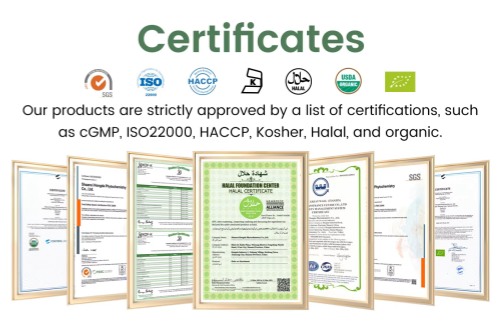
Certified emulsifiers reduce compliance risks and help food manufacturers access multiple international markets with a single formulation.
Halal Certification for Food Emulsifiers
What Does Halal Mean?
Halal certification confirms that a food ingredient complies with Islamic dietary laws. For emulsifiers, this mainly concerns fat sources and processing aids.
Key Halal Requirements for Emulsifiers
No pork-derived or non-Halal animal fats
Alcohol-free or alcohol-controlled processing
Approved slaughter methods for animal-based raw materials
Dedicated or validated production lines
Common Halal-Certified Emulsifiers
Glycerol Monostearate (GMS) – vegetable-based
Sodium Stearoyl Lactylate (SSL)
Polysorbates (Tween series)
Distilled Monoglycerides
Why Halal Matters for Buyers
Halal-certified emulsifiers are essential for Middle East, Southeast Asia, and Muslim-majority markets, and are increasingly required by multinational food brands.
Kosher Certification for Food Emulsifiers
What Is Kosher Certification?
Kosher certification ensures compliance with Jewish dietary laws, focusing on ingredient origin, processing, and cross-contamination control.
Kosher Considerations for Emulsifiers
Plant-based raw materials are generally preferred
Strict separation between dairy, meat, and pareve products
Equipment inspection and supervision by a recognized Kosher authority
Common Kosher Status Types
Pareve: Neither dairy nor meat (most preferred)
Dairy: Must be clearly labeled
Business Value of Kosher Emulsifiers
Kosher-certified emulsifiers improve acceptance in North America, Europe, and Israel, and are often seen as a quality and cleanliness benchmark, even beyond religious use.
Non-GMO Certification for Food Emulsifiers
What Does Non-GMO Mean?
Non-GMO certification verifies that emulsifiers are produced without genetically modified organisms, including raw materials and processing aids.
Typical Non-GMO Emulsifier Sources
· Palm oil
· Coconut oil
· Rapeseed oil
· Sunflower oil
Why Non-GMO Matters
· Required by clean-label and natural food brands
· Meets retailer and private-label standards
· Supports transparency and consumer trust
For markets like the EU, USA, and Japan, Non-GMO status is increasingly a commercial requirement, not just a marketing claim.
RSPO Certification and Sustainable Emulsifiers
What Is RSPO?
RSPO (Roundtable on Sustainable Palm Oil) certification ensures that palm oil is sourced from environmentally and socially responsible supply chains.
Why RSPO Is Important for Emulsifiers
Many emulsifiers are palm oil–based. RSPO certification helps:
· Reduce deforestation risks
· Improve supply chain transparency
· Meet ESG and sustainability commitments
RSPO Supply Chain Models
· Identity Preserved (IP)
· Segregated (SG)
· Mass Balance (MB)
Who Needs RSPO-Certified Emulsifiers?
· Multinational food companies
· Brands with sustainability policies
· Customers selling to Europe and premium global markets

Can One Emulsifier Have Multiple Certifications?
Yes. Many food emulsifiers can be Halal + Kosher + Non-GMO + RSPO certified, depending on raw materials and production controls.
Multi-certified emulsifiers help buyers:
· Simplify global sourcing
· Reduce SKU complexity
· Ensure compliance across multiple markets
How Chemsino Supports Certified Food Emulsifiers?
At Chemsino, we understand that certifications are a key part of your sourcing strategy. We provide:
1. Halal & Kosher certified food emulsifiers
2. Non-GMO compliant solutions
3. RSPO-certified palm oil–based emulsifiers
4. Complete documentation: TDS, COA, MSDS certificates
5. Technical support for formulation and application
Our emulsifiers are widely used in bakery, dairy, beverages, confectionery, and processed foods, serving customers across global markets.
Final Thoughts
Food emulsifier certifications play a highly crucial role in global food production and trade. Selecting the right certified emulsifier helps manufacturers ensure compliance, support sustainability goals, and build trust with customers and regulators.
Contact Chemsino today to request certification documents, samples, or customized emulsifier solutions for your food applications.

 Emulsifier List
 About Us


 Used For.jpg)