Home
Products
Emulsifier List
Application
Gallery
News
Blog
About Us
About Us
Contact Us
Your Position : Home > Blog

Emulsification Challenges in Coconut Beverages and Practical Solutions

Date:2026-02-24
Read:
Share:
Coconut beverages, including coconut milk drinks, coconut juice blends, and dairy alternatives, face numerous challenges in emulsification stability during processing, storage, and transportation. This blog will explore common emulsification problems in coconut beverages and practical solutions to help manufacturers produce stable, high-quality products.
 

Why Coconut Beverages Are Difficult to Emulsify


Coconut beverages are naturally rich in coconut oil, which contains a high level of saturated fats. These fats behave differently from typical vegetable oils, leading to several challenges:

High oil content that tends to separate from water

Fat crystallization at low temperatures, causing creaming or sediment

Density differences between oil and water phases

Thermal stress during pasteurization or UHT processing

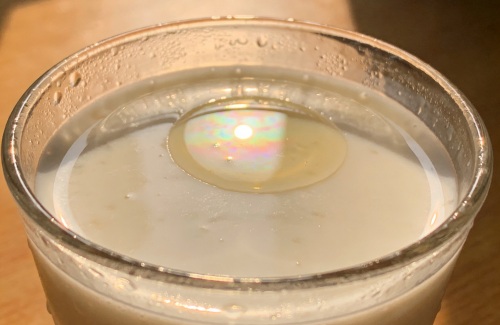
Without proper formulation, these factors can result in oil rings, floating fat layers, or uneven texture—directly affecting consumer acceptance.

Uneven coconut beverage


Common Emulsification Problems


1. Oil Separation During Storage


Coconut oil droplets can merge and rise to the surface over time, forming visible oil layers, especially at ambient or refrigerated temperatures.
 

2. Creaming and Phase Instability


Fat droplets may migrate upward even without visible separation, resulting in an uneven appearance and inconsistent mouthfeel.
 

3. Texture Inconsistency


Poor emulsification can result in gritty or watery textures, reducing perceived product quality.
 

4. Instability After Heat Treatment


Pasteurization and sterilization can weaken emulsifier performance if the formulation is not properly designed.
 

Practical Emulsification Solutions


Use the Right Emulsifier System


Coconut beverages require oil-in-water (O/W) emulsifiers to maintain uniform dispersion of coconut oil. Common options include:

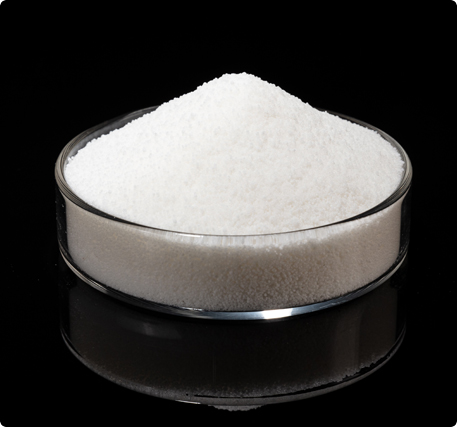
Mono- and Diglycerides (E471, e.g., GMS 90) – stabilize oil droplets

Polysorbates (Polysorbate 60, 80) – enhance heat and storage stability

Sodium Stearoyl Lactylate (SSL) – strengthens emulsion and texture

Blended emulsifier systems often provide better long-term stability than single emulsifiers.


Optimize Emulsifier Dosage


Using too little emulsifier causes instability, while excessive use may affect flavor and cost. Dosage should be considered:

Oil content
Beverage viscosity
Processing conditions

Small-scale trials are recommended to determine the optimal level.


Combine Emulsifiers with Stabilizers


Stabilizers increase water-phase viscosity, slowing fat movement and improving storage stability. Common stabilizers include gellan gum, carrageenan, xanthan gum, and CMC. This combination helps:

Reduce oil separation and creaming
Maintain smooth, consistent texture
Ensure uniform appearance throughout shelf life


Apply Proper Homogenization


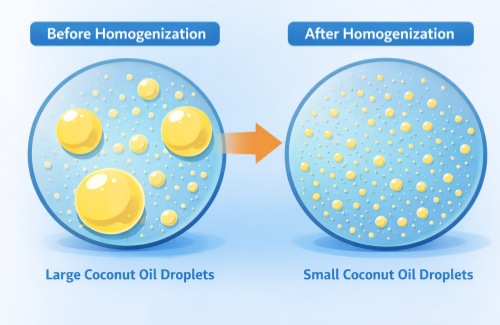
Mechanical processing is critical. High-pressure homogenization breaks coconut oil into fine droplets, allowing emulsifiers to coat them effectively. Key factors include:

Homogenization pressure
Temperature control
One-stage vs. two-stage homogenization

Even the best emulsifiers cannot perform well without proper mechanical dispersion.

Comparison of oil droplet size before and after homogenization


Control Temperature Throughout Production


Coconut oil solidifies easily at low temperatures. Sudden cooling or poor temperature control can destabilize the emulsion. Best practices:

Maintain consistent processing temperatures
Avoid temperature shock during filling
Test stability under real storage conditions


Tailor Solutions for Different Products


Formulation should match the beverage type:

Ready-to-drink coconut milk beverages – require strong emulsification and heat stability (GMS 90, Polysorbate 60)

Low-fat coconut drinks – need lighter emulsifier systems (Polysorbate 80, GMS 40)

Blended beverages (coconut + juice/coffee) – must be compatible with acids and other ingredients

Customized solutions always outperform generic formulations.


Ensure Quality Consistency and Supplier Support


Stable production depends not only on formulation but also on ingredient consistency. Variations in emulsifier quality can lead to unpredictable results in large-scale manufacturing.

Chemsino supports beverage manufacturers by supplying consistent food emulsifiers and offering technical guidance for coconut-based applications, helping maintain stable emulsions across batches and markets.


Final Thoughts


Understanding coconut oil properties, selecting the right emulsifier system, optimizing processing, and ensuring consistent raw materials are key to producing high-quality coconut beverages.

For emulsifiers or other ingredients suitable for coconut beverages, feel free to contact us for free samples.
Start earning substantial
profits in your country today!
Email
Whatsapp