Home
Products
Emulsifier List
Application
Gallery
News
Blog
About Us
About Us
Contact Us
Your Position : Home > Blog

Dosage of Polysorbate 80 in Various Foods

Date:2025-01-10
Read:
Share:
Polysorbate 80,or Tween 80, is a widely used non-ionic emulsifier in the food industry. Its role is essential in stabilizing emulsions, improving texture, and enhancing the shelf life of various food products. Understanding the appropriate dosage of Polysorbate 80 in different food applications ensures optimal product performance and compliance with safety regulations. 


Why Use Polysorbate 80 in Food?


Stabilize Oil-Water Mixtures: Essential for salad dressings, sauces, and beverages.
Prevent Ice Crystal Formation: Improves the texture of frozen desserts like ice cream.
Enhance Product Consistency: Ensures uniform distribution of ingredients in bakery items and confectionery.
Improve Shelf Life: Helps maintain product stability over time by preventing ingredient separation.


Dosage Recommendations by Food Category


1. Ice Cream and Frozen Desserts

Purpose: Prevents ice crystal formation, improves creaminess, and stabilizes emulsions.
Recommended Dosage: 0.1% to 0.5% of total product weight.
Usage Tip: Start with lower concentrations and adjust based on texture and sensory preferences.

chemsino polysorbate 80 in ice cream


2. Salad Dressings and Sauces

Purpose: Ensures a smooth, homogenous mixture by stabilizing oil and water components.
Recommended Dosage: 0.05% to 0.3%.
Usage Tip: Test different concentrations to avoid overly thick textures or flavor masking.


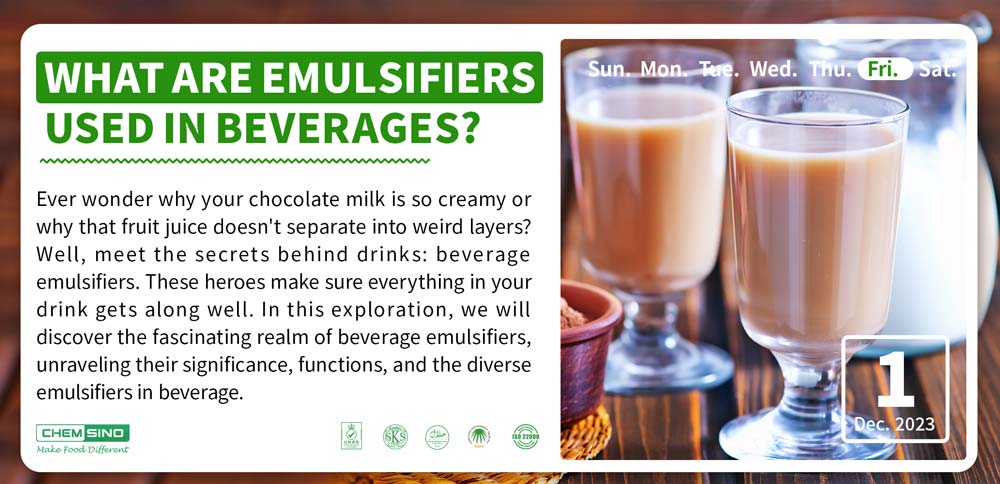
3. Beverages and Flavored Drinks

Purpose: Stabilizes flavor oils, prevents separation, and maintains beverage clarity.
Recommended Dosage: 0.01% to 0.1%.
Usage Tip: Ensure thorough mixing to avoid oil separation during storage.


4. Baked Goods (Cakes, Pastries)

Purpose: Improves dough consistency, crumb softness, and overall product stability.
Recommended Dosage: 0.25% to 0.4% based on flour weight.
Usage Tip: Combine with other emulsifiers for best results in complex formulations.


5. Confectionery Products (Caramel, Chocolate, Chewing Gum)

Purpose: Reduces viscosity, stabilizes emulsions, and prevents fat bloom in chocolate products.
Recommended Dosage: 0.1% to 0.3%.
Usage Tip: Monitor texture changes carefully during production trials.


Regulatory Considerations


The U.S. Food and Drug Administration (FDA) has established specific regulations for the use of Polysorbate 80 in food products:
Shortenings and Edible Oils: Polysorbate 80 can be used alone in an amount not to exceed 1% of the weight of the finished product. When combined with Polysorbate 60, the total combination must not exceed 1% of the finished product.
Whipped Edible Oil Toppings: As an emulsifier, alone or in combination with other specified emulsifiers, the maximum amount used does not exceed 0.4% of the weight of the finished product.

chemisno polysorbate 80 in food


Safety and Acceptable Daily Intake (ADI)


The acceptable daily intake (ADI) for Polysorbate 80 has been established at 25 mg per kilogram of body weight. This means that an individual weighing 70 kg (154 lbs) can safely consume up to 1,750 mg of Polysorbate 80 per day. It's important to note that typical consumption levels are well below this limit.


Key Factors to Consider When Using Polysorbate 80 in Food


Regulatory Compliance: Different regions have specific regulations on the maximum permissible dosage of Polysorbate 80. Always consult local guidelines.

Product Testing: Conduct extensive trials to determine the optimal dosage for your specific formulation to achieve the desired product characteristics.

Labeling Requirements: Ensure accurate ingredient labeling to meet regulatory and consumer transparency expectations.

Consumer Perception: Maintain a balance between functionality and consumer acceptance by avoiding overly complex or unnecessary formulations. 


Best Practices for Using Polysorbate 80 in Food Production


Gradual Incorporation: Slowly mix Polysorbate 80 to prevent clumping or uneven distribution. 
Quality Control: Regularly test batches to maintain consistent product quality.
Storage: Store emulsifiers in a cool, dry place to maintain their effectiveness. 


Final Thoughts


Polysorbate 80 is a versatile emulsifier that plays a significant role in the food industry. Adhering to recommended dosages and regulatory guidelines ensures product quality and consumer safety. Manufacturers should conduct thorough formulation testing to determine the optimal amount for each specific application.
For more detailed information, contact ChemSino Experts today!
Related Blog
What Is Polysorbate 40 In Food? Properties & Uses
07 Jun 2024
Polysorbate 40, or Tween 40, scientifically known as polyoxyethylene (20) sorbitan monopalmitate, is an important additive widely used in the food industry, famous for its role as an emulsifier and surfactant. As part of the polysorbate family, Polysorbate 40 shares many functional properties with its relatives, such as Polysorbate 20 and Polysorbate 80. This article delves into the properties, uses, and benefits of Polysorbate 40 in food applications.  
What is LACTEM Emulsifier in Bread
13 Dec 2024
LACTEM emulsifier in bread is great for achieving the perfect texture, structure, and shelf life. It is widely used in bread production, offering numerous functional benefits. In this article, we will explore what LACTEM is, its role in bread production, and how it helps create the high-quality bread consumers expect.    
Propylene Glycol Esters of Fatty Acids in Food
27 Nov 2023
Propylene glycol esters of fatty acids are multifunctional compounds that play a crucial role in the food industry. Their unique chemical structure allows them to improve the texture, viscosity, and longevity of a wide range of food products. From baked goods to dairy and beverages, propylene glycol esters contribute to the overall sensory experience, ensuring that consumers can enjoy high-quality and fresh food. In this blog, we will explore the world of propylene glycol esters(PGMS) and the uses in baking, cakes, dairy products, beverages, etc.
Start earning substantial
profits in your country today!
Email
Whatsapp