Home
Products
Emulsifier List
Application
Gallery
News
Blog
About Us
About Us
Contact Us
English
Your Position : Home > Blog

Choosing the Right Bread Emulsifier

Date:2025-03-03
Read:
Share:
Bread emulsifiers are essential ingredients for improving product quality and extending shelf life in the baking. However, with so many emulsifier products on the market, how do you choose the one that best meets your needs?

As a leading manufacturer of food emulsifiers, Chemsino understands your challenges and provides efficient, safe, and cost-effective solutions tailored to your requirements. Here are the common challenges our bakery manufacturer clients face, and how CHEMSINO can offer the perfect solution.


Challenges Faced by Bakery Manufacturers in Bread Production


1. Inconsistent Texture & Mouthfeel

Achieving the perfect softness and elasticity is essential for consumer satisfaction. However, poor-quality emulsifiers or improper formulations can result in dry, dense, or crumbly bread, affecting overall product appeal. Manufacturers seek emulsifiers like Glycerol Monostearate (GMS) and Sodium Stearoyl Lactylate (SSL) to enhance dough elasticity and workability.

2. Short Shelf Life & Staling

One of the biggest challenges in bread production is rapid staling, leading to increased waste, reduced sales, and customer complaints. Without the right emulsifiers, maintaining freshness and extending shelf life becomes difficult.

3. Rising Production Costs

With fluctuating raw material prices, bakery manufacturers face increasing pressure to control costs. Finding cost-effective emulsifier solutions that enhance dough performance while reducing ingredient usage is crucial for maintaining profitability.

4. Food Safety & Regulatory Compliance

Ensuring emulsifiers meet international food safety standards (FDA, EFSA, etc.) is a top priority. Bread manufacturers need reliable ingredients that comply with clean-label trends, non-GMO requirements, and halal/kosher certifications.

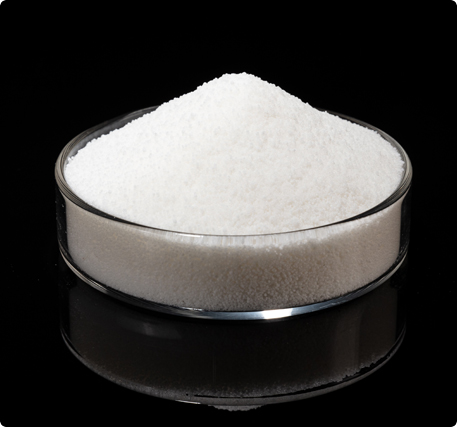
Glycerol Monostearate (GMS) in bread


Chemsino’s Solutions & Why Choose CHEMSINO?


High Quality and Safety: Chemsino’s bread emulsifiers strictly comply with international food safety standards (such as FDA and EFSA) and are certified with ISO, HACCP, and other accreditations, ensuring safe and reliable products.

Exceptional Functionality: Our emulsifiers significantly improve bread texture, making it softer, more elastic, and extending its shelf life by delaying staling.

Cost-Effectiveness: Chemsino emulsifiers are highly efficient, requiring minimal usage while delivering outstanding results, helping you reduce production costs and increase profitability.

Technical Support and Customization: We provide professional technical support and customized solutions to optimize your production processes and address specific challenges.

Stable Supply and Fast Delivery: With a robust supply chain system, Chemsino ensures stable supply and efficient logistics to meet your production demands.

✅ Free Samples Available – Try before you buy!


High-Quality Bread Emulsifiers for Sale – Explore Chemsino’s Product Range


At CHEMSINO, we specialize in supplying high-quality bread emulsifiers tailored to bakery manufacturers’ needs. Our range includes:

1. Glycerol Monostearate (GMS - E471) – Improves dough strength, aeration, and crumb softness. From GMS high purity levels ranging from 40% to 90% to GMS in flake, liquid, and tablet forms, we've got your GMS emulsifier needs covered.

2. Sodium Stearoyl Lactylate (SSL - E481) – Enhances dough stability and increases bread volume. SSL 80 and SSL100 are available.

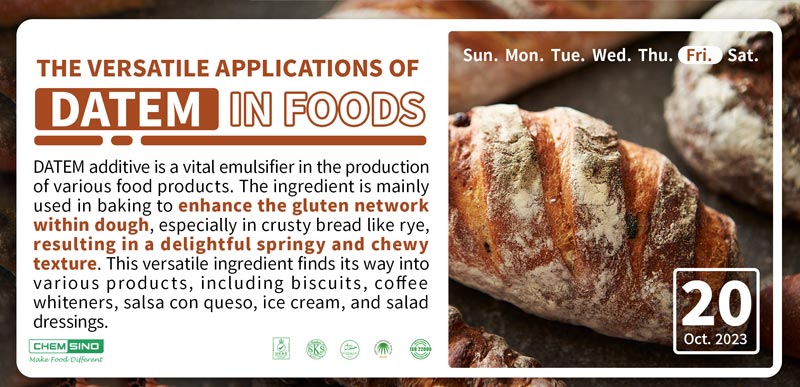
3. DATEM (E472e) – Strengthens gluten networks for improved elasticity and texture. Available in different types like DATEM 80%/100%/ High Acid Value.

4. Lecithin – A natural emulsifier for clean-label formulations. Lecithin in powder and liquid form is for sale at CHEMISNO.

datem emulsifier in bread


Customer Success Stories: Real Feedback on Chemsino Emulsifiers


Case 1: Brazilian Bakery Extends Shelf Life by 30%


A leading bakery in Brazil struggled with bread staling quickly, increasing waste and customer complaints. After adopting Chemsino’s emulsifiers, they achieved a 30% longer shelf life, reducing waste and expanding distribution. Customers praised the improved softness and freshness, boosting repeat purchases and brand loyalty.


Case 2: Kuwaiti Bakery Saves 10% on Costs


A medium-sized bakery in Kuwait faced rising production costs due to inefficient emulsifier use. Chemsino provided a customized solution, optimizing dosage and dough consistency. This reduced costs by 10% while maintaining quality, helping the bakery improve profitability and meet growing demand.

If you’re also looking for efficient, safe, and cost-effective bread emulsifiers, Chemsino is your ideal partner! Contact us today to request free samples and technical consultations. Experience the exceptional transformation Chemsino emulsifiers can bring to your products!
Related Blog
Tween 80 VS. Span 80: What is the Difference
18 Oct 2024
Tween 80 and Span 80 are two commonly used nonionic surfactants, often found in a wide range of applications, from food and cosmetic to pharmaceuticals and industrial processes. Despite their similar names, these two emulsifiers differ in structure, function, and applications. Understanding the differences between Tween 80 and Span 80 can help manufacturers and formulators choose the right emulsifier for their specific needs. This article will discover the key differences between Tween 80 and Span 80, including their chemical structures, functionality, and common uses in various industries.
Why Does Ice Cream Develop Ice Crystals
11 Apr 2025
If you`ve ever enjoyed a scoop of ice cream and felt it melt effortlessly in your mouth, you’ve experienced the magic of a smooth, creamy texture. But when ice cream develops large, gritty ice crystals, it`s a different story altogether. So, why does this happen, and how can emulsifiers play a crucial role in preventing it? Let`s explore the science behind it and discover how emulsifiers can keep your ice cream silky and smooth.
What to Know About Propylene Glycol in Foods
10 Apr 2024
Propylene glycol is produced industrially through the hydration of propylene oxide. It has almost no taste and is a chemically synthesized food additive, belonging to the alcohol class of substances, similar to ethanol. Propylene glycol e1520 is widely used in various industries such as food, pharmaceuticals, cosmetics, tobacco, and others. This is because it possesses properties like stabilizing, solidifying, anticaking, defoaming, emulsifying, humectant, and thickening. These properties make it valuable for a range of applications in these industries.
Start Earning Substantial
Profits in Your Country Today!
Email
Whatsapp