Home
Products
Emulsifier List
Application
Gallery
News
Blog
About Us
About Us
Contact Us
Your Position : Home > Blog

Best Emulsifiers for Oil-in-Water Emulsion

Date:2026-02-06
Read:
Share:
Oil-in-water (O/W) emulsions are one of the most common dispersion systems in food and personal care products. They are essential in sauces, dressings, beverages, creams, lotions, and many processed foods where oil droplets must stay suspended uniformly in a water phase. The success of these emulsions—stability, texture, mouthfeel, shelf life—depends heavily on choosing the right emulsifier.

This article will explain what makes an emulsifier effective for O/W systems, the top emulsifiers used in industry, and how to select the best one based on your product needs.


What Is an Oil-in-Water Emulsion?


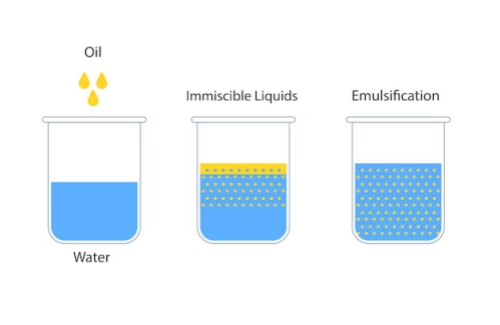
An O/W emulsion consists of tiny oil droplets dispersed throughout a continuous aqueous phase. Without an emulsifier, oil and water separate due to immiscibility. Emulsifiers help stabilize the interface, reduce surface tension, and prevent droplet coalescence, leading to uniform texture, improved stability, and better product sensory qualities.


Why Oil-in-Water Emulsions Fail So Easily


Oil and water naturally separate because their molecular structures are incompatible. Oil droplets in water will collide, merge, and rise to the surface unless something actively prevents this process. An emulsifier performs this role by forming a protective layer around oil droplets and reducing the interfacial tension between the two phases.

Oil-in-Water Emulsions

The challenge is that this protective layer is constantly under attack. Heat treatment, mechanical shear, changes in pH, salt content, or even vibration during transport can weaken the interfacial film. When that film breaks down, instability appears quickly.

For this reason, emulsifier performance must be evaluated in the context of the full formulation and the full process, not in isolation.


Key Properties of an Effective O/W Emulsifier


Before choosing an emulsifier, it’s important to understand the functional properties that make one suitable for oil-in-water systems:


1. High HLB Value


Hydrophilic-Lipophilic Balance (HLB) determines affinity for water vs. oil.

For O/W emulsions, HLB values typically ≥ 8 are desired — these favor stabilization in aqueous systems.


2. Good Interfacial Activity


A good emulsifier rapidly adsorbs at the oil–water interface and lowers interfacial tension.


3. Compatibility with Other Ingredients


Emulsifiers often work alongside thickeners, gums, and stabilizers, so compatibility matters.


4. Functional Benefits


Beyond stability, emulsifiers may also improve:

· Texture (mouthfeel)

· Foam stability

· Heat or freeze–thaw resistance


What Emulsifiers Are Best for Oil-in-Water Emulsion?


Polysorbates


Polysorbates, especially Polysorbate 80, are commonly used when strong and consistent emulsification is required. They are highly effective at reducing droplet size and maintaining dispersion, even under heat treatment and long-term storage.

In beverage emulsions and flavor systems, polysorbates often deliver a level of stability that is difficult to achieve with natural emulsifiers alone. Their limitations are mainly related to labeling preferences rather than technical performance.

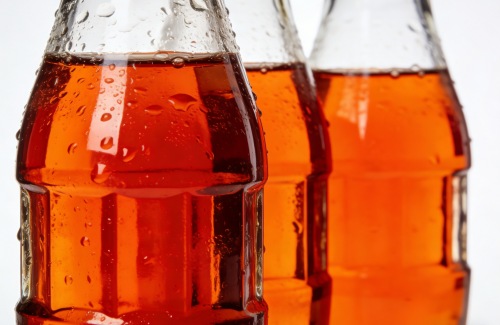
Emulsifier in beverage


Mono- and Diglycerides


Mono- and diglycerides are frequently included in oil-in-water emulsions, but they rarely act as the primary emulsifier. Their main contribution lies in strengthening the interfacial structure and improving tolerance to temperature fluctuations.

In dairy products, sauces, and frozen desserts, mono- and diglycerides help improve robustness and texture when used together with other emulsifiers. They are best understood as supporting components rather than the main stabilizing force.


Why Blended Emulsifier Systems Perform Better?


In real food products, emulsions are exposed to multiple stresses at the same time. No single emulsifier can address all of them equally well. Some emulsifiers excel at reducing interfacial tension, while others improve film strength or interact favorably with proteins and stabilizers.

By combining emulsifiers with complementary functions, formulators can achieve better droplet size control, stronger resistance to processing stress, and improved shelf-life stability. This is why most successful commercial oil-in-water emulsions rely on blended emulsifier systems rather than a single ingredient.


How to Choose the Right Emulsifier?


Based on Product Type


Dressings & Sauces: Polysorbate 60/80, lecithin

Bakery & Dough Systems: SSL, mono/diglycerides

Beverages: Polysorbates, propylene glycol esters


Based on Stability Needs


High oil content: Polysorbates

Natural label: Lecithin, mono-/diglycerides

Acidic environments: Propylene glycol esters


Based on Sensory Profile


Creaminess: GMS, SSL

Light mouthfeel: Polysorbates

Natural taste profile: Lecithin


Final Perspective


There isn't a one-size-fits-all emulsifier for oil-in-water systems. The ideal choice depends on your product’s formulation, desired texture, cost, and label requirements. Popular and reliable emulsifiers such as polysorbates, Mono- and Diglycerides, SSL, and propylene glycol esters each play important roles in creating stable, appealing food and personal care emulsions.

Selecting the right emulsifier—and optimizing its use—can make the difference between a product that simply forms an emulsion and one that performs reliably in the market.
Start earning substantial
profits in your country today!
Email
Whatsapp