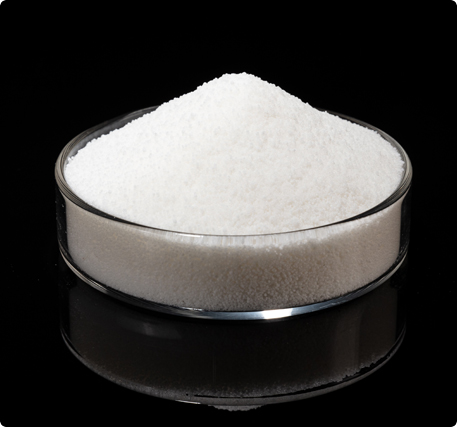
Span and Tween emulsifiers are widely used to help evenly mix oil and water in the food, pharmaceutical, and cosmetic industries. They both belong to the non-ionic surfactant family, but exhibit significant differences in practical applications.
This blog discusses the differences between them, covering their structure, solubility, HLB values, applications, why they are often used in combination, and their safety.
1. Basic Definition: Span vs Tween
Span emulsifiers are non-ionic surfactants derived from sorbitol and fatty acids. They are oil-soluble and have low HLB values, which means they prefer the oil phase. This makes Span emulsifiers suitable for formulations where fats play a dominant functional role.
Tween emulsifiers are polyoxyethylene sorbitan esters. They are non-ionic surfactants produced by ethoxylating sorbitan fatty acid esters. The presence of polyoxyethylene chains increases their hydrophilicity, allowing them to interact efficiently with aqueous systems. They are widely used to support uniform dispersion and formulation consistency.
Because of this, Span emulsifiers are often used to stabilize water-in-oil (W/O) systems, while Tween emulsifiers are mainly used in oil-in-water (O/W) systems.
In practical formulations, this HLB difference directly affects emulsification behavior. Span emulsifiers mainly stabilize fat-rich systems by improving oil structure and acting as co-emulsifiers, while Tween emulsifiers help disperse oils into water, forming fine and stable emulsions in liquid systems.
4. Typical Applications
Food Industry
Span
Margarine
Shortening
Bakery fats
Tween
Beverages
Dairy and non-dairy creams
Flavor emulsions
Using Span or Tween alone does not always provide enough stability. When combined, they offer better control of emulsification.
Benefits of combining Span and Tween:
Adjustable HLB for different formulations
Improved emulsion stability
Smaller and more uniform oil droplets
Better performance under heat and shear
This combination is common in beverages, sauces, creams, and functional food emulsions.
6. Regulatory and Safety Considerations
Both Span and Tween emulsifiers are:
Non-ionic and mild
Widely approved for food use
Listed with E-numbers in many regions
They are generally considered safe when used within regulatory limits.
Conclusion
The primary differences between Span and Tween emulsifiers are their solubility, HLB values, and functional role. Span emulsifiers are oil-soluble with low HLB values, while Tween emulsifiers are water-soluble with high HLB values. Many food formulators combine the two to achieve stable, balanced emulsions, thereby improving product texture, consistency, and shelf life.
For manufacturers and distributors seeking high-quality emulsifiers such as Span and Tween, Chemsino offers a comprehensive range of food-grade solutions. Please feel free to contact us for more information and free samples.