Home
Products
Emulsifier List
Application
Gallery
News
Blog
About Us
About Us
Contact Us
Your Position : Home > Blog

Polyglycerol Esters of Fatty Acids: Chemistry & Applications

Date:2026-04-03
Read:
Share:
Polyglycerol Esters of Fatty Acids (PGE) are widely used emulsifiers in the food industry and increasingly important in cosmetics, pharmaceuticals, and industrial formulations. Known in food regulations as E475, these compounds combine excellent emulsifying ability with flexibility in formulation, making them one of the most versatile non-ionic surfactants available today.

This article provides a complete overview of PGE, including its chemical properties, production, functional features, applications, and regulatory status.


What Are Polyglycerol Esters of Fatty Acids?


Polyglycerol esters of fatty acids (PGEs), designated E475 in the European Union, are a class of synthetic, non-ionic surfactants produced by the direct esterification of polymerized glycerol with edible fatty acids. Their defining structural feature is a dual-natured molecule: a hydrophilic polyglycerol head group bonded to one or more hydrophobic fatty acid chains.

This amphiphilic architecture is what makes PGEs so chemically useful. Like all surfactants, they reduce interfacial tension between immiscible phases — most importantly, between oil and water. The result is stabilized emulsions, improved foam structures, and enhanced texture across a remarkable range of food systems.

PGEs belong to a broader family of polyol esters that includes monoglycerides, diglycerides, sucrose esters, and propylene glycol esters — but PGEs occupy a unique niche due to the exceptional breadth of their adjustable properties.

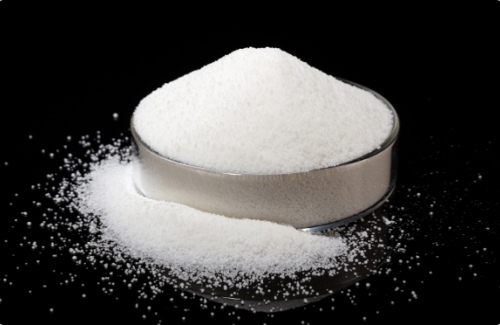
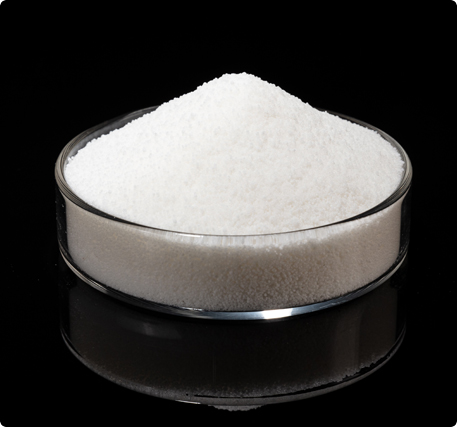
Polyglycerol-esters-of-fatty-acids-pge-e475-chemsino


Chemical Structure and Characteristics  


PGEs belong to a family of surfactants whose properties depend on several structural parameters:


2.1 Key Structural Variables


Degree of glycerol polymerization
(diglycerol, triglycerol, tetraglycerol, etc.)

Type of fatty acid

Examples include:

Stearic acid
Oleic acid
Palmitic acid
Lauric acid
Degree of esterification
Mono-, di-, or poly-ester structures.

Adjusting these factors creates a wide range of products with different solubility and emulsifying properties.


2.2 Hydrophilic–Lipophilic Balance (HLB)


PGE emulsifiers cover a broad HLB range (approximately 3–14), enabling them to function in both oil-in-water and water-in-oil systems.

Typical behavior:

 
HLB Range Application
3–6 Water-in-oil emulsions
7–10 Intermediate emulsification
10–14 Oil-in-water emulsions

This flexibility is one reason PGEs are used in a wide variety of food products.


Production Process


Industrial PGE manufacture proceeds in two principal stages. In the first stage, glycerol undergoes base-catalyzed polymerization at temperatures between 200°C and 250°C. The ratio of di-, tri-, tetra-, and higher polyglycerols in the resultant mixture is controlled by reaction time, temperature, and catalyst concentration.

In the second stage, the polyglycerol mixture is subjected to direct esterification with purified fatty acids (or transesterification with vegetable fats) under reduced pressure and controlled temperature. The reaction is typically driven to completion by continuous removal of water as a by-product.

The final product contains not only the desired esters but also minor quantities of unreacted mono-, di-, and triglycerides, free fatty acids, free glycerol, polyglycerol, and sodium salts of fatty acids. Regulatory specifications define acceptable limits for all of these components.


Applications Across Industries


Bakery products


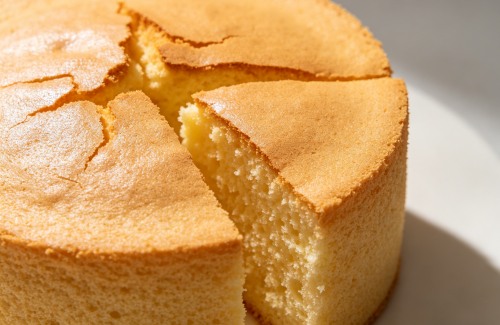
In the bakery sector, PGEs perform multiple simultaneous functions. They improve dough handling by facilitating uniform fat dispersion, increase product volume through enhanced gas retention (bread volume can increase by approximately 25%), produce a finer and more uniform crumb structure, and extend shelf life through anti-staling mechanisms. In cake production, PGE addition has been shown to increase batter volume by up to 17% and final cake volume by up to 28%.
Margarine & spreads

pge emulsifier in cake

PGEs improve the organoleptic properties of margarines and low-fat spreads by reducing graininess in the lipid phase, yielding plasticity and elasticity more closely resembling natural butter. Their ability to form emulsion systems with high water content also enables the development of reduced-calorie spreads without sacrificing mouthfeel or stability.


Chocolate & confectionery


In chocolate manufacture, PGEs outperform traditional lecithin in reducing viscosity during processing, resulting in improved pourability and a smoother texture. Their crystal-modifying properties are particularly valuable for controlling polymorphic transitions in cocoa butter, reducing the risk of fat bloom in finished products.


Dairy and dairy alternatives


In recombined and reconstituted dairy products — including cream, whipping cream, and non-dairy creamers — PGEs reduce droplet particle size, increase emulsion viscosity and stability, and improve whipping performance. Studies show PGE addition can reduce droplet size from approximately 2.75 μm to 1.48–1.73 μm, substantially improving emulsion homogeneity and shelf stability.


Cosmetics & personal care


Outside the food industry, PGEs have found significant applications as skin-compatible emulsifiers and conditioning agents in creams, lotions, sunscreens, and hair care products. Their biodegradability and derivation from renewable raw materials position them as a preferred green alternative to polyethylene glycol (PEG)-based surfactants, which carry the risk of the carcinogenic by-product 1,4-dioxane.

Pge in cosmetics and personal care products


Pharmaceuticals & industrials


PGEs serve as solubilizers and bioavailability enhancers for poorly water-soluble drugs, and as food-grade lubricants in processing equipment. Their biodegradability — classified as WGK 0 (no water hazard) — and low toxicity profile make them attractive as sustainable alternatives to mineral oil-based lubricants in food-contact applications.
 

Comparison with Related Emulsifiers


PGEs occupy a distinct position relative to other common food emulsifiers:

 
Emulsifier HLB Range Key Advantages of PGEs
Monoglycerides (E471) 3–4 PGEs offer a wider HLB range and superior long-term whipping stability
Lecithin (E322) 3–9 PGEs provide better viscosity reduction in chocolate; consistent synthetic purity
Sucrose esters (E473) 1–16 PGEs are generally more cost-effective, with better thermal stability in baking
PEG-based surfactants Variable PGEs are biodegradable; no 1,4-dioxane by-product risk; renewable feedstocks

Final Thoughts


Polyglycerol Esters of Fatty Acids (PGE) are versatile emulsifiers with applications across the food, cosmetic, and pharmaceutical industries. Their unique amphiphilic structure allows them to stabilize oil-water systems, improve texture, and enhance product stability.

With customizable structures, renewable raw materials, and strong functional performance, PGEs continue to play an essential role in modern food formulation and are likely to remain a key ingredient in future food innovation. As a global Polyglycerol Esters emulsifier supplier, CHEMSINO provides a full range of PGE products. Get in touch with us for the best quotes and technical data.
Start earning substantial
profits in your country today!
Email
Whatsapp