Home » Baking Enzymes » Fungal α-amylase
Fungal α-amylase
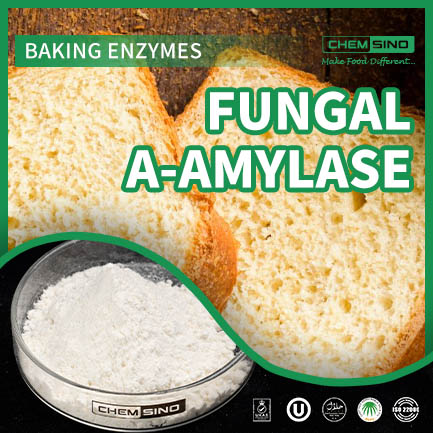
Fungal α-amylase, derived from Aspergillus oryzae via fermentation and purification, catalyzes starch hydrolysis to produce maltose syrup. Widely applied in baking, brewing, and other food industries, it enhances sugar yield, dough performance, and process efficiency. CAS No.: 9000-90-2.
Get Free Quote
Previous:
Next:
Lipase
Content
Fungal α-amylase is refined from Aspergillus oryzae through deep culture, extraction, and other processes. The enzyme is an endo-amylase, which can rapidly hydrolyze the α-1,4 glucosidic bond in the aqueous solution of gelatinized starch, amylose, and amylopectin to produce soluble dextrin, a small amount of maltose, and glucose. Prolonged reaction will produce a large amount of maltose and a small amount of glucose syrup. The enzyme has been widely used in industries such as caramel, high maltose, alcohol, beer brewing, and baked goods.
Application area:
1. Used in bakery products, it will improve the structure and volume of bread; it can also be directly used in the terminal to improve the quality of steamed bread and bread processing.
2. Alcohol production, fungal α-amylase is conducive to low temperature (50-60℃) liquefaction, liquefaction of starch in alcohol mash.
3. Beer production can improve the fermentability of wort and retain dextrin in beer.
| ITEMS | SPECIFICATION |
| Appearance | Brown liquid or light yellow powder |
| Odor | Odorless |
| Temperature adaptation range | 45-65℃ |
| Enzyme activity (u/ml) | 10000-40000 |
| PH Value | 4.0-6.6 |
| Bulk density (g/ml) | 1.15-1.25 |
| Dosage for flour (ppm) | 5-15 |
| Dosage for bread(ppm) | 5-20 |
Inquiry
More Baking Enzymes